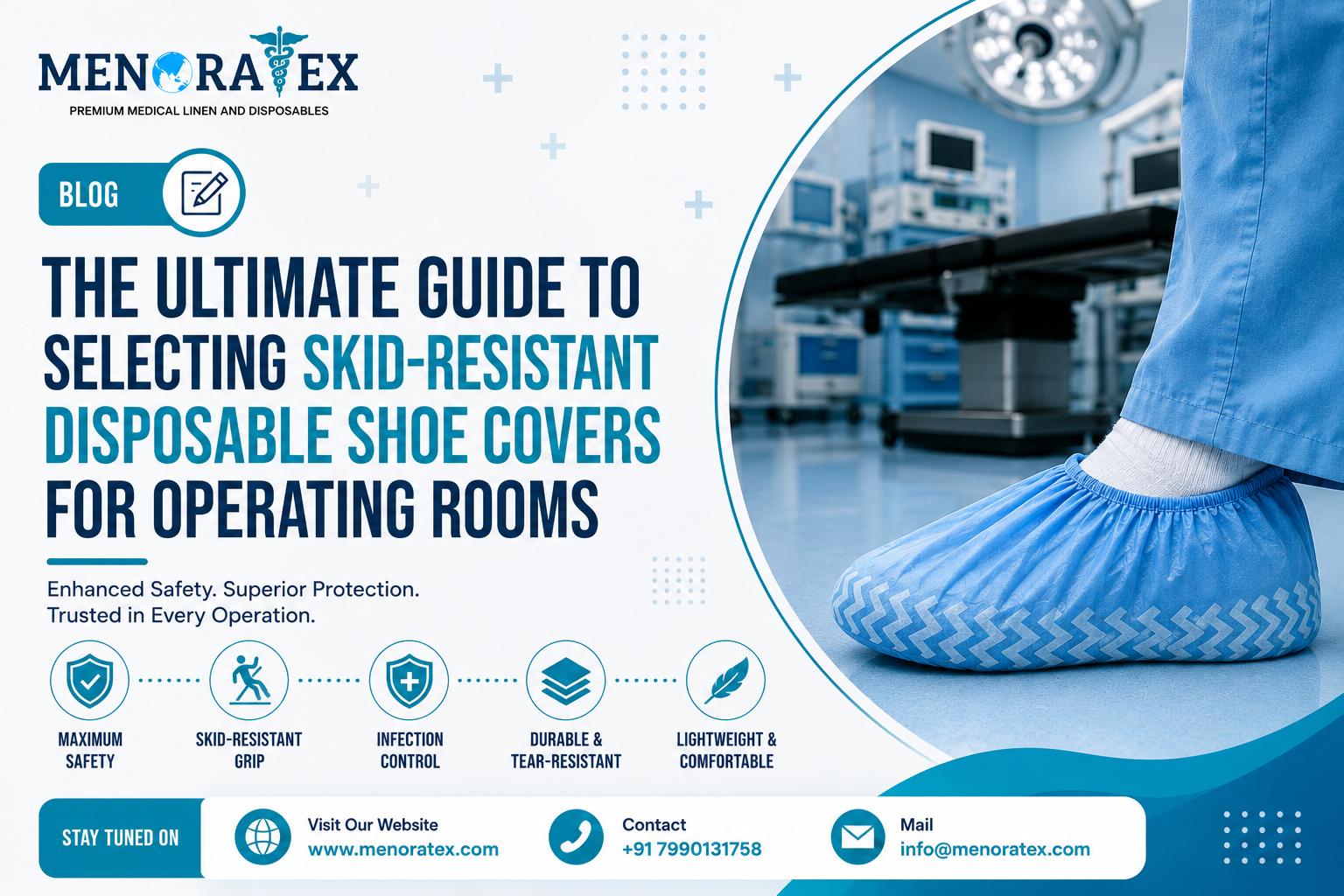
Operating rooms are among the most hazardous walking environments in any healthcare facility. Saline drips, blood, irrigation fluids, disinfectants, and prep solutions can quickly create slippery surfaces, increasing the risk of slips and falls.
While hospitals invest heavily in advanced surgical equipment and infection control protocols, one simple item is often overlooked until an accident occurs—the disposable shoe cover.
For procurement managers, infection control specialists, hospital administrators, and clinic owners, selecting the right skid-resistant disposable shoe covers is about much more than purchasing another disposable product. The right choice helps protect staff, maintain sterile environments, reduce workplace injuries, and minimize liability.
This comprehensive guide explains everything you need to know—from materials and tread design to certifications and supplier evaluation—so you can confidently choose the best anti-skid medical booties for your facility.
Why Skid Resistance Matters in Operating Rooms
Every hospital department experiences spills, but operating rooms present unique challenges where slip resistance becomes essential rather than optional.
Constant Fluid Exposure
Operating room floors frequently come into contact with:
- Blood
- Saline solution
- Irrigation fluids
- Betadine
- Alcohol-based preparation solutions
Each fluid affects floor traction differently, making reliable grip critical.
Fast-Paced Clinical Environment
Surgeons, nurses, and surgical technicians constantly shift positions during procedures. Even a brief loss of footing can interrupt critical tasks or compromise patient safety.
Higher Safety and Financial Risks
A slip inside an operating room can result in:
- Staff injuries
- Workers’ compensation claims
- Procedure delays
- Sterile field contamination
- Increased legal liability
- Higher operational costs
Quick Answer:
Skid-resistant disposable shoe covers are designed with textured or coated soles that increase friction between footwear and the floor, helping reduce slips on wet or contaminated hospital surfaces.
What Makes a Disposable Shoe Cover Truly Skid-Resistant?
Not every product labeled “anti-slip” offers the same level of protection. Understanding the engineering behind these products helps buyers avoid misleading marketing claims.
1. Sole Texture and Tread Design
The outsole is the primary factor affecting traction.
Common tread patterns include:
Diamond or Waffle Pattern
- Excellent general-purpose grip
- Performs well on smooth vinyl and tile floors
Ribbed or Channel Design
- Helps disperse liquids
- Similar to tire tread technology
- Ideal for wetter environments
Dot-Matrix Texture
- Lightweight
- Common in economy models
- Provides moderate slip resistance
Avoid smooth polyethylene (PE) soles, as they typically offer minimal traction once wet.
2. Material Selection
Different materials provide different levels of protection.
| Material | Slip Resistance | Fluid Protection | Recommended Applications |
|---|---|---|---|
| Polypropylene (PP) with anti-slip strip | Moderate to High | Moderate | General operating rooms |
| CPE-coated polypropylene | High | High | Moderate to high fluid exposure |
| PVC-reinforced sole | Very High | Excellent | Orthopedic, trauma, cardiac procedures |
| Basic non-woven PP | Low | Low | Non-sterile or low-risk areas |
For operating rooms with frequent fluid exposure, reinforced CPE or PVC soles generally provide better grip than standard non-woven materials.
3. Slip Resistance Testing
Reputable manufacturers should be able to provide documented testing information.
Ask suppliers for:
- Coefficient of Friction (COF) results
- ASTM F2913 testing (or equivalent)
- Independent laboratory reports
- Product testing summaries
If these documents aren’t available, consider it a warning sign before placing a large order.
Essential Features to Consider Before Buying
Fluid Barrier Performance
Match the product to your facility’s level of exposure.
Low Fluid Exposure
Suitable for:
- Outpatient procedures
- Minor surgeries
- Standard operating rooms
Recommended material:
- Lightweight PP with anti-slip strip
Moderate Fluid Exposure
Recommended:
- Laminated non-woven material
- CPE-coated shoe covers
Heavy Fluid Exposure
Best suited for:
- Orthopedic surgery
- Trauma cases
- Cardiac procedures
Recommended:
- PVC-reinforced soles
- Boot-style covers
Height and Coverage
Choose the height based on your environment.
Ankle Height
- Standard surgical procedures
- General OR staff
Mid-Calf Boot Covers
- Heavy irrigation procedures
- Orthopedic surgeries
- High splash-risk environments
Greater coverage helps prevent fluid from entering footwear.
Secure Fit
Poorly fitting shoe covers become tripping hazards.
Look for:
- Wide elastic openings
- Reinforced seams
- Heat-sealed construction
- Multiple size options
- Compatibility with surgical clogs
Latex-Free Construction
Because latex allergies remain a concern in healthcare settings, verify that:
- Elastic bands are latex-free
- Adhesives are latex-free
- Product specifications clearly state compliance
Color Coding
Many hospitals use colored shoe covers to identify:
- Sterile core personnel
- General OR staff
- Visitors
- Different departments
Choose suppliers capable of maintaining consistent color availability throughout the year.
Sterile vs. Non-Sterile Packaging
Understand your facility’s requirements.
Sterile Shoe Covers
Ideal for:
- Sterile core
- High-risk environments
- Procedures requiring sterile packaging
Non-Sterile Shoe Covers
Suitable for:
- Circulating staff
- General clinical areas
- Standard hospital traffic
Sterile packaging increases product cost, so order accordingly.
Step-by-Step Buying Guide
Before purchasing in bulk, follow this evaluation process.
Step 1
Assess fluid exposure levels throughout each department.
Step 2
Establish a minimum traction requirement.
Step 3
Request product samples.
Test them on:
- Dry flooring
- Wet flooring
- Floors cleaned with your facility’s disinfectants
Step 4
Verify sizing.
Ensure compatibility with:
- Surgical clogs
- Athletic shoes
- Orthopedic footwear
Step 5
Confirm compliance.
Check for:
- Latex-free certification
- Material safety documentation
- Quality certifications
Step 6
Review packaging.
Determine whether you require:
- Bulk packaging
- Individually wrapped pairs
- Sterile single-use packaging
Step 7
Compare total landed cost.
Include:
- Freight
- Duties
- Customs
- Minimum order quantities
Step 8
Request documentation.
Ask for:
- Certificate of Compliance
- ISO 13485 certification (where applicable)
- Manufacturing quality documents
Step 9
Run a pilot program.
Evaluate the product over two to four weeks before full implementation.
Step 10
Create inventory thresholds.
Maintain adequate stock levels to prevent shortages.
Common Purchasing Mistakes
Buying Based Only on Price
The lowest-priced product may become the most expensive if poor traction leads to workplace incidents.
Ordering Without Samples
Photographs rarely reveal tread depth or sole quality.
Always test physical samples.
Ignoring Floor Type
Traction performance varies between:
- Vinyl composition tile
- Epoxy floors
- Seamless resin flooring
Test on your facility’s actual flooring.
Skipping Staff Feedback
Surgical teams quickly notice issues with comfort and fit.
Pilot testing helps identify problems before large-scale purchases.
Not Evaluating Supplier Consistency
Ask suppliers about:
- Batch-to-batch consistency
- Quality control systems
- Manufacturing inspections
Overlooking Minimum Order Quantities
Lower unit prices often require significantly larger purchases.
Evaluate inventory costs alongside pricing.
Best Practices for Procurement Teams
Successful hospitals typically follow these practices:
- Standardize products according to risk level rather than department.
- Qualify multiple suppliers to reduce supply chain disruptions.
- Track slip-related incidents separately from general workplace falls.
- Train employees on proper shoe cover application.
- Review products annually to ensure ongoing quality and performance.
Expert Recommendations
Healthcare professionals often recommend:
- Requesting tread depth measurements rather than relying on marketing descriptions.
- Testing traction during wet-to-dry floor transitions.
- Choosing soles with enough flexibility to maintain floor contact.
- Evaluating toe grip to reduce snagging on cables and equipment.
- Keeping an approved backup supplier for emergencies.
Typical Wholesale Pricing
| Product Type | Estimated Price Per Pair (USD) | Best Application |
|---|---|---|
| Basic non-woven with anti-slip strip | $0.10–$0.25 | Low-risk areas |
| CPE-coated ankle cover | $0.25–$0.45 | Standard operating rooms |
| PVC-reinforced cover | $0.40–$0.70 | High-fluid surgeries |
| Sterile mid-calf boot cover | $0.80–$1.50+ | Orthopedic and trauma procedures |
Larger purchase volumes generally reduce unit costs, but always compare landed cost rather than product price alone.
Storage and Inventory Best Practices
Although disposable shoe covers are single-use, proper storage preserves product quality.
Recommendations include:
- Store in a cool, dry location.
- Protect products from direct sunlight.
- Rotate inventory using the FIFO method.
- Keep packaging sealed until use.
- Monitor monthly consumption.
- Audit product quality periodically.
Frequently Asked Questions
What is the difference between anti-slip and skid-resistant shoe covers?
The terms are often used interchangeably. However, skid-resistant products typically feature engineered tread patterns and may have documented slip-resistance testing.
Are skid-resistant shoe covers required?
Safety regulations generally require employers to minimize slip hazards, but product requirements vary by jurisdiction and facility policies.
Can disposable shoe covers be reused?
No. Disposable shoe covers are intended for single use. Reuse may compromise both infection control and slip resistance.
Which sole material offers the best traction?
CPE-coated and PVC-reinforced soles generally provide superior grip in wet operating room environments.
How can I verify a supplier’s claims?
Request:
- COF testing reports
- Third-party certifications
- Product samples
- Quality documentation
Should I choose sterile or non-sterile shoe covers?
Select the option that aligns with your facility’s infection control protocols and intended area of use.
Conclusion
Skid-resistant disposable shoe covers may appear to be a minor purchase, but they play a significant role in workplace safety, infection control, and operational efficiency.
The best products are distinguished by their tread design, sole material, documented testing, and manufacturing consistency—not simply by marketing claims.
Before making a bulk purchase:
- Assess your facility’s exposure risks.
- Define minimum traction requirements.
- Test products under real operating conditions.
- Verify supplier certifications.
- Evaluate total ownership cost rather than unit price alone.
A structured purchasing process helps ensure safer working environments while maximizing long-term value.
Looking for a Reliable Wholesale Supplier?
If you’re sourcing anti-skid disposable shoe covers for hospitals, surgical centers, or healthcare distributors, partner with a manufacturer that can provide:
- Consistent production quality
- Product samples
- Third-party testing documentation
- Competitive wholesale pricing
- Reliable global shipping
Choosing the right supplier today can help reduce workplace risks and improve procurement efficiency for years to come.
Contact Us
We welcome inquiries from hospitals, distributors, wholesalers, and healthcare procurement teams worldwide.
Email: info@menoratex.com | kunalsharma888@gmail.com
Phone: +91 7990131758