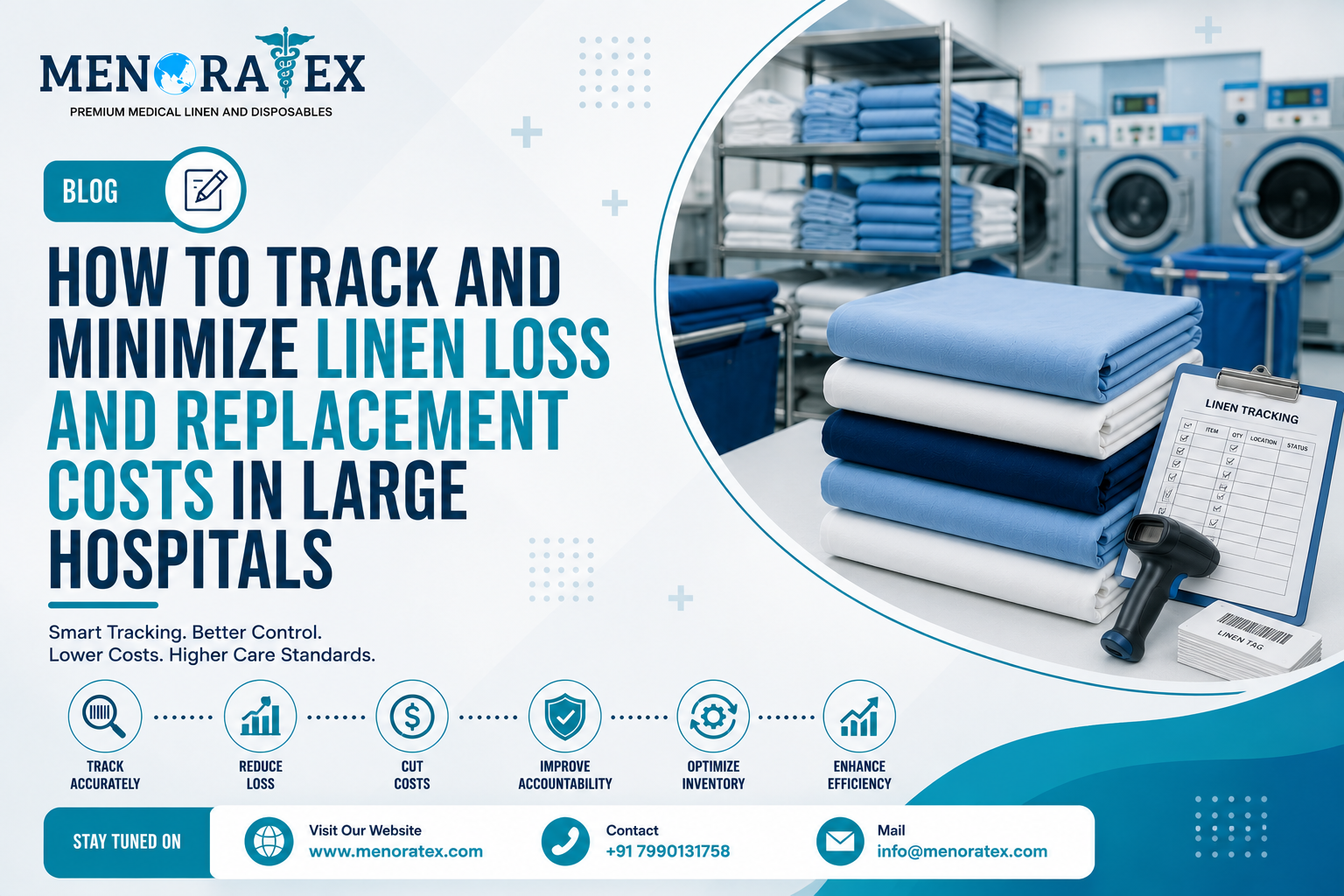
Every large hospital loses linen. The only question is how much — and whether anyone is actually watching the numbers.
Bed sheets vanish into laundry carts and never come back. Pillowcases get tossed with medical waste by mistake. Blankets walk out the door in patient belongings bags. Multiply that by hundreds of beds and thousands of linen cycles a month, and you get a line item that quietly drains six or seven figures a year from a facility’s supply budget — often without anyone noticing until the annual inventory count comes back short.
Linen loss isn’t a minor housekeeping nuisance. It’s a measurable financial leak, a supply-chain risk, and in some cases, an infection-control liability. The good news is that it’s also one of the most fixable cost problems in hospital operations, once you know where to look and what to measure.
This guide breaks down exactly how large hospitals and health systems can track linen loss, identify where it’s happening, and put practical systems in place to cut replacement costs — without adding a mountain of extra administrative work for already-stretched facilities teams.
Why Linen Loss Is a Bigger Problem Than Most Hospitals Realize
Ask most facilities directors how much linen their hospital loses each year, and you’ll often get a shrug or a rough guess. That’s the core issue: linen is treated as a low-value consumable, so it doesn’t get the same tracking rigor as pharmaceuticals, implants, or capital equipment.
But the math doesn’t support that assumption. A mid-sized hospital running 300–400 beds can easily cycle through 15,000–25,000 linen pieces a week between sheets, pillowcases, blankets, gowns, and towels. Industry benchmarks commonly cited by healthcare textile services suggest that hospitals lose somewhere between 15% and 30% of their total linen inventory annually to shrinkage — a term borrowed from retail that describes stock that disappears without being properly used, damaged, or discarded through normal channels.
At even a modest per-piece replacement cost, that shrinkage adds up to tens of thousands of dollars a year for a single facility, and considerably more across a multi-site health system.
Where the Losses Actually Come From
Linen loss rarely comes from one dramatic cause. It’s usually death by a thousand small cuts across the entire linen lifecycle:
- Improper disposal — linens thrown into biohazard or general waste bins instead of soiled linen carts
- Contamination write-offs — linens exposed to bodily fluids, chemotherapy agents, or other hazards that require destruction rather than laundering
- Theft or unauthorized removal — staff, patients, or visitors taking items home
- Transfers between departments or facilities — linen that moves with a patient during transport and never gets returned
- Loss in transit to outside laundry vendors — items lost, misrouted, or retained at a contracted laundry facility
- Excessive wear and tear — over-laundering, harsh detergents, or high dryer temperatures that shorten usable life
- Poor par-level management — departments hoarding excess stock “just in case,” which then ages out or goes missing in storage
Each of these is manageable on its own. The challenge is that most hospitals never separate them out, so the problem looks like one big unsolvable mystery instead of six or seven specific, addressable issues.
The Real Cost of Linen Loss: More Than Just Replacement Bills
When administrators calculate linen loss, they usually default to a simple number: replacement cost per item multiplied by the number of missing items. That’s real money, but it’s only part of the picture.
- Direct costs include the purchase price of replacement bed sheets, pillow covers, blankets, and gowns, plus expedited shipping fees when a shortage forces an emergency order.
- Operational costs show up as staff time spent searching for missing linen, redoing par-level counts, and managing vendor disputes over delivery discrepancies.
- Clinical costs are less obvious but arguably more serious. A shortage of clean linen during a busy shift can delay bed turnover, which affects patient throughput in the emergency department and can contribute to longer wait times. In infection-control terms, staff under pressure to “make do” with limited supply sometimes reuse linens longer than protocols recommend, which raises risk.
- Reputational and compliance costs matter too. Accreditation bodies and health authorities increasingly expect hospitals to demonstrate solid inventory and supply-chain controls, and chronic linen shortages can become a flagged item during facility reviews.
Put together, linen loss isn’t a housekeeping line item — it’s a supply-chain, clinical-safety, and financial governance issue that deserves the same attention as any other high-volume consumable.
How to Track Linen Loss: A Step-by-Step System
You can’t fix what you don’t measure. Building a reliable tracking system doesn’t require a massive capital investment — it requires consistency and the right combination of tools.
Step 1: Establish a Baseline Inventory Count
Before you can track loss, you need an accurate starting point. Conduct a full physical count of every linen category — flat sheets, fitted sheets, pillowcases, bath towels, patient gowns, blankets, and any specialty items — across every department, storage closet, and linen chute.
Tip: Do this count on the same day of the week and shift each time (for example, every first Monday of the month, early morning) so comparisons stay consistent.
Step 2: Assign a Unique Tracking Method to Each Item Category
Large hospitals typically use one or a combination of these tracking technologies:
| Tracking Method | Best For | Approximate Cost Per Item |
| RFID (Radio Frequency Identification) tags | High-volume acute care hospitals, multi-site systems | $0.25–$0.75 |
| Barcode labels | Mid-size facilities, department-level tracking | $0.05–$0.15 |
| Color-coded stitching by department | Small facilities, low budget | Negligible |
| Manual par-level logs | Backup method, low-tech departments | Staff time only |
RFID has become the gold standard in larger facilities because it allows automated counting at laundry sorting stations, linen chutes, and delivery docks without manual scanning of every item — which dramatically improves accuracy and cuts labor hours.
Step 3: Track Linen at Every Transition Point
Loss happens at handoffs, not while linen is sitting quietly on a shelf. Set up tracking checkpoints at each of these transition points:
- Clean linen delivery — count and log what arrives from the laundry provider or in-house laundry
- Department distribution — log what each unit receives
- Point of use — track what’s applied to a patient bed or used clinically
- Soiled linen collection — count what goes into soiled linen carts
- Return to laundry — reconcile what the laundry provider receives against what was sent
- Final clean return — confirm the loop closes and quantities match expectations
Any gap between these checkpoints tells you exactly where in the cycle linen is disappearing, rather than leaving you guessing.
Step 4: Reconcile Vendor Invoices Against Actual Counts
If your hospital uses an outside commercial laundry or linen rental service, don’t assume their delivery counts are automatically correct. Build in a reconciliation process where a designated staff member checks received quantities against the invoice every single delivery, not just periodically. Discrepancies should be logged and reported back to the vendor within a set window (many facilities use 24–48 hours) to qualify for credit or replacement under the service contract.
Step 5: Use Software to Centralize the Data
Spreadsheets work for small operations, but a large hospital needs a centralized linen management system — either a dedicated inventory platform or a module within existing supply-chain or EHR-adjacent software — that pulls data from RFID scanners, barcode systems, and manual logs into one dashboard. This is where patterns become visible: a specific unit with chronically high loss rates, a laundry vendor with a consistent shortfall, or a seasonal spike tied to visitor traffic.
Common Mistakes That Make Linen Loss Worse
Even hospitals that try to address linen loss often undermine their own efforts. Watch for these recurring mistakes:
- Treating linen counts as an annual event instead of an ongoing process. Losses compound quietly between yearly audits, making the eventual shortfall look shocking instead of gradual and traceable.
- Not training frontline staff on proper disposal. Many losses trace back to linen being thrown into red-bag biohazard waste or general trash simply because staff weren’t trained on which items are launderable versus which require disposal.
- Overstocking departments “to be safe.” Excess par levels don’t prevent loss — they usually just move the loss further down the chain, into storage closets that rarely get audited.
- Ignoring seasonal and occupancy patterns. Linen loss often spikes during flu season, holiday visitor surges, or periods of high bed turnover, and hospitals that don’t adjust monitoring intensity during these windows miss the biggest loss events of the year.
- Blaming laundry vendors without data. It’s tempting to assume an outside laundry service is responsible for shortfalls, but without checkpoint tracking, hospitals often can’t prove where the loss actually occurred — which weakens their negotiating position.
- Using low-quality linen that wears out fast. Cheap linens that thin, tear, or shrink after a handful of wash cycles inflate “replacement” costs that look like loss but are really a durability problem.
Best Practices to Minimize Linen Loss and Replacement Costs
1. Standardize Linen Quality Across the Facility
Inconsistent linen quality across departments makes tracking and cost control harder. Standardizing on durable, hospital-grade textiles — properly rated for GSM (grams per square meter) weight, thread count, and industrial wash-cycle tolerance — reduces premature wear and extends usable life, which lowers the baseline replacement rate before loss even enters the equation.
2. Set Department-Level Accountability
Assign each nursing unit or department a designated linen custodian responsible for par-level checks, disposal training, and reporting discrepancies. When accountability sits with a named person rather than “whoever’s on shift,” compliance improves measurably.
3. Build Linen Loss Into Monthly Operational Reviews
Treat linen loss the same way finance teams treat pharmaceutical or supply-chain variances — as a recurring line item reviewed monthly, not annually. Facilities that shift to monthly tracking typically catch problems while they’re still small and cheap to fix.
4. Right-Size Par Levels Using Data, Not Guesswork
Use your tracking data to calculate actual usage patterns by unit, then set par levels that reflect real demand plus a reasonable buffer — rather than historical habits or “what we’ve always ordered.”
5. Negotiate Loss-Sharing Terms With Laundry and Linen Vendors
If linen is rented or laundered through a third-party healthcare linen service, review the service contract for shrinkage and loss-sharing clauses. Many vendors offer replacement guarantees or capped loss liability, but only if the hospital tracks and reports discrepancies consistently.
6. Improve Signage and Bin Placement
Simple, low-cost fixes — clearly labeled soiled linen carts placed near points of care, and signage distinguishing linen from biohazard or trash disposal — measurably reduce accidental disposal losses.
7. Audit Storage Areas, Not Just Point of Care
A significant share of “lost” linen is actually sitting in an overstocked, unaudited storage closet. Quarterly storage audits across every department often recover inventory that was assumed lost.
8. Consider RFID for High-Volume Facilities
For hospitals processing tens of thousands of linen pieces weekly, the upfront cost of RFID tagging typically pays for itself within 12–18 months through improved recovery rates and reduced manual labor for counting.
Cost Considerations: Building the Business Case
When presenting a linen loss reduction program to hospital leadership, frame it around return on investment rather than just cost avoidance. A typical business case includes:
- Current annual replacement spend — pulled from purchasing records over the past 12–24 months
- Estimated shrinkage rate — calculated from your baseline audit versus current stock
- Projected savings — based on industry benchmarks showing that structured tracking programs typically reduce loss rates by 30–50% within the first year
- Technology investment — RFID or barcode system costs, amortized over expected useful life
- Labor cost offset — reduced manual counting hours once automated tracking is in place
Most large facilities find that a mid-range investment in tracking infrastructure — commonly in the $15,000–$60,000 range depending on facility size and technology choice — pays back within one to two budget cycles through reduced replacement spend alone, before factoring in labor savings.
Long-Term Maintenance: Keeping the Program Effective
A linen tracking program isn’t a one-time project. To keep results sustainable:
- Re-audit baseline inventory annually, even with automated tracking in place
- Rotate department linen custodians into refresher training every six months
- Review vendor performance data quarterly and renegotiate contract terms if discrepancy rates rise
- Retire and replace linen on a defined lifecycle schedule (many facilities use wash-cycle counts, not just calendar age, to determine replacement timing)
- Keep frontline staff engaged by sharing loss-reduction wins — teams are more likely to sustain good habits when they see the data improve
Expert Tips for Facilities and Supply Chain Teams
- Track loss by category, not just total pieces — pillowcases and gowns often disappear at very different rates than heavier items like blankets, and lumping them together hides the real pattern.
- Cross-reference linen loss data with occupancy and admission data. Spikes usually correlate with specific operational events, not random chance.
- When switching linen suppliers, run a controlled pilot in one or two units before a facility-wide rollout, so you can compare durability and loss rates against your existing stock.
- Involve environmental services (EVS) leadership early. They see disposal patterns firsthand and often have the most practical insight into where losses originate.
Frequently Asked Questions
What is considered a normal linen loss rate for a hospital?
Industry data suggests losses in the range of 15–30% annually are common without active tracking programs, while hospitals running structured RFID or barcode-based tracking often bring that down to single digits within a year or two.
What is linen shrinkage in a hospital setting?
Linen shrinkage refers to the gap between the linen inventory a hospital should have on hand and what actually remains, accounting for normal wear, theft, contamination write-offs, and misplaced items across the linen lifecycle.
Is RFID tracking worth the cost for a mid-sized hospital?
For facilities processing several thousand linen pieces weekly, RFID typically pays back its upfront cost within 12–18 months through improved recovery rates, reduced labor for manual counting, and better vendor accountability.
How often should a hospital audit its linen inventory?
A full baseline count should happen at least annually, but high-volume facilities benefit from monthly spot audits and quarterly full storage-area reviews to catch losses before they compound.
Who is usually responsible for linen loss in a hospital?
Responsibility is typically shared across environmental services, nursing units, and any outside laundry vendor. Without checkpoint-based tracking, it’s difficult to isolate where along the cycle loss actually occurs.
Can outside laundry vendors be held accountable for lost linen?
Yes, if the service contract includes loss-sharing or replacement guarantee clauses, and if the hospital maintains consistent delivery-count reconciliation to document discrepancies.
What’s the difference between linen loss and linen damage?
Loss refers to items that disappear from inventory entirely, while damage refers to items that are accounted for but no longer usable due to tears, staining, or excessive wear — both affect replacement budgets but require different tracking approaches.
How does GSM weight affect linen replacement costs?
Higher GSM (grams per square meter) linens generally withstand more industrial wash cycles before wearing out, which lowers the frequency of “replacement due to damage” even if it raises the upfront purchase cost per piece.
What role does staff training play in reducing linen loss?
A significant share of losses trace back to improper disposal by staff who weren’t trained on which items belong in soiled linen carts versus biohazard or general waste, making training one of the lowest-cost, highest-impact interventions available.
Should small and mid-sized hospitals use the same tracking methods as large hospitals?
Not necessarily — barcode systems or color-coded stitching often make more financial sense for smaller facilities, while RFID becomes cost-effective once linen volume reaches the tens of thousands of pieces per week.
Conclusion
Linen loss will never hit zero — some level of wear, contamination, and handling loss is simply part of running a busy hospital. But the gap between “normal operational loss” and “an unmanaged financial leak” comes down entirely to whether a facility is tracking the problem with real data or guessing at year-end.
The hospitals that get this right treat linen the way they treat any other high-volume clinical supply: with checkpoint tracking, department-level accountability, vendor reconciliation, and a maintenance schedule that keeps the program working long after the initial rollout. The payoff isn’t just a smaller line item on next year’s budget — it’s fewer shortages during busy shifts, stronger vendor accountability, and one less unpredictable variable in facilities management.
If your hospital is also evaluating linen quality as part of a loss-reduction strategy, sourcing durable, properly rated hospital linens is just as important as tracking them. Better-built linens simply survive more wash cycles before they need replacing in the first placeContact Us
We’re always looking for new business opportunities and partnerships. If your hospital or healthcare facility is sourcing quality medical linens and disposables, we’d love to hear from you.
Feel Free To Contact Us We are looking for business opportunities to work with. If your requirement matches our products, feel free to get in touch.
- Email: info@menoratex.com | kunalsharma888@gmail.com
- Phone: +91 7990131758
- Address: 310, Binori B Square 2, Opposite Hathi Singh ni Vadi, Iscon Ambli Road, Ahmedabad 380054, Gujarat, India
- Website: menoratex.com