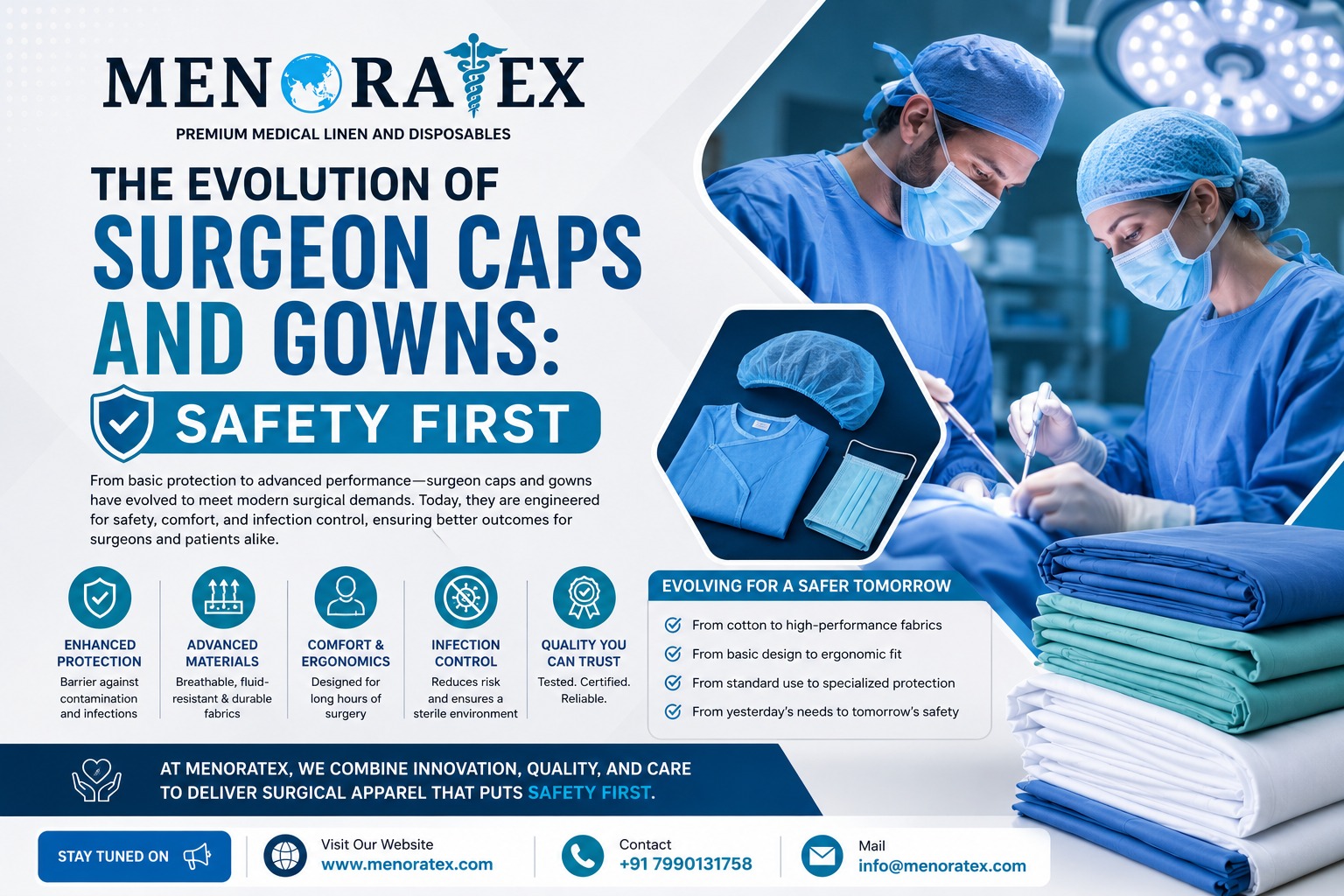
In the high-acuity, fast-paced environment of a modern American operating room (OR), the equipment utilized—no matter how seemingly small—is a primary line of defense against infection. The evolution of surgeon caps and gowns represents a fascinating, multi-decade journey from rudimentary cotton cloths to highly engineered, bio-protective synthetic barriers. For U.S. hospital procurement leaders, surgical teams, and infection control professionals, understanding this evolution is not just a matter of medical history; it is a critical component of maintaining patient safety and clinical excellence in 2026.
The Early Days: The Era of Cotton and Cloth
For the majority of the 20th century, surgical attire was simplistic. Cotton gowns and caps were the absolute industry standard. During this era, the focus of the OR was primarily on the mechanical aspect of surgery rather than the microscopic risks of contamination. While cotton offered a basic level of modesty and dust-catching capacity for the surgeon, it was notoriously ineffective at preventing the strike-through of fluids.
In the mid-century U.S. hospital, surgeons often dealt with damp, stained garments by the end of long procedures. At the time, the risk of “strike-through”—where bodily fluids pass through the fabric to the skin—was largely overlooked. This era established the baseline for surgical attire, but it left a dangerous gap in the sterile field that would eventually drive the industry toward synthetic innovation.
The Turning Point: The Rise of Infection Control Standards
As the medical community’s understanding of Surgical Site Infections (SSIs) evolved, so did the necessity for higher-performance textiles. The shift was accelerated by the introduction of standardized testing frameworks, most notably those championed by the Association for the Advancement of Medical Instrumentation (AAMI). AAMI’s introduction of performance levels for surgical gowns changed the landscape entirely.
These standards defined how much fluid a gown could withstand under specific pressures before compromising the sterile field. For U.S. hospitals, this moved the conversation away from “what feelscomfortable” to “what provides the necessary barrier protection.” This transition marked the beginning of a data-driven approach to medical apparel.
The Modern Era: High-Performance Synthetic Textiles
Today, the U.S. healthcare market demands more than just fabric; it demands active protection. Advanced materials, such as non-woven spunbond-meltblown-spunbond (SMS) fabrics, have become the gold standard. These engineered materials offer a trifecta of benefits:
- Fluid Repellency: Specifically designed to prevent blood, saline, and other contaminants from breaching the barrier.
- Breathability: Advanced polymers allow for the transfer of moisture vapor, ensuring the surgeon’s comfort and cognitive clarity during intense, multi-hour procedures.
- Antimicrobial Coatings: Modern coatings now inhibit bacterial growth on the surface of the textile, providing a secondary layer of defense.
The Deep Dive into Barrier Technology
To truly appreciate the evolution, one must understand the material science. SMS fabric is a multi-layered composite. The spunbond layers provide structural integrity, ensuring that the gown does not tear during a vigorous orthopedic procedure or emergency trauma intervention. The meltblown middle layer acts as a filter, trapping pathogens and preventing fluid penetration. This architectural approach to fabric design is what allows modern surgeons to work in high-risk environments with confidence.
Surgeon Caps: From Style to Safety
The evolution of the surgeon cap is one of the most debated topics in surgical hygiene. For years, the choice of cap was often a matter of personal expression for surgeons. However, increased research into the shedding of skin particles and hair in the OR environment has led to a major shift in policy. Modern U.S. operating room protocols now emphasize full-coverage, disposable caps that are both breathable and secure.
The goal is to ensure that no particles from the surgeon’s head or hair enter the sterile field. This evolution highlights the granular, detail-oriented nature of 2026 surgical safety standards, where even the smallest piece of apparel is scrutinized for its potential impact on infection rates.
The Menoratex Advantage: Precision Manufacturing
In this complex and highly regulated market, finding a manufacturing partner that combines technical excellence with personalized, U.S.-centric service is essential for hospital networks. Menoratex (https:// menoratex.com/) has established itself as a leader in bridging the gap between Indian manufacturing precision and the rigorous requirements of U.S. healthcare facilities.
With a deep commitment to AAMI compliance and sustainable sourcing, Menoratex provides the reliability that modern, high-volume hospital networks demand. By utilizing a vertically integrated production model, Menoratex ensures that every garment produced meets the most stringent quality control checks before leaving the factory. Whether you are looking for high-performance surgical gowns or industry-compliant caps, Menoratex offers the scalability and quality oversight necessary to ensure your surgical teams are operating at their best.
Comprehensive Selection Guide for U.S. Procurement Teams
For those in charge of procurement, the sheer volume of choices can be overwhelming. We recommend following a structured, multi-step evaluation process to ensure long-term clinical satisfaction:
- AAMI Level Assessment: Categorize your procedures based on fluid exposure risk. Do you require AAMI Level 1 for minor procedures, or AAMI Level 4 for high-fluid orthopedic or trauma surgeries?
- Clinical Trial Feedback: Never switch to a new textile without a controlled pilot study. Surgeons need to feel the difference in weight, breathability, and range of motion.
- Supply Chain Robustness: In the post-2020 era, a just-in-time delivery model is no longer enough. Partner with suppliers who can maintain deep buffer stocks to protect you from global logistics volatility.
The Impact of ESG and Sustainability in Healthcare Textiles
As the U.S. healthcare system moves toward broader sustainability goals, the textile supply chain is under scrutiny. Leading providers are now seeking gowns and caps that not only protect the patient but also reduce the ecological footprint. Menoratex, for instance, has invested in production practices that minimize water waste and promote the use of responsibly sourced materials, aligning perfectly with the environmental, social, and governance (ESG) mandates of leading American health systems.
Looking Toward the Future: Smart Textiles
The future of surgical attire lies in “Smart Textiles.” Researchers are currently working on fabrics that can detect moisture, track surgical duration, and even signal when a barrier has been breached. As we look ahead, the core value remains “Safety First.” The evolution of these garments is a testament to the healthcare industry’s unwavering commitment to protecting both the patient and the provider through continuous technological innovation.
Conclusion
The journey from the early days of cotton to today’s high-tech synthetic barriers has been defined by one mission: the reduction of surgical site infections. By leveraging advanced materials and partnering with trusted manufacturers like Menoratex, U.S. hospitals can ensure their surgical teams are equipped with apparel that matches their dedication to patient care. Your choice of surgical apparel is a foundational decision that impacts the daily life of every surgeon and the safety of every patient.
Ready to Upgrade Your Supply Chain?
If you are a procurement manager looking to secure high-quality, compliant surgical caps and gowns, reach out to the experts at Menoratex today. Visit https://menoratex.com/ to discuss your specific requirements and receive a detailed material analysis and safety consultation.