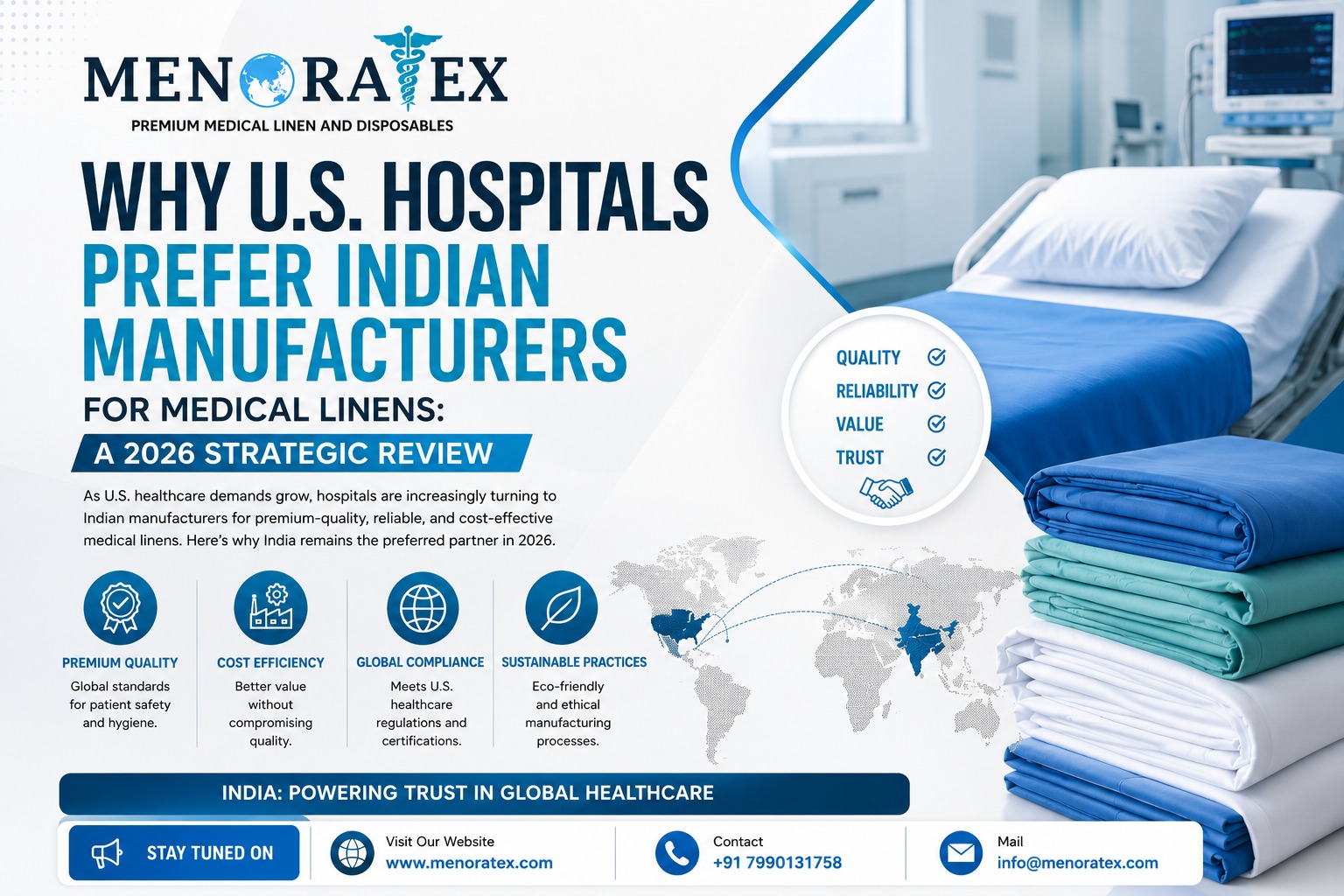
The Modern Procurement Dilemma
Supply chain managers today face a “triple threat”: price volatility, sustainability mandates, and the constant risk of inventory depletion. Traditional reliance on single-source regions has left many facilities vulnerable to logistics bottlenecks. When sourcing medical textiles, the stakes are not just financial—they are clinical. A delay in receiving high-grade surgical linens can literally pause operations. Therefore, the search for a partner who can offer stability, transparency, and compliance is the #1 priority for 2026 procurement teams.
Why India? The Manufacturing Powerhouse
India’s emergence as the preferred destination for medical textiles is rooted in three distinct pillars: Vertical Integration, Technological Maturity, and Language/Legal Framework. India is one of the world’s largest cotton producers. Unlike manufacturers in other regions, Indian textile mills often own the entire value chain—from the fiber to the finished product. This control ensures consistent quality and eliminates the “middle-man” volatility that plagues global prices.
Furthermore, the Indian textile sector has undergone a massive digital transformation. Modern facilities now utilize automated looms, laser-cutting technology, and AI-driven quality inspection systems. This level of precision is essential for medical-grade textiles that must withstand high-heat sterilization and heavy-duty usage.
Quality and Compliance: The Non-Negotiables
You cannot compromise on safety in healthcare. The top-tier Indian exporters understand this implicitly. Leading Indian manufacturers now produce fabrics that meet AAMI PB70 standards (Levels 1 through 4), providing the necessary protection against blood, fluids, and microorganisms.
When selecting a supplier, look for ISO 13485 certification. This is the international standard for quality management systems specific to the medical device and textile industry. It proves that the manufacturer has documented processes for every aspect of production, from raw material inspection to final packaging.
The Sustainable Shift in Healthcare
U.S. hospitals are under intense pressure to reduce their carbon footprint. Indian manufacturers are meeting this challenge head-on by adopting “Green Textile” initiatives. Many modern Indian textile parks operate on Zero Liquid Discharge (ZLD) systems, meaning all wastewater is purified and recycled back into the production process. Additionally, India leads the world in organic cotton production, providing a “clean” raw material base that appeals to hospital ESG targets.
How to Vet Your Indian Textile Partner
Request a Virtual Facility Tour: Any reputable supplier should provide a live walkthrough of their floor.
Demand Third-Party Validation: Ask for AAMI lab test reports from independent, accredited testing labs (e.g., Intertek or SGS).
Check Export History: Experience in U.S. Customs and FDA import requirements is vital.
Evaluate Sample Consistency: Request batches from different production cycles to ensure uniformity.
The Menoratex Advantage
In this evolving market, finding a partner that combines technical excellence with personalized service is crucial. Menoratex (https://menoratex.com/) stands out as a leader in bridging the gap between Indian manufacturing precision and the specific needs of the U.S. healthcare sector. With a deep commitment to AAMI compliance, sustainable sourcing, and a vertically integrated production model, Menoratex provides the reliability that modern hospital networks demand. Whether you are looking for highperformance surgical linens or durable patient apparel, Menoratex offers the scalability and quality oversight necessary for your facility’s success.
Frequently Asked Questions
Q: Are Indian medical linens as durable as domestic products?
A: Yes. In fact, many U.S. domestic linens are actually manufactured in India and rebranded. By going direct, you often get the same or better quality at a reduced cost.
Q: How does Menoratex ensure lead-time reliability?
A: Menoratex utilizes advanced logistics planning and maintains “buffer stock” agreements, effectively insulating partners from common global supply chain bottlenecks.
Ready to Upgrade Your Supply Chain?
If you are a procurement manager looking to secure high-quality, compliant medical textiles, reach out to the experts at Menoratex today to discuss your specific requirements and receive a comprehensive material analysis.