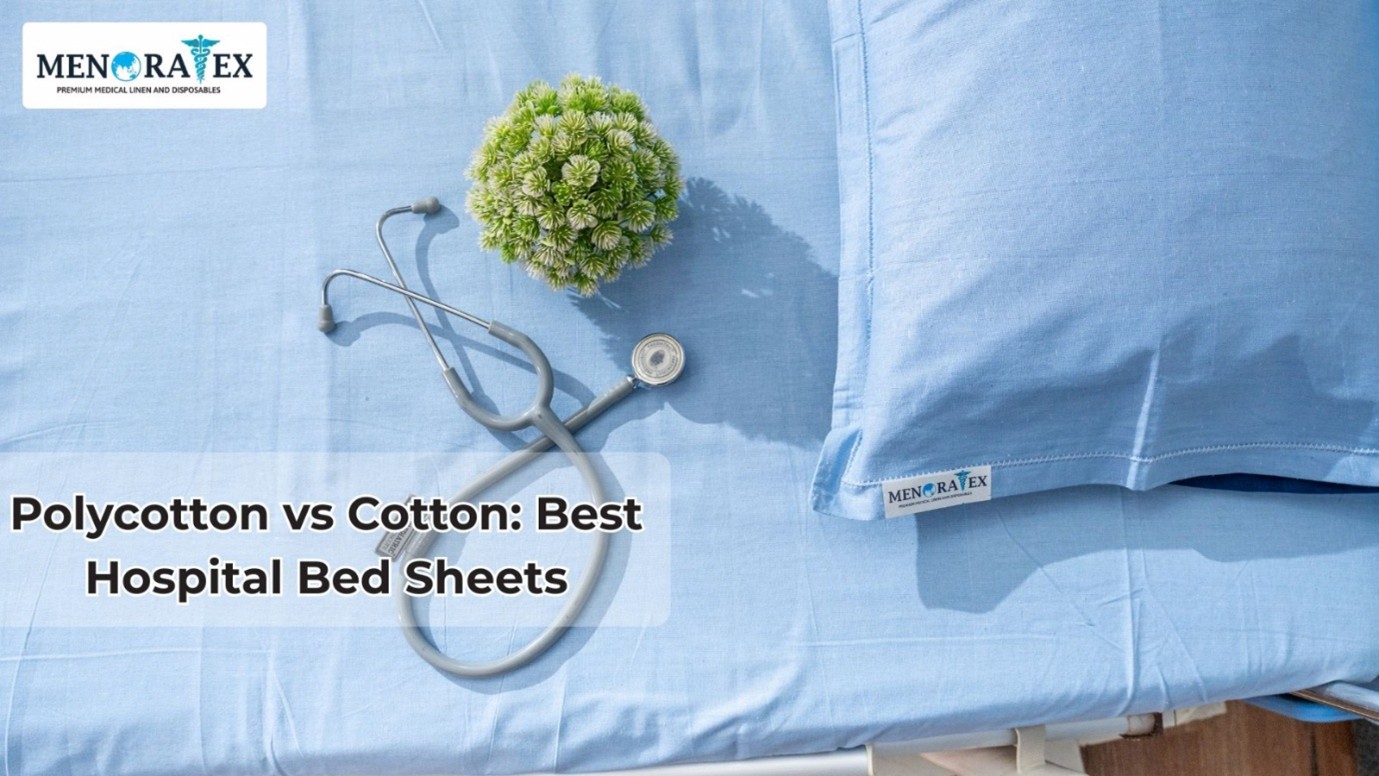
Polycotton vs Cotton: Choosing the Best Hospital Bed Sheets
Introduction: Why Hospital Bed Sheets Deserve More Attention
Let’s be honest—hospital bed sheets rarely get the spotlight. But in reality, they’re one of the most used items in any healthcare facility. Every patient touches them. Every nurse handles them. And every laundry cycle tests them.
If you’re involved in healthcare purchasing, facility management, or even just curious about how hospitals make smarter decisions, you’ve probably come across the debate: polycotton vs cotton. At first glance, cotton sounds like the obvious winner. It’s natural, soft, and familiar. But hospitals don’t operate like homes. They operate under pressure—tight budgets, strict hygiene rules, and nonstop usage.
That’s where polycotton sheets quietly take the lead. In this blog, we’ll break down cotton vs polycotton in real-world hospital terms—comfort, durability, cost effectiveness, and most importantly, total cost of ownership (TCO). No fluff. Just practical insight that hospitals across the US, UAE, Europe, and Latin America rely on every day.
What Hospitals Actually Need From Bed Sheets
Hospital bed sheets go through a very different life cycle than home linens. In general wards, sheets are washed daily, sometimes multiple times per day. They’re exposed to:
- High-temperature washing
- Strong disinfectants
- Industrial dryers
- Constant pulling, stretching, and tucking
This means hospital bed sheets must do three things extremely well:
stay hygienic, stay intact, and stay cost effective.
Comfort matters, yes—but comfort that disappears after 20 washes isn’t comfort. Hospitals need sheets that still perform after 200+ wash cycles. This is where the conversation around polycotton vs cotton becomes less about preference and more about performance.
Understanding Cotton Bed Sheets in Hospitals
Cotton has been used in healthcare for decades. It’s breathable, soft, and feels natural against the skin. Many people associate cotton with premium quality, and for good reason—it’s comfortable and absorbs moisture well.
However, cotton has some serious drawbacks in hospital environments:
- Shrinks under high heat
- Loses strength after repeated washing
- Wrinkles easily, increasing labor costs
- Tears and thins over time
In a home, these issues are manageable. In a hospital? They become expensive problems. Cotton hospital bed sheets often need replacement far sooner than expected, which directly impacts budgets.
When comparing cotton vs polycotton, cotton tends to win on first impression—but lose over time.
What Makes Polycotton Different (and Smarter)
Polycotton is a blend—usually polyester and cotton combined to create a stronger, more stable fabric. The polyester adds durability and shape retention, while the cotton maintains comfort and breathability.
This balance is exactly why polycotton sheets have become the standard in many hospitals worldwide.
Key advantages of polycotton sheets include:
- Minimal shrinkage
- High tear resistance
- Faster drying times
- Better shape retention
- Longer lifespan
In the polycotton vs cotton debate, polycotton isn’t trying to replace comfort—it’s improving it by making it last.
Polycotton vs Cotton: Real Differences That Matter
On paper, cotton and polycotton may look similar. In daily hospital use, the differences are impossible to ignore.
Cotton fibers weaken with every hot wash. Polycotton fibers stay stable. Cotton sheets wrinkle and need ironing. Polycotton sheets come out smoother. Cotton fades and thins. Polycotton holds its structure.
This is why linen service providers and hospital administrators often move away from cotton after reviewing usage data. The cotton vs polycotton decision becomes obvious when performance is tracked over time.
Cost Effectiveness: Where Polycotton Quietly Wins
Cost effectiveness isn’t about buying cheap—it’s about spending smart. Cotton sheets may cost more upfront and wear out faster. Polycotton sheets cost less to maintain and replace less often.
Think about this:
- Fewer replacements
- Lower laundry energy usage
- Reduced labor for ironing
- Predictable performance
All of these reduce operational strain. For hospitals managing hundreds or thousands of beds, these savings aren’t small—they’re massive.
Total Cost of Ownership (TCO): The Metric Hospitals Trust
If there’s one metric hospitals care about, it’s total cost of ownership (TCO). TCO includes:
- Purchase price
- Washing and drying costs
- Labor
- Energy
- Replacement frequency
When analyzed honestly, polycotton sheets almost always outperform cotton in TCO calculations. Even if cotton feels nicer on day one, polycotton wins by day ninety—and keeps winning for years. This is why procurement teams increasingly evaluate polycotton vs cotton using lifecycle data rather than assumptions.
Polycotton vs Cotton in High-Volume Laundry Systems
Industrial laundry is brutal. Cotton struggles here. Polycotton thrives.
Polycotton sheets dry faster, which reduces energy consumption. They resist tearing and pilling. They maintain consistent sizing, which matters when making beds quickly in busy wards.
This reliability is why most commercial laundries recommend polycotton hospital bed sheets without hesitation.
Hygiene, Infection Control, and Safety
Hospitals must meet strict infection control standards. Sheets must survive thermal disinfection without breaking down. Polycotton handles high heat better than cotton, making it more reliable for hygiene protocols. Lower linting also means fewer airborne fibers, reducing contamination risks. This small detail has a big impact in clinical environments.
Patient Comfort Still Matters—and Polycotton Delivers
There’s a myth that polycotton isn’t comfortable. In reality, modern polycotton sheets are smooth, breathable, and gentle on skin.
The difference? They stay that way longer.
Cotton may feel softer initially, but polycotton provides consistent comfort throughout its lifecycle. For patients in general wards, consistency matters more than first impressions.
Sustainability: An Overlooked Advantage
Polycotton sheets last longer, which means less textile waste. Faster drying uses less energy. Fewer replacements reduce transportation and manufacturing impact. When hospitals compare cotton vs polycotton through a sustainability lens, polycotton often aligns better with long-term environmental goals.
Why Hospitals Worldwide Choose Polycotton
Across the US, UAE, Europe, and Latin America, hospitals face the same challenges—cost pressure, staffing shortages, and rising patient volumes.
Polycotton sheets solve a quiet but important problem: they simply work better, for longer, at lower overall cost. That’s why they’ve become the default choice in general wards globally.
Cotton vs Polycotton: Quick Comparison
| Factor | Cotton | Polycotton |
| Lifespan | Shorter | Longer |
| Shrinkage | High | Low |
| Laundering Cost | Higher | Lower |
| TCO | Higher | Lower |
| Hospital Preference | Limited | Widespread |
Final Thoughts: Which Fabric Really Makes Sense?
The polycotton vs cotton debate isn’t about which fabric feels nicer in a store. It’s about which one performs better in real hospital conditions. For general wards, polycotton sheets deliver better durability, stronger hygiene performance, and far superior cost effectiveness. When total cost of ownership is considered, polycotton isn’t just a good option—it’s the smart one.
FAQs
- Are polycotton sheets suitable for sensitive skin?
Yes, modern blends are designed for comfort and safety. - Why do hospitals avoid 100% cotton sheets?
Because cotton wears out faster under industrial laundering. - Which fabric lowers hospital laundry costs?
Polycotton, due to faster drying and durability. - Is polycotton accepted in infection-control environments?
Absolutely. It performs well under high-temperature washing. - Which is better long-term: cotton vs polycotton?
Polycotton, especially when total cost of ownership is considered.
Why the Right Linen Partner Matters
Healthcare providers across the UK and Europe are under
increasing pressure to optimise linen and laundry services while meeting strict
infection control, sustainability, and compliance standards. In this
environment, outcomes depend not only on internal processes, but also on the
capability and expertise of the supplier behind them.
This is where experienced linen partners make a measurable
difference.
Menoratex works alongside healthcare providers and
commercial laundries to support NHS-aligned linen and laundry services, with a
focus on durability, compliance, and long-term performance rather than
short-term cost savings. By understanding how textiles behave across
high-intensity laundry cycles, infection control protocols, and evolving
sustainability requirements, Menoratex helps organisations reduce operational
risk and improve long-term stability.
Rather than treating linen as a commodity, Menoratex
supports healthcare teams with practical insights that connect product design,
laundry performance, RFID technology integration, and sustainable healthcare
objectives. This joined-up approach enables procurement, estates, and infection
control teams to make informed decisions that stand up to real-world healthcare
demands.
For organisations reviewing their current linen strategy,
early supplier involvement can help prevent costly inefficiencies, compliance
gaps, and avoidable disruption later in the service lifecycle.
Looking to Strengthen Your Linen and Laundry Services?
If your organisation is reviewing linen and laundry services across the NHS or wider European healthcare systems—whether driven by infection control requirements, sustainability targets, or RFID technology adoption—engaging an experienced supplier early can significantly improve outcomes.
Menoratex supports healthcare providers and commercial laundries in aligning textile solutions with NHS standards, operational realities, and long-term sustainable healthcare goals.
👉 Learn more or start a conversation at
https://www.menoratex.com