Hospital-acquired infections (HAIs) remain one of the biggest challenges facing modern healthcare systems across the USA, UAE, and Latin America. Every year, millions of patients worldwide develop infections during hospital stays, increasing healthcare costs, extending recovery periods, and in severe cases, causing preventable deaths. While hospitals invest heavily in sanitation protocols, medical equipment sterilization, and infection-control programs, one critical area is often underestimated:
Hospital linen management.
From patient bed sheets and pillow covers to surgical drapes and staff uniforms, healthcare linens constantly come into contact with patients, healthcare workers, and contaminated environments. Poor linen handling can quickly become a major source of cross-contamination.
At Menoratex, we work closely with healthcare institutions, distributors, and procurement teams that understand one simple truth:
Proper linen management is not just about cleanliness — it is a frontline defense against hospital-acquired infections.
This article explains how effective hospital linen management helps reduce HAIs and why healthcare facilities across the USA, UAE, and Latin America are prioritizing highperformance healthcare textile systems.
What Are Hospital-Acquired Infections (HAIs)?
Hospital-acquired infections are infections patients develop while receiving medical treatment in healthcare facilities.
Common HAIs include:
• Surgical site infections (SSIs)
• Urinary tract infections (UTIs)
• Pneumonia
• Bloodstream infections
• Clostridium difficile infections
• MRSA infections
These infections often spread through:
• Contaminated surfaces
• Medical devices
• Poor hand hygiene
• Improper textile handling
Hospital linens can easily carry bacteria, viruses, fungi, bodily fluids, and other harmful contaminants if not managed correctly.
This is why hospitals increasingly rely on trusted healthcare textile suppliers like Menoratex for hygienic and durable hospital linen solutions.
Why Hospital Linens Play a Critical Role in Infection Control
Hospital linens are used in nearly every healthcare setting:
• Patient rooms
• Operating theaters
• Intensive care units
• Emergency departments
• Long-term care facilities
Because linens have direct patient contact, they can become contamination points when:
• Washing standards are inadequate
• Dirty linens are improperly stored
• Cross-contamination occurs during transportation
• Fabrics retain moisture and bacteria
Effective linen management significantly reduces these risks.
How Proper Linen Management Helps Prevent HAIs
Reduces Cross-Contamination
One of the biggest infection risks in hospitals is cross-contamination between contaminated and clean textiles.
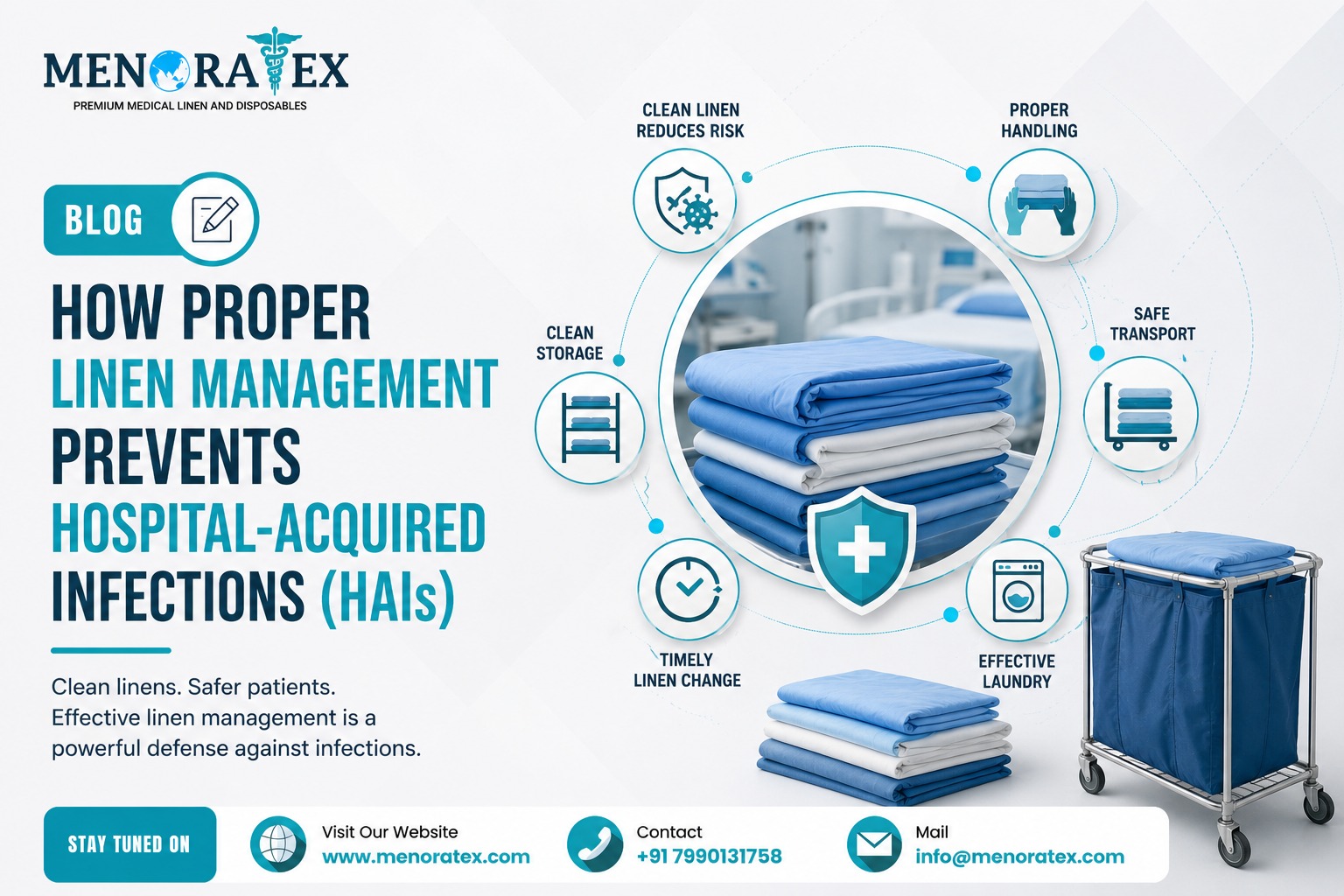
Proper linen management systems ensure:
• Soiled linens are separated immediately
• Clean linens remain protected
• Transportation systems are controlled
• Storage areas meet hygiene standards
Hospitals in the USA often follow strict CDC and infection-prevention protocols regarding healthcare textile handling.
At Menoratex, healthcare fabrics are designed to support safer handling and easier industrial sanitation processes.
Supports Effective Industrial Laundering
Healthcare linens require specialized laundering procedures that eliminate pathogens without damaging the fabric.
Professional hospital laundry systems use:
• High-temperature washing
• Medical-grade disinfectants
• Controlled drying cycles
• Infection-control protocols
Improper laundering can leave dangerous microorganisms alive within fabric fibers.
This is particularly critical in high-humidity regions across Latin America and the UAE, where microbial growth risks are higher.
High-quality healthcare textiles from Menoratex are engineered for repeated industrial washing while maintaining durability and hygiene performance.
Prevents Moisture Retention and Bacterial Growth
Certain fabrics trap moisture longer than others.
Moist environments encourage:
• Bacterial multiplication
• Fungal growth
• Odor buildup
• Textile degradation
Modern hospital linens now use:
• Moisture-management fabrics
• Quick-drying materials
• Breathable blended textiles
These textile technologies help reduce microbial survival rates.
Healthcare institutions increasingly choose Menoratex because of our focus on highperformance healthcare textiles suitable for demanding hospital environments.
Improves Infection-Control Compliance
Healthcare accreditation organizations now closely evaluate hospital linen practices. In the USA, hospitals must comply with strict infection-control guidelines. Similarly, healthcare facilities in the UAE increasingly adopt international healthcare standards to strengthen patient safety.
Proper linen management helps hospitals:
• Maintain compliance
• Improve inspection outcomes
• Reduce infection-related liabilities
• Strengthen patient trust
Reliable textile sourcing partners like Menoratex help healthcare facilities maintain consistent linen quality and hygiene standards.
Minimizes Airborne Contamination Risks
Improper handling of soiled hospital linens can release contaminated particles into the air.
This can expose:
• Patients
• Nurses
• Cleaning staff
• Laundry workers
Best practices include:
• Using closed linen collection systems
• Avoiding shaking contaminated linens
• Proper PPE for handling staff
• Controlled laundry transportation
Healthcare systems across Latin America are increasingly modernizing textile handling procedures to reduce airborne infection risks.
The Importance of Fabric Selection in Infection Prevention
Not all healthcare fabrics perform equally.
The wrong fabric can:
• Retain bacteria
• Degrade quickly
• Trap moisture
• Lose integrity after repeated washing
Hospitals increasingly prefer blended healthcare fabrics because they provide:
• Better durability
• Faster drying
• Improved hygiene maintenance
• Lower operational costs
At Menoratex, we help healthcare buyers select fabrics specifically designed for infection-control environments.
Common Linen Management Mistakes That Increase HAIs
Many healthcare facilities unknowingly create infection risks through poor linen practices.
Common mistakes include:
• Mixing clean and dirty linens
• Overloading washing machines
• Using low-quality fabrics
• Inadequate drying procedures
• Poor storage ventilation
• Delayed linen replacement
• Reusing damaged linens
These mistakes increase contamination risks and reduce textile lifespan.
Why Linen Durability Matters in Infection Control
Worn-out linens create hidden infection risks.
Damaged fabrics may develop:
• Fiber breakdown
• Surface roughness
• Stain retention
• Reduced cleaning efficiency
This allows microorganisms to remain trapped inside textile structures. Durable hospital linens from Menoratex are designed for repeated industrial use while maintaining fabric integrity and hygiene performance.
Hospital Linen Trends in the USA
Healthcare facilities in the USA increasingly prioritize:
• Antimicrobial textiles
• High-durability fabrics
• Automated laundry systems
• Infection-control-focused procurement
• Sustainable healthcare textiles
Hospitals are moving toward integrated linen management systems that combine operational efficiency with patient safety.
Linen Management Priorities in the UAE
The UAE healthcare sector focuses heavily on:
• Premium patient experience
• International healthcare accreditation
• Luxury hospital environments
• High hygiene standards
Because of the region’s climate, breathable and quick-drying healthcare fabrics are especially important. Many UAE healthcare institutions work with global healthcare textile suppliers like Menoratex to improve both hygiene performance and operational efficiency.
Hospital Linen Challenges in Latin America
Healthcare systems across Latin America often face:
• Budget limitations
• High patient turnover
• Aging laundry infrastructure
• Humid climate conditions
This increases demand for:
• Cost-effective healthcare linens
• Durable blended fabrics
• Easy-maintenance textiles
Why Hospitals Trust Menoratex
Our hospital linen solutions are developed to support:
• Infection prevention
• Long-term durability
• Industrial laundry performance
• Patient comfort
• International healthcare standards
We work with healthcare buyers across the USA, UAE, and Latin America to deliver healthcare textile solutions that improve operational efficiency and patient safety.
Final Thoughts
Hospital-acquired infections remain a major healthcare challenge worldwide. However, many hospitals underestimate the direct role that hospital linens play in infection prevention.
Proper linen management helps healthcare facilities:
• Reduce contamination risks
• Improve hygiene compliance
• Enhance patient safety
• Lower long-term operational costs
From textile selection and industrial laundering to storage and transportation, every stage of linen management affects infection-control performance.
As healthcare systems continue raising hygiene standards, trusted healthcare textile partners like Menoratex are becoming increasingly important in supporting safer hospital environments.
Investing in proper hospital linen management is not optional anymore — it is a critical component of modern healthcare infection prevention.
Frequently Asked Questions (FAQs)
How do hospital linens spread infections?
Hospital linens can spread infections when contaminated textiles are improperly handled, washed, stored, or reused.
Why is hospital linen management important?
Proper linen management reduces cross-contamination, improves hygiene standards, and helps prevent hospital-acquired infections.
Which fabrics are best for infection prevention?
Blended healthcare fabrics with moisture-management and durability features are commonly preferred for infection-control environments.
How often should hospital linens be replaced?
Replacement depends on fabric quality, washing frequency, and visible wear. Damaged linens should be replaced immediately.
Why choose Menoratex healthcare textiles?
Menoratex provides durable, hygienic, and healthcare-focused textile solutions designed for hospitals and healthcare facilities across global markets.
Contact MenoraTex for Premium Hospital Linens & Healthcare Textile Solutions
Looking for high-quality hospital linens that support patient comfort, infection prevention, and operational efficiency?
MenoraTex is a trusted manufacturer and supplier of premium healthcare textiles, serving hospitals, clinics, nursing homes, long-term care facilities, and healthcare distributors worldwide. Our product range includes hospital bed sheets, patient gowns, pillowcases, blankets, surgical textiles, and customized medical linen solutions designed to meet the demanding standards of modern healthcare environments.
Whether you need bulk hospital linen supplies or tailored textile solutions for your healthcare facility, our team is ready to assist.
Contact Us Today
🌐 Website: www.menoratex.com
📧 Email: info@menoratex.com
📞 Phone: +91 79901 31758
Partner with MenoraTex to enhance patient care, support infection control initiatives, and ensure reliable access to premium medical linens and healthcare textile products.