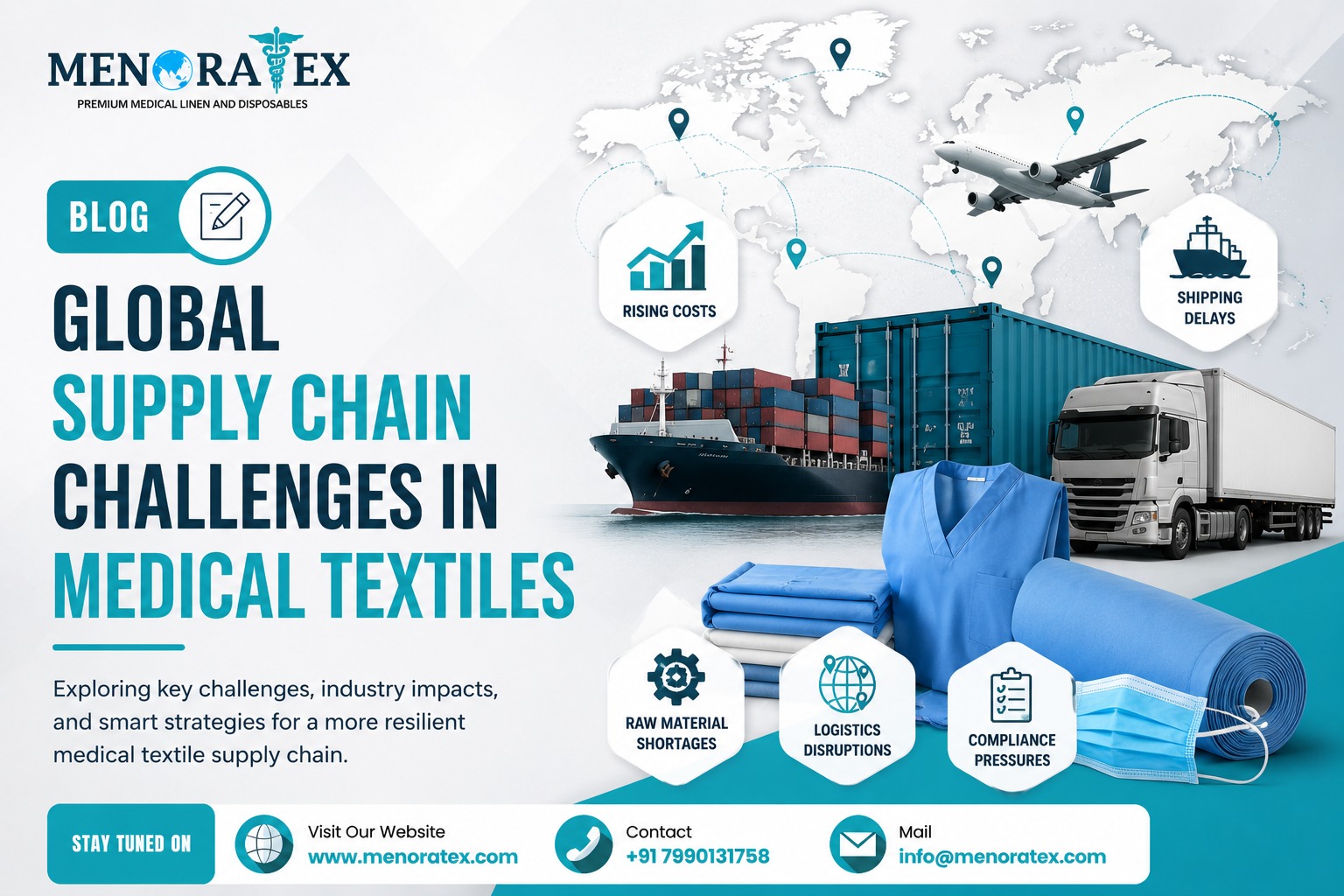
The global healthcare industry depends heavily on reliable medical textile supply chains. From hospital bed linens and surgical gowns to PPE products and reusable healthcare fabrics, medical textiles are essential for patient safety, infection control, and healthcare operations.
However, over the last few years, global supply chains have faced unprecedented disruptions.
Healthcare facilities across the USA, UAE, and Latin America continue dealing with:
• Raw material shortages
• Shipping delays
• Rising transportation costs
• Manufacturing bottlenecks
• Geopolitical instability
• Inflationary pressures
These challenges have significantly impacted the medical textile industry.
At Menoratex, we work closely with healthcare buyers, distributors, and institutional procurement teams that increasingly demand stable, high-quality, and scalable healthcare textile solutions despite global market disruptions.
This article explores the biggest global supply chain challenges affecting medical textiles and how healthcare organizations can reduce procurement risks in an increasingly uncertain global environment.
Why Medical Textile Supply Chains Matter
Medical textiles are critical products used daily in:
• Hospitals
• Clinics
• Surgical centers
• Long-term care facilities
• Emergency response systems
• Government healthcare programs
Unlike conventional textiles, healthcare fabrics must meet strict standards for:
• Hygiene
• Durability
• Infection control
• Patient safety
• Industrial laundering performance
Any disruption in medical textile supply chains can directly affect hospital operations and patient care.
This is why healthcare institutions increasingly prioritize long-term supplier reliability when selecting partners like Menoratex.
Major Global Supply Chain Challenges in Medical Textiles
Raw Material Price Volatility
One of the biggest challenges in medical textiles is fluctuating raw material costs.
Healthcare textile production depends heavily on:
• Cotton
• Polyester
• Synthetic fibers
• Chemical coatings
• Packaging materials
Global inflation and energy market instability have caused sharp increases in material costs.
For example:
• Cotton prices often fluctuate because of climate conditions and agricultural supply issues.
• Synthetic fibers depend heavily on petroleum markets.
• Chemical treatment costs have risen due to stricter environmental regulations.
These pricing fluctuations create major procurement challenges for hospitals and distributors.
At Menoratex, maintaining stable sourcing relationships helps reduce supply instability for healthcare buyers.
Shipping and Freight Disruptions
Global logistics disruptions continue affecting healthcare textile deliveries worldwide. Major supply chain problems include:
• Port congestion
• Container shortages
• Rising freight costs
• Customs delays
• Geopolitical shipping restrictions
Healthcare buyers in the USA and Latin America have experienced extended lead times for hospital linens, PPE products, and surgical textiles.
The UAE, as a global trade hub, also faces pressure from fluctuating international freight markets.
Reliable logistics planning has become a competitive advantage for healthcare textile suppliers like Menoratex.
Increased Demand for Healthcare Textiles
The global pandemic permanently changed healthcare procurement patterns.
Hospitals now maintain larger inventories of:
• Surgical gowns
• Protective textiles
• Hospital bed linens
• Isolation room fabrics
• Reusable healthcare garments
This increased demand places constant pressure on textile manufacturers.
Healthcare systems in the USA especially now prioritize:
• Supply continuity
• Backup sourcing
• Long-term procurement contracts
At Menoratex, we continue seeing strong growth in demand for durable and scalable healthcare textile solutions.
Dependence on Limited Manufacturing Regions
A major weakness in the global medical textile industry is overdependence on a small number of manufacturing regions.
When disruptions occur due to:
• Political instability
• Labor shortages
• Energy crises
• Natural disasters
• Trade restrictions
global healthcare supply chains become vulnerable. Healthcare institutions are increasingly diversifying suppliers to reduce dependency risks.
This shift creates opportunities for trusted international healthcare textile brands like Menoratex that can provide consistent supply reliability.
Rising Compliance and Quality Standards
Healthcare regulations continue becoming stricter worldwide.
Medical textiles must now meet advanced requirements for:
• Infection control
• Fabric durability
• Chemical safety
• Sustainability
• Antimicrobial performance
Hospitals in the USA often require compliance with strict healthcare textile standards.
Similarly, healthcare facilities in the UAE increasingly adopt international accreditation systems that demand higher textile quality.
Meeting these standards while controlling costs remains a major challenge for textile manufacturers.
Labor Shortages in Textile Manufacturing
Global textile manufacturing faces labor shortages caused by:
• Aging workforce demographics
• Wage inflation
• Skilled labor gaps
• Factory closures
• Migration shifts
This affects production capacity and delivery timelines. Latin American healthcare distributors particularly face sourcing difficulties when global manufacturing output declines.
Healthcare buyers now prioritize suppliers with stable operational capacity and scalable production systems.
Sustainability Pressures in Healthcare Textiles
Sustainability is becoming a major procurement factor in healthcare.
Hospitals increasingly seek:
• Eco-friendly hospital linens
• Sustainable healthcare textiles
• Water-efficient fabric production
• Reusable medical textiles
• Lower carbon supply chains
However, balancing sustainability with:
• affordability,
• durability,
• and infection-control performance
remains a complex challenge.
At Menoratex, healthcare textile innovation increasingly focuses on combining operational efficiency with sustainability goals.
How Supply Chain Disruptions Affect Hospitals
When healthcare textile supply chains fail, hospitals may face:
• Delayed linen deliveries
• Shortages of critical textiles
• Increased procurement costs
• Infection-control risks
• Reduced patient satisfaction
• Operational inefficiencies
Poor-quality substitute products can also create:
• Faster textile wear
• Higher replacement costs
• Poor industrial laundry performance
This is why hospitals increasingly build strategic partnerships with reliable suppliers like Menoratex.
Medical Textile Trends in the USA
Healthcare systems in the USA are responding to supply chain challenges by:
• Increasing domestic sourcing
• Diversifying suppliers
• Expanding inventory reserves
• Prioritizing reusable textiles
• Strengthening procurement forecasting
American hospitals increasingly value healthcare textile partners that offer:
• consistent quality,
• scalable supply,
• and long-term reliability
Healthcare Textile Demand in the UAE
The UAE healthcare sector emphasizes:
• Premium healthcare infrastructure
• International accreditation standards
• Fast procurement cycles
• High infection-control standards
Healthcare buyers in the UAE increasingly seek:
• durable blended fabrics,
• quick delivery systems,
• and premium healthcare textile suppliers.
Menoratex supports institutional healthcare buyers with scalable medical textile solutions designed for high-performance healthcare environments.
Supply Chain Challenges in Latin America
Healthcare systems across Latin America often face:
• Import dependency
• Currency fluctuations
• Freight cost sensitivity
• Procurement budget limitations
• Infrastructure challenges
As a result, hospitals increasingly prioritize:
• long-lasting healthcare textiles,
• cost-efficient procurement,
• and reliable global suppliers.
Blended fabrics and reusable medical textiles are becoming more common due to their long-term cost advantages.
Strategies Hospitals Can Use to Reduce Supply Chain Risks
Diversify Suppliers
Relying on a single supplier increases risk exposure.
Prioritize Durable Textiles
Long-lasting fabrics reduce replacement frequency.
Build Inventory Buffers
Strategic stock management improves resilience.
Choose Reusable Healthcare Textiles
Reusable textiles reduce dependency on disposable supply chains.
Partner with Experienced Suppliers
Reliable suppliers like Menoratex help healthcare organizations maintain procurement stability during global disruptions.
Why Menoratex Is Positioned for Global Healthcare Textile Demand
At Menoratex, we understand that healthcare textile reliability is critical for modern healthcare systems.
Our focus includes:
• Durable healthcare fabrics
• Industrial laundry performance
• Scalable production support
• Infection-control-focused textiles
• Long-term supply consistency
We support healthcare buyers across the USA, UAE, and Latin America with solutions designed for evolving global healthcare demands.
Final Thoughts
Global supply chain challenges are reshaping the medical textile industry.
Healthcare institutions can no longer focus only on price when sourcing medical textiles. Today, reliability, durability, compliance, and supply continuity are equally important.
From raw material volatility and shipping disruptions to rising healthcare standards and sustainability pressures, the healthcare textile sector faces growing complexity.
Hospitals that invest in strategic supplier partnerships and durable healthcare textile solutions will be better positioned to maintain operational stability.
As healthcare systems continue evolving worldwide, trusted partners like Menoratex play an increasingly important role in supporting resilient, high-performance healthcare textile supply chains.
Frequently Asked Questions (FAQs)
Why are medical textile supply chains important?
Medical textile supply chains are essential because hospitals rely on continuous access to hygienic healthcare fabrics for patient care and infection control.
What causes disruptions in healthcare textile supply chains?
Major causes include raw material shortages, shipping delays, labor shortages, geopolitical instability, and rising global demand.
Why are reusable medical textiles becoming more popular?
Reusable healthcare textiles help reduce long-term costs, improve sustainability, and strengthen supply chain resilience.
How do supply chain disruptions affect hospitals?
Disruptions can lead to product shortages, delayed deliveries, increased costs, and operational inefficiencies.
Why choose Menoratex healthcare textiles?
Menoratex provides durable, scalable, and healthcare-focused textile solutions designed to meet the demands of global healthcare systems.
Contact Us
Have questions about our medical textiles, healthcare linens, or disposable medical products? The MenoraTex team is here to help.
Whether you’re looking for product information, bulk orders, custom solutions, or partnership opportunities, we’re committed to providing prompt and professional assistance. Our experts can help you find the right medical textile products to meet your healthcare, hospital, or institutional requirements.
Get in Touch
📞 Phone: +91 7990131758
📧 Email: info@menoratex.com
🌐 Website: www.menoratex.com
We value every inquiry and strive to respond as quickly as possible. Contact us today to learn more about our premium medical linens and disposable healthcare solutions.
MenoraTex – Your Trusted Partner for Quality Medical Textiles and Healthcare Supplies.