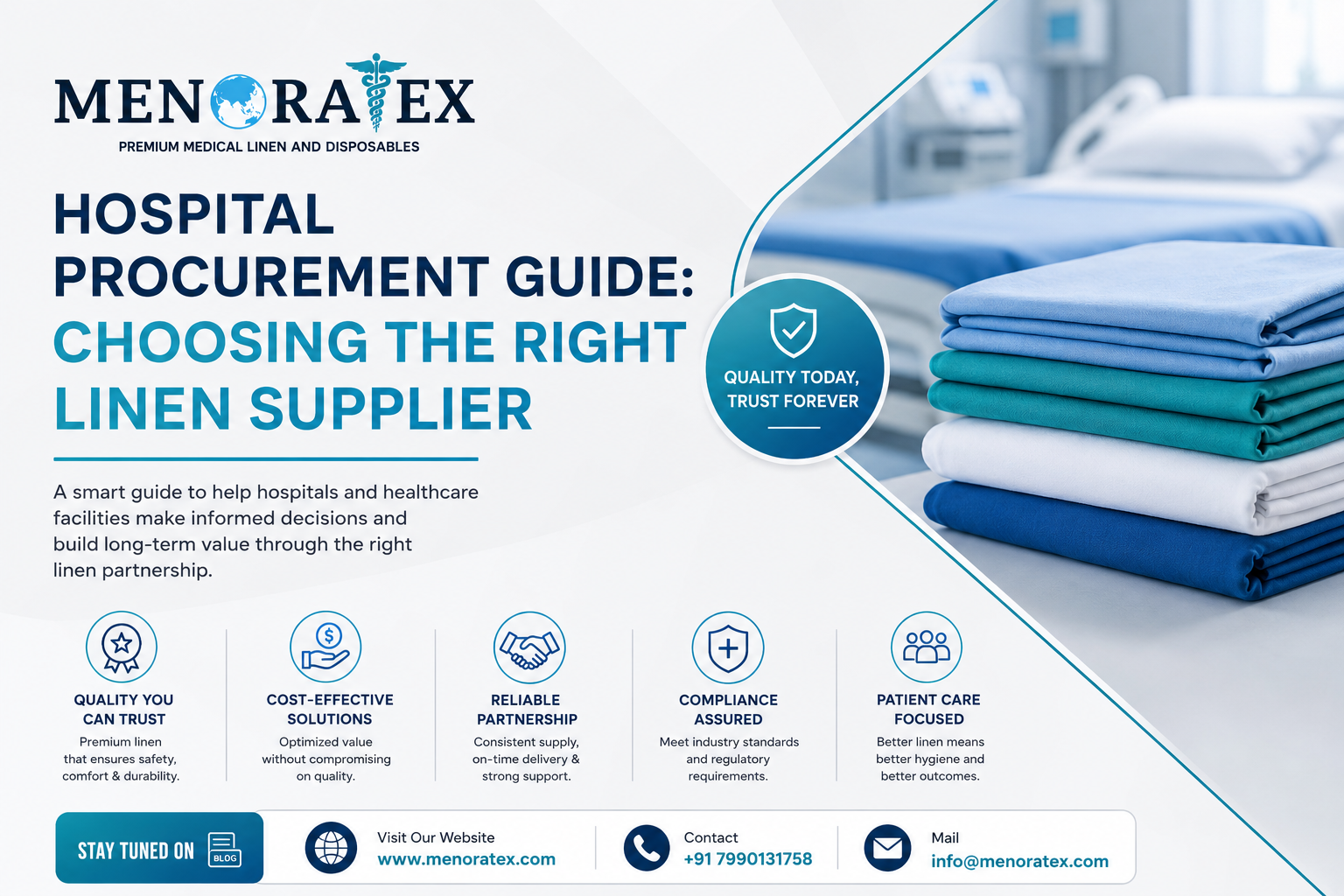
For hospital procurement officers, the responsibility of sourcing medical linens is far more than a simple clerical task—it is a critical pillar of hospital operations. From high-performance surgical drapes to dailyuse patient bed linens, the textiles you choose impact infection control, patient comfort, and the overall efficiency of your facility’s laundry and supply chain systems. In 2026, the complexity of global logistics, combined with the stringent regulatory environment in the U.S., makes choosing the right partner more important than ever. This guide provides a strategic, long-form roadmap to navigating the medical textile market.
The Critical Importance of Medical Linen Sourcing
Hospital linens are not merely commodities; they are vital components of the clinical environment. Improperly sourced linens can lead to increased rates of hospital-acquired infections (HAIs), operational bottlenecks in laundry, and unnecessary budgetary strain due to poor textile longevity. Understanding the lifecycle of a medical textile—from raw fiber selection to end-of-life disposal—is the first step for any procurement professional looking to add value to their institution.
When we talk about “procurement,” we are talking about risk management. Every garment that enters a sterile field carries the weight of the patient’s safety. Therefore, the supplier you choose is essentially an extension of your hospital’s clinical staff.
Defining Your Hospital’s Requirements
Before initiating a search, you must define the facility’s unique needs through a comprehensive internal audit. Ask yourself these foundational questions:
- Infection Control Standards: Does your facility require AAMI-compliant barrier protection for high-risk surgeries, or are you focused on high-durability fabrics for general ward use?
- Volume and Frequency: What is your daily linen throughput? Do you operate your own laundry facility, or do you outsource to a third party?
- Sustainability Goals: Are you mandated to meet specific ESG targets, such as reducing water consumption or textile waste?
- Budgetary Constraints vs. TCO: Are you looking for the lowest upfront cost, or are you prioritizing the Total Cost of Ownership (TCO) based on how many wash cycles a fabric can survive?
The Deep Dive into Material Science and Performance
Procurement officers must be amateur material scientists. Not all polyester-cotton blends are created equal. The weaving techniques, the thread count, and the chemical treatments (such as antimicrobial finishes or fluid-repellent coatings) significantly impact the performance of the fabric.
In high-fluid environments like the operating room, understanding the difference between woven and nonwoven materials is essential. Woven materials are excellent for comfort and durability, but non-woven materials (like SMS) are superior for barrier protection. A sophisticated procurement strategy understands when to use which material to balance cost, comfort, and clinical outcomes.
Evaluating Potential Suppliers: The Five-Pillar Framework
The marketplace is flooded with vendors, but true partners are rare. When vetting suppliers, focus on these five core pillars:
- Regulatory Compliance: Does the supplier have ISO 13485 certification? This is non-negotiable for medical textiles. Can they provide validated AAMI lab reports for their surgical products?
- Supply Chain Transparency: Is the manufacturer vertically integrated? Suppliers that own the entire process from raw material to finished product—like the model favored by industry leaders— offer vastly superior quality control and price stability.
- Logistics and Safety Stock: In the current global climate, can they demonstrate a proven ability to manage buffer stocks? A partner who can hold inventory locally (or in regional warehouses) is worth their weight in gold during global supply chain disruptions.
- Environmental Stewardship: Review their sustainability certifications. Do they utilize Zero Liquid Discharge (ZLD) technologies in their processing? This is no longer a “nice-to-have” but a requirement for modern U.S. health systems.
- Communication and Service: Do they offer a dedicated point of contact who understands the U.S. healthcare regulatory environment and is available during your working hours?
The Role of Strategic Partners: Introducing Menoratex
In the highly technical field of hospital textile procurement, the value of a partner who understands the “why” behind the specification cannot be overstated. Menoratex (https://menoratex.com/) has positioned itself as more than just a supplier; they act as a strategic partner for U.S. hospital networks. They recognize that their products are not just pieces of fabric—they are essential tools for medical professionals.
Menoratex bridges the gap between Indian manufacturing precision and the rigorous clinical needs of the American healthcare sector. By prioritizing AAMI compliance and sustainable production, they ensure that hospitals do not have to choose between quality and operational efficiency. Whether you are scaling up your linen procurement for a large network or seeking specialized surgical textiles, Menoratex provides the consistency, transparency, and technical oversight required to optimize your supply chain from end to end.
Managing the Procurement Lifecycle
A successful procurement strategy is not a “set it and forget it” task. Once you have chosen your supplier, focus on:
- Regular Quality Audits: Periodically test batches of linens in your own laundry cycles to ensure they retain their integrity.
- Cross-Departmental Feedback Loops: Create a system where clinical staff (nurses, surgeons) can provide feedback on the comfort and performance of the linens. Their daily experience is the ultimate metric.
- Predictive Analytics: Use historical data to manage your linen usage and reduce the risk of stockouts during peak seasons (e.g., flu season or high-elective surgery periods).
Common Procurement Pitfalls to Avoid
Avoid the “Race to the Bottom” on price. Low-cost, low-quality linens often fail prematurely, leading to a higher Total Cost of Ownership (TCO). Instead, focus on the durability and performance metrics that ensure the linens last through more wash/dry cycles. Additionally, ignore regional suppliers without global • • • import experience; the complexity of customs and FDA compliance requires a partner with a proven history of shipping into the U.S. market successfully.
The Impact of ESG and Sustainability in Healthcare
As the U.S. healthcare system moves toward broader sustainability goals, the textile supply chain is under intense scrutiny. Leading providers are now seeking gowns and caps that not only protect the patient but also reduce the ecological footprint. Menoratex has invested in production practices that minimize water waste and promote the use of responsibly sourced materials, aligning perfectly with the environmental, social, and governance (ESG) mandates of leading American health systems.
Conclusion: Building a Resilient Future
Procurement is the backbone of the hospital. By implementing a structured, value-based approach to sourcing your linen suppliers, you can drastically improve clinical outcomes and operational stability. Focus on partnerships that prioritize compliance, sustainability, and transparency. By partnering with experts like Menoratex, you ensure that your hospital remains well-equipped to face the challenges of the modern healthcare landscape.
Ready to Streamline Your Linen Procurement?
If you are a procurement manager looking to secure high-quality, compliant surgical caps and gowns, reach out to the experts at Menoratex today. Visit https://menoratex.com/ to discuss your specific requirements and receive a detailed material analysis and safety consultation.