Introduction
A four-year-old patient doesn’t care about thread count. She cares about whether the sheet under her feels soft, whether the blanket smells clean, and whether the fabric itches against a freshly placed IV line.
That’s the real test pediatric linens have to pass, and it’s a different test than the one adult hospital bedding faces.
Procurement teams sourcing for children’s hospitals and pediatric wards are working with a narrower margin for error. The patients are smaller, their skin is more sensitive, their immune systems are still developing, and many of them will spend their memories of “the hospital” wrapped in whatever fabric is on the bed. Get the sourcing wrong, and you’re not just dealing with a comfort complaint — you’re dealing with skin irritation reports, infection control flags, or a bedding recall.
This guide walks through what separates pediatric-grade hospital linens from standard adult linens, which safety certifications actually matter, how comfort and durability standards intersect, and how to build a sourcing checklist that holds up to both clinical scrutiny and budget review.
Why Pediatric Hospital Linens Need Their Own Standard
Adult hospital linen programs are built around durability, industrial laundering survival, and cost-per-use. Those factors still matter for pediatric wards, but they sit behind a different priority: the physiology of the patient wearing them.
Children’s skin is thinner and more permeable than adult skin, which means it absorbs chemical residues — dyes, finishing agents, flame retardant chemicals — more readily. Pediatric and neonatal patients also spend more skin-to-fabric contact time than most adult patients, particularly in NICUs and long-stay pediatric oncology units, where a child may be in the same bed for weeks.
Add in the sensory piece. Pediatric care teams increasingly treat comfort as a clinical variable, not a hospitality afterthought. Softer, less clinical-feeling linens are tied to lower reported pain scores and better cooperation during procedures, according to pediatric nursing research on comfort-focused care environments.
So a pediatric linen program has to satisfy three overlapping requirements at once: it must be chemically safe for developing skin, physically comfortable enough to reduce distress, and durable enough to survive the aggressive laundering cycles infection control demands.
Material Safety Standards Buyers Should Verify
OEKO-TEX Standard 100 Certification
This is the certification most sourcing teams lean on first, and for good reason. OEKO-TEX Standard 100 tests finished textile products for harmful substances — including certain dyes, formaldehyde, heavy metals, and pesticide residues — against limits that get stricter for products intended for babies and small children (Product Class I).
When you’re sourcing pediatric linens, ask suppliers which OEKO-TEX product class their fabric is certified under. A general Class II or III certification (intended for adult apparel with skin contact) is not the same guarantee as Class I.
CPSIA Compliance for Lead and Phthalates
The Consumer Product Safety Improvement Act sets limits on lead content and phthalates in products marketed to children under 12. While most hospital linen isn’t classified as a “children’s product” in the strict regulatory sense, many pediatric hospitals now hold suppliers to CPSIA-equivalent limits voluntarily, especially for printed or dyed items like character-pattern pillowcases and gowns.
Ask for third-party lab reports confirming lead and phthalate levels, not just a supplier’s written assurance.
Flame Retardant Chemistry — Read the Fine Print
Flame resistance is non-negotiable in institutional bedding, but how that resistance is achieved matters enormously for pediatric use. Older flame-retardant chemistries relied on halogenated compounds that have since been linked to hormone disruption concerns in developing children, and many have been phased out of children’s products under state and federal restrictions.
Best practice: favor linens that achieve flame resistance through inherently flame-resistant fiber construction (like certain FR-treated cotton-poly blends engineered for the fiber itself) rather than topical chemical coatings that can leach or wash out unevenly. Confirm compliance with NFPA 701 for institutional textiles and, where applicable, the flammability standards referenced by the Joint Commission’s Environment of Care requirements.
Formaldehyde-Free and Low-VOC Finishing
Anti-wrinkle and easy-care finishes often use formaldehyde-releasing agents. For pediatric linens, look for suppliers who use formaldehyde-free finishing processes — this is usually disclosed in OEKO-TEX documentation or available on request.
Dye and Print Safety
Printed pediatric linens — think cartoon-patterned pillowcases in a children’s ward — carry extra risk because pigment adhesion chemicals sit directly on the surface a child’s skin and mouth may contact. Ask specifically about azo-dye-free printing and water-based (rather than plastisol or solvent-based) pigment systems.
Comfort Standards: What “Soft Enough” Actually Means
Comfort in pediatric linens isn’t a marketing word — it’s measurable, and buyers should be asking for numbers, not adjectives.
| Comfort Factor | What to Look For | Why It Matters for Pediatric Patients |
|---|---|---|
| Fabric weight (GSM) | 130–180 GSM for sheets; 200–280 GSM for blankets | Lighter weight sheets reduce heat retention and feel less restrictive on smaller bodies |
| Weave | Percale or combed cotton-poly blends | Smoother hand-feel, fewer loose fibers that can irritate sensitive or post-surgical skin |
| Thread finish | Combed, not carded, yarns | Removes shorter fibers that cause pilling and scratchiness |
| Hem and seam construction | Flat-felled or bound seams | Reduces pressure points and chafing, especially important for NICU and immobile patients |
| Elastic/fitted components | Soft, non-latex elastic | Avoids allergic reactions and reduces skin marking on longer-stay patients |
A useful gut-check for buyers: request a physical swatch and have it handled by clinical staff before signing a purchase order. Fabric that reads well on a spec sheet doesn’t always feel acceptable against a child’s arm.
Temperature Regulation Matters More for Kids
Children regulate body temperature less efficiently than adults, particularly infants and toddlers. Breathable, moisture-wicking blends (often cotton-poly at a 60/40 or 55/45 ratio) help prevent overheating without sacrificing the durability needed for industrial laundering. Purely synthetic microfiber sheets, while cheap and wrinkle-resistant, tend to trap heat and are worth avoiding for extended pediatric stays.
Step-by-Step: Building a Pediatric Linen Sourcing Checklist
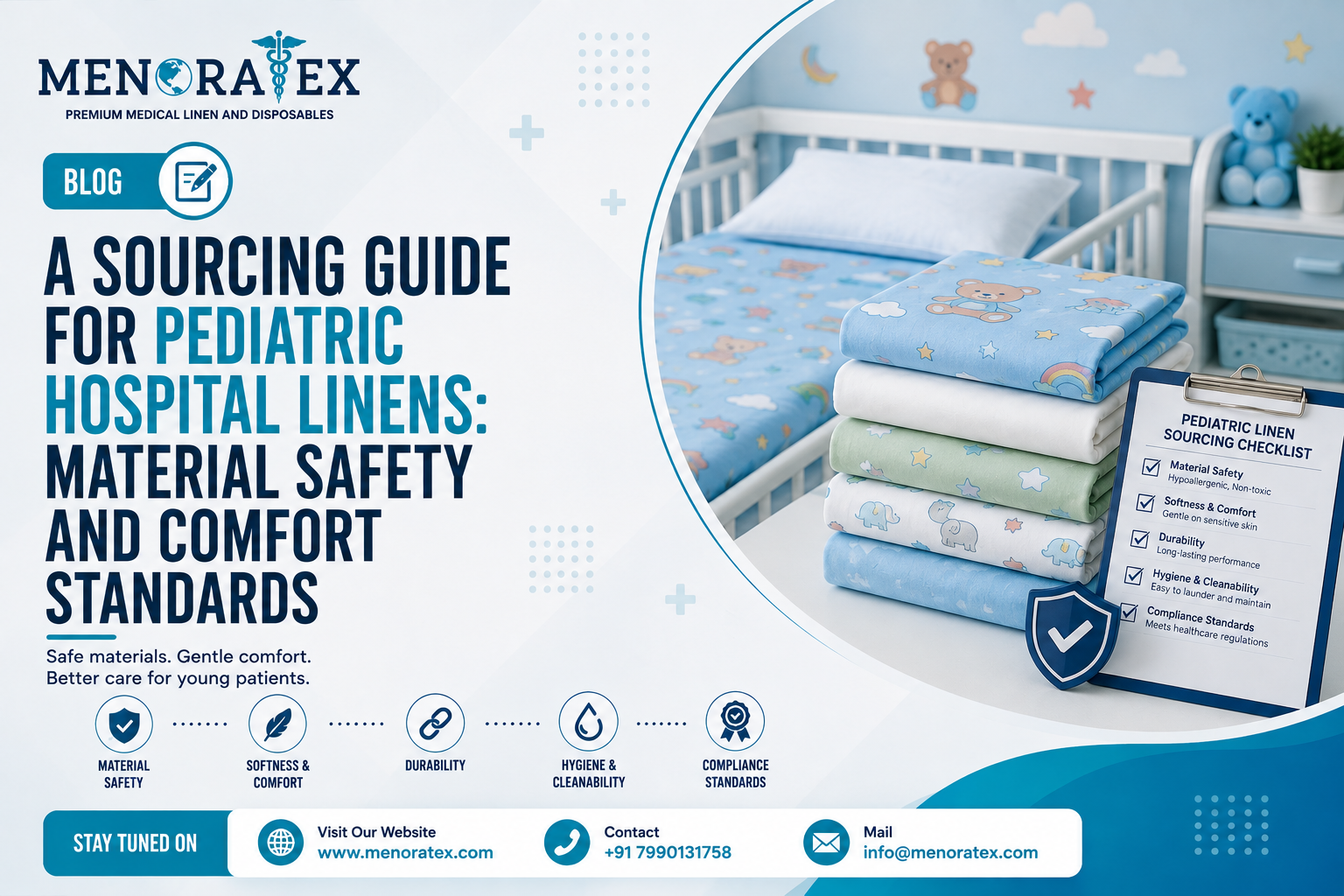
- Define the use case first. NICU, general pediatric ward, pediatric oncology, and pediatric ICU each have different durability and softness priorities. A NICU isolette liner has different needs than a general pediatric ward top sheet.
- Request full certification documentation up front. Ask for OEKO-TEX Standard 100 certificates (with product class specified), third-party CPSIA-equivalent lab reports, and flame-resistance test data referencing NFPA 701, before requesting pricing. Suppliers who can’t produce this quickly are usually not equipped for pediatric-grade production.
- Order physical samples, not photos. Get actual swatches of sheets, pillowcases, and blankets. Run them through your facility’s actual laundering protocol once before approving a bulk order — some fabrics that feel soft new degrade badly after a handful of industrial wash cycles.
- Involve infection prevention staff early. Pediatric-friendly softness sometimes conflicts with infection control preferences for tighter, more launderable weaves. Loop in your infection control team before finalizing fabric choice, not after.
- Confirm colorfastness and shrinkage rates. Ask for shrinkage percentage after industrial wash-and-dry cycles (aim for under 3%) and colorfastness ratings, especially for printed patterns that appeal to pediatric patients.
- Negotiate minimum order quantities against actual usage data. Pediatric units typically have lower linen turnover volume than adult med-surg floors — don’t let a supplier’s standard MOQ push you into overstocking specialty items with shorter shelf appeal (seasonal or character-print designs).
- Set a re-certification cadence. Textile regulations and supplier finishing processes change. Build a contract clause requiring updated certification documentation annually, not just at initial onboarding.
Common Mistakes Buyers Make
- Treating pediatric linens as a smaller version of adult linens. Downsizing an adult product line without re-evaluating the chemical finishing and softness specs is one of the most common — and most avoidable — sourcing errors.
- Accepting a general OEKO-TEX certificate without checking the product class. A Class III certificate doesn’t carry the same guarantees as Class I, which is the tier meant for infants and small children.
- Skipping the wash-cycle sample test. Fabric performance before laundering tells you almost nothing about how it will feel or look after fifty industrial wash cycles.
- Overlooking print and dye safety on decorative items. Character-pattern pillowcases and blankets are often sourced from a different supplier line than plain linens, and that line doesn’t always carry the same safety documentation.
- Ignoring seam and closure hardware. Snaps, zippers, and drawstrings on pediatric gowns pose choking and entrapment risks that adult gowns don’t need to account for.
Best Practices for Long-Term Pediatric Linen Programs
- Standardize on a single validated supplier per linen category rather than mixing sources, which makes certification tracking and quality consistency far easier to manage.
- Rotate stock on a “first in, first out” basis so that comfort-degrading wear (thinning, pilling) doesn’t concentrate in older batches used disproportionately on longer-stay patients.
- Separate NICU and general pediatric inventory even if the fabric specs overlap, so laundering protocols and infection control tracking stay clean.
- Build softness testing into your quality assurance rounds, not just your initial procurement decision — fabric can drift in feel across production runs even from the same supplier.
Expert Tips from Procurement Professionals
“The certification paperwork tells you what’s legally allowed. The wash-cycle sample tells you what’s actually going to hold up on your floor. Ask for both, and don’t skip the second one just because the first one looks clean.”
- Request lot-specific certification, not just a general supplier certificate, especially for high-volume reorders — production lots can vary.
- Build a small “comfort panel” of nursing staff who physically test new linen samples before large orders are approved; frontline staff often catch texture and fit issues buyers miss on paper.
- When budgets are tight, prioritize certification spend on items with the most skin contact time (fitted sheets, pillowcases, gowns) over lower-contact items like top blankets.
Cost Considerations
Pediatric-grade linens typically run 10–25% higher per unit than standard adult hospital linens, largely due to certified fiber sourcing, tighter quality control, and smaller production runs for specialty sizing.
| Item | Typical Cost Range (USD, per unit, bulk order) | Notes |
|---|---|---|
| Pediatric fitted sheet (crib/toddler size) | $4.50 – $8.00 | Higher end for OEKO-TEX Class I certified cotton-poly blends |
| Pediatric pillowcase | $1.75 – $3.50 | Printed/character designs sit at the higher end |
| Thermal blanket (child size) | $9.00 – $16.00 | Flame-retardant fiber construction costs more than topical treatment |
| Pediatric patient gown | $6.00 – $12.00 | Snap-closure, non-choke-hazard hardware adds cost |
Buyers can offset the premium by negotiating annual supply contracts, which typically bring per-unit costs down 8–15% versus spot ordering, and by right-sizing minimum order quantities to actual pediatric census data rather than standard adult-floor MOQs.
Maintenance and Long-Term Recommendations
- Follow supplier-specified wash temperature limits closely. Pediatric-grade FR fiber blends can lose flame-resistant properties if washed above recommended thresholds over time.
- Track fabric lifespan by wash-cycle count, not calendar age. A pediatric sheet washed daily wears out faster than the same sheet in lower-turnover storage stock.
- Retire decorative/printed items sooner than plain linens. Print integrity (and the safety of the pigment layer) typically degrades before the base fabric does.
- Schedule an annual supplier documentation review to confirm certifications haven’t lapsed and that finishing chemistry hasn’t changed without notice.
Frequently Asked Questions
What certifications should pediatric hospital linens have?
At minimum, look for OEKO-TEX Standard 100 certification (ideally Product Class I, the tier for infants and small children), documented flame-resistance testing referencing NFPA 701 for institutional textiles, and lab-verified low levels of lead, phthalates, and formaldehyde.
Are flame-retardant chemicals in hospital linens safe for children?
Fiber-inherent flame resistance, built into the yarn itself, is generally considered a safer approach than topical chemical coatings, some of which have raised concerns for developing children. Ask suppliers which method they use and request supporting test data.
What GSM is best for pediatric hospital sheets?
Most pediatric sheeting performs well in the 130–180 GSM range — light enough to avoid overheating small patients, while still holding up to institutional laundering.
How often should pediatric hospital linens be replaced?
Replacement schedules should be tracked by wash-cycle count rather than a fixed calendar date, since laundering frequency (and therefore wear) varies significantly between high-turnover general wards and lower-turnover specialty units.
Do printed or character-pattern linens carry different safety risks?
Yes. Printed items involve additional pigment and adhesion chemistry, so ask specifically about azo-dye-free, water-based printing processes and request separate documentation from plain linen certifications.
Is cotton or a cotton-blend better for pediatric linens?
Cotton-poly blends (commonly 55/45 or 60/40) tend to offer the best balance of softness, breathability, shrink resistance, and durability for institutional laundering, while 100% cotton offers superior softness but shrinks and wears faster under industrial wash conditions.
How much more do pediatric-grade linens cost compared to standard hospital linens?
Expect roughly a 10–25% premium over standard adult linens, largely driven by certified fiber sourcing, tighter quality control, and smaller specialty production runs.
Should NICU linens meet a different standard than general pediatric ward linens?
Yes. NICU linens typically require even softer, lower-friction fabric given fragile skin and longer average contact time, along with stricter chemical residue limits given prolonged, near-constant skin contact for premature infants.
What’s the biggest mistake hospitals make when sourcing pediatric linens?
Treating pediatric linens as a scaled-down version of adult linens instead of re-evaluating chemical finishing, softness, and safety hardware from the ground up for a pediatric-specific use case.
Can hospitals request lot-specific certification instead of a general supplier certificate?
Yes, and it’s recommended for high-volume reorders — production lots can vary in fiber source or finishing chemistry even from an established, generally-certified supplier.
Conclusion
Sourcing pediatric hospital linens well means holding two priorities at once: clinical-grade safety and genuine physical comfort. Certifications like OEKO-TEX Standard 100 and documented flame-resistance testing give you the compliance floor, but they don’t replace a hands-on wash-cycle sample test or input from the nurses actually changing these beds every day.
Build your checklist around the patient, not the purchase order — verify chemical safety first, test comfort second, and confirm durability last, because a linen that fails any one of those three tests isn’t ready for a pediatric floor, no matter how competitive the price looks on paper.
Call to Action
Sourcing pediatric-grade hospital linens for your facility? Menoratex supplies OEKO-TEX certified, flame-resistant hospital bed sheets, pillow covers, blankets, and gowns built for pediatric and general healthcare use, backed by full compliance documentation and sample testing support.
Contact Us
Menoratex (a brand of Radhe Overseas)
Email: info@menoratex.com | kunalsharma888@gmail.com
Phone: +91 7990131758
Request a quote: menoratex.com/contact-us