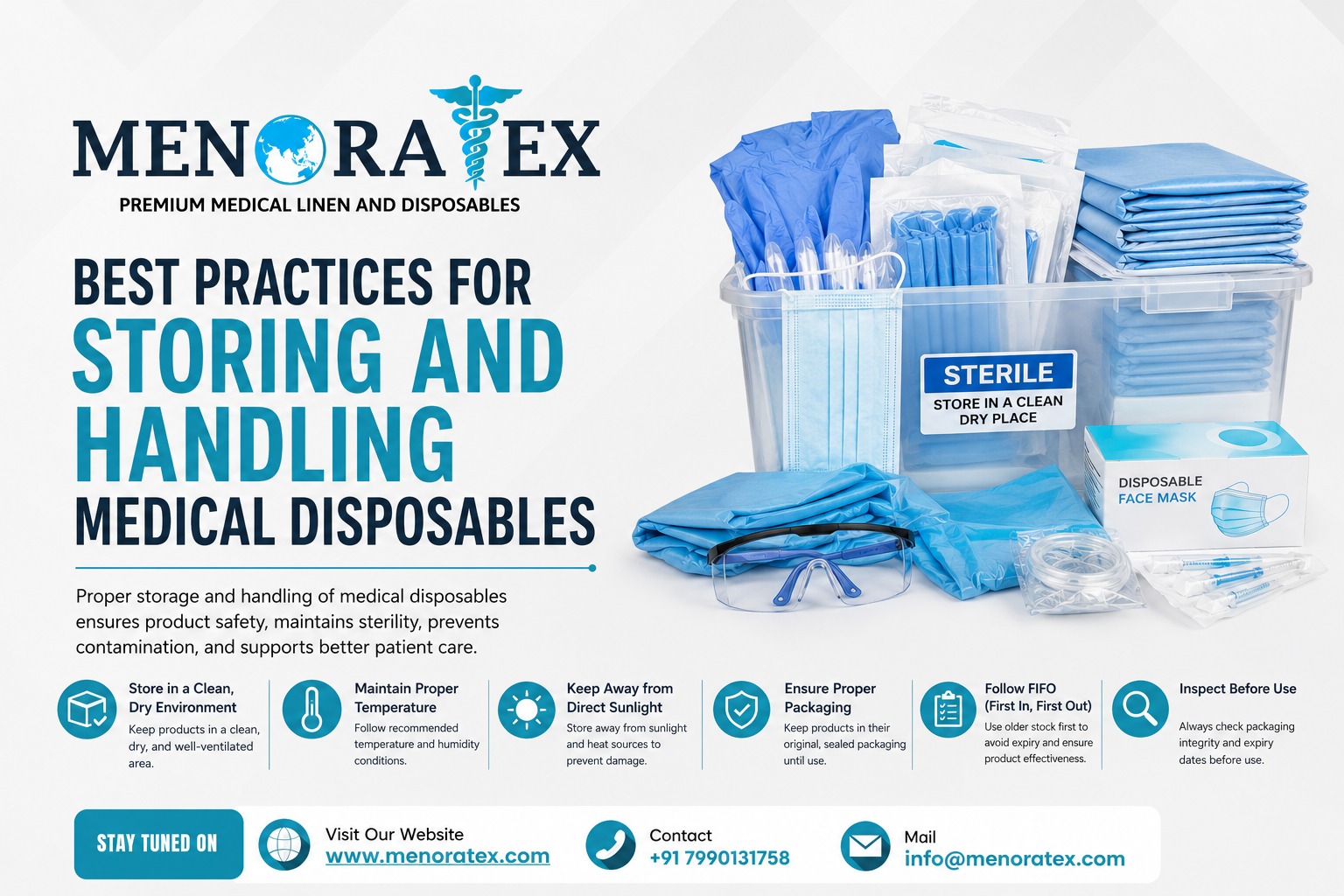
In the complex ecosystem of a modern U.S. hospital, the management of medical disposables—from surgical gowns and drapes to gloves and dressings—is a critical operational function. Proper storage and handling are not merely matters of organization; they are fundamental to maintaining the sterility, integrity, and clinical utility of these products. Mishandling or improper storage can lead to compromised sterile barriers, waste, and, ultimately, risks to patient safety. This guide outlines industry-standard best practices for ensuring that your medical disposables are stored and handled effectively.
The Significance of Proper Storage Environments
Medical disposables are highly sensitive to their environment. Temperature, humidity, and airflow are the three pillars of a safe storage facility. According to AAMI guidelines and general healthcare standards, medical supplies should be stored in environments that prevent degradation.
Temperature Control: Fluctuations in temperature can affect the adhesives on packaging or the chemical stability of sterilization barriers. Ideally, storage areas should remain between 60°F and 75°F (15°C to 24°C)
Humidity Management: Excess humidity is a primary driver of mold and bacterial growth, while extremely dry environments can make paper-based packaging brittle, leading to micro-tears that compromise sterility. Target 30% to 60% relative humidity.
Ventilation and Airflow: Storage areas should be well-ventilated to prevent the accumulation of dust and moisture. Air exchanges per hour should meet local healthcare facility guidelines.
Clean and Sterile Storage Protocols
The distinction between “clean” and “sterile” storage is vital. Sterile supplies require more stringent environmental controls.
Physical Barriers: Sterile supplies should be separated from nonsterile items to prevent contamination via cross-contact.
Elevated Storage: All items must be stored at least 8–10 inches off the f loor to prevent contamination during floor cleaning or from standing water.
Top-Shelf Clearance: To prevent damage from fire sprinkler systems, items should be stored at least 18 inches below the ceiling or sprinkler heads
The “First-In, First-Out” (FIFO) Principle
Effective inventory management is predicated on the FIFO principle. Medical disposables have expiration dates—or “shelf-life” limits based on the integrity of the packaging. Procurement and logistics teams should ensure that older stock is moved to the front for immediate use, while newer stock is placed at the back. This simple inventory rotation prevents unnecessary wastage due to expiration, a significant cost-saving measure for any hospital.
Handling Disposables: Reducing the Risk of Compromise
Storage is only half the battle. How staff handles these items on a daily basis is equally important.
Proper Lifting and Carrying: Avoid using “hook” methods to pull boxes, as this can easily rip the primary packaging. Always use flat palms to support the weight of the box.
Inspection Before Use: Clinical staff must perform a visual inspection of the packaging before entering the sterile field. Any package that shows signs of moisture, tears, or crushed corners must be treated as contaminated and discarded.
Limiting Excess Handling: Minimize the number of times a product is moved. Every time a sterile item is moved or reorganized, the risk of a packaging breach increases.
Menoratex: Ensuring Quality from Production to Your Facility
The quality of your disposables starts with how they are manufactured and shipped. Menoratex (https://menoratex.com/) recognizes that the safety of medical disposables depends on robust packaging and logistics. Their products are designed with durable materials that withstand the rigors of transit and storage, ensuring that the sterile barrier remains intact from their facility to your hospital’s storage shelves.
Menoratex also provides guidance on material-specific storage needs, helping procurement teams understand how to best handle their specific range of high-performance surgical apparel and linens to maintain their AAMI-rated protective properties.
Integrating Technology into Storage Management
In 2026, technology is the procurement officer’s best friend. Implementing barcode scanning and RFID tags allows for real-time tracking of expiration dates and stock levels. This technology reduces the labor cost of manual inventory counts and ensures that the facility never faces a critical “out of stock” moment for essential surgical disposables.
Conclusion
The protocols you put in place for storing and handling medical disposables directly translate to your facility’s safety culture. By standardizing these processes, you not only improve efficiency and reduce waste but also contribute to a safer surgical environment for both your staff and your patients. Invest in the right infrastructure, train your staff on handling best practices, and partner with suppliers like Menoratex who understand the importance of integrity throughout the supply chain.
Need Assistance with Your Supply Integrity?
For procurement managers and clinical staff looking for high-quality, reliably packaged disposables, Menoratex is your partner. Reach out today at https://menoratex.com/ for a consultation on how our apparel and linen products are built to survive and thrive in the modern hospital storage environment.