Introduction
A patient leaves the operating room with a fresh incision, a compromised immune response, and skin that’s more fragile than it was twenty-four hours earlier. The next thing that touches their body for days isn’t a scalpel or a suture — it’s the bedsheet underneath them.
That detail gets overlooked constantly. Facility managers and procurement teams tend to think about linens as a laundry-and-budget line item, not a clinical variable. But in post-operative and intensive recovery units, the fabric touching a healing patient plays a measurable role in comfort, skin integrity, and infection control.
This guide breaks down why anti-allergenic and hypoallergenic linens have moved from a “nice-to-have” amenity to a clinical-outcome-driven purchasing decision — and what to actually look for when sourcing them, whether you’re running a surgical recovery floor, an outpatient surgery center, or a long-term care unit that handles post-op patients.
What “Hypoallergenic” and “Anti-Allergenic” Actually Mean
These two terms get used interchangeably in marketing copy, but they describe different things, and the distinction matters for purchasing decisions.
Hypoallergenic linens are made or treated in ways that reduce the likelihood of triggering an allergic or irritant skin reaction. This usually means:
- Fibers processed without harsh dyes, formaldehyde-based finishes, or optical brighteners
- Tight, smooth weaves that resist trapping dust mites and skin flakes
- Materials less likely to provoke contact dermatitis in sensitive or compromised skin
Anti-allergenic (or antimicrobial-treated) linens go a step further. These are engineered or finished to actively resist the growth of dust mites, mold, bacteria, and other microorganisms on the fabric surface — often through certified antimicrobial treatments or inherently resistant fiber structures.
In plain terms: hypoallergenic reduces the chance of a reaction. Anti-allergenic reduces the microbial load the linen can harbor. A well-specified post-op linen program uses both properties together.
Featured Snippet Answer: Hypoallergenic linens minimize allergic skin reactions through fiber choice and finishing processes, while anti-allergenic linens actively resist microbial growth like dust mites and bacteria. Post-operative units benefit most from linens that combine both properties.
Why This Matters More in Post-Operative Units Than Anywhere Else
Every recovering surgical patient is dealing with at least one of the following, often several at once:
- A weakened immune response from anesthesia and surgical trauma
- Broken or newly-closed skin near the incision site
- Reduced mobility, meaning extended, uninterrupted contact with bedding
- IV lines, drains, and dressings that increase points of skin contact and friction
- Medication-related skin sensitivity (opioids, antibiotics, and anticoagulants can all affect skin condition)
A patient in general admission might tolerate a rougher-weave sheet or a residual detergent scent without issue. A post-op patient, especially in the first 48 to 72 hours, doesn’t have that same margin. Skin that’s already stressed by surgical positioning, tape removal, or edema is far more reactive to friction, chemical residue, and microbial exposure.
The Connection to Surgical Site Infections (SSIs)
Surgical site infections remain one of the most common and costly hospital-acquired complications. While linens aren’t the primary vector most of the time, they are a documented contact surface in infection control literature, and contaminated or poorly laundered bedding has been implicated in outbreaks involving organisms like Mucorales and other environmental pathogens in immunocompromised patients.
For post-op and intensive recovery units, this means linen selection isn’t just about comfort — it intersects directly with infection prevention protocols that accreditation bodies and clinical quality teams already take seriously.
Clinical Outcomes Linked to Linen Quality
Here’s where “which sheets should we buy” becomes a genuine clinical-outcome-driven purchasing decision rather than a housekeeping preference.
| Outcome Area | How Linen Quality Plays a Role |
|---|---|
| Skin integrity / pressure injury risk | Rougher, lower-thread-count or poorly finished fabrics increase friction and shear, both of which are risk factors for pressure injuries in immobile post-op patients |
| Allergic and irritant dermatitis | Residual dyes, optical brighteners, and harsh detergent residues can trigger reactions in patients already dealing with inflamed or sensitive skin |
| Healthcare-associated infection (HAI) risk | Linens that resist microbial colonization and are laundered to verified hygiene standards reduce one contact-surface variable in infection chains |
| Sleep quality and recovery | Breathable, moisture-wicking, temperature-regulating fabrics support better rest, and rest is directly tied to wound healing and immune function |
| Patient satisfaction scores | Comfort and perceived cleanliness consistently show up in patient experience surveys, which many facilities tie to reimbursement and reputation metrics |
Expert tip: If your facility already tracks HCAHPS-style patient satisfaction data or internal comfort surveys, cross-reference complaints about “itchy,” “scratchy,” or “hot” bedding with your current linen supplier’s fiber content. It’s a fast, low-cost way to build a business case for an upgrade.
Key Features to Look for When Sourcing Post-Op Linens
Not all linens marketed as “hypoallergenic” meet the bar that a post-operative or intensive recovery unit actually needs. Use this as a sourcing checklist.
1. Fiber Composition
- 100% combed cotton or cotton-blend percale is a common, well-tolerated baseline for general post-op use.
- Microfiber and certain synthetic blends can offer better moisture-wicking and durability under industrial laundering, provided they’re certified low-irritant.
- Avoid fibers with unnecessary added finishes (softeners, wrinkle-resistant coatings) unless those finishes are specifically certified hypoallergenic.
2. Weave and Thread Count
- A tighter, smoother weave (often in the 200–400 thread count range for cotton percale) resists dust mite penetration and reduces surface friction.
- Extremely high thread counts aren’t automatically better; durability under commercial laundering matters more than a marketing number.
3. Certification and Testing Standards
Look for linens backed by recognized third-party testing, such as:
- OEKO-TEX Standard 100 certification, which verifies textiles are tested for harmful substances
- STANDARD 100 by OEKO-TEX Class I, the strictest category, appropriate for products with the most direct and prolonged skin contact
- Antimicrobial treatments validated under AATCC test methods commonly used in North American textile testing
4. Chemical-Free or Low-Chemical Processing
- Free of formaldehyde-based wrinkle finishes
- Free of azo dyes and other restricted chemical classes
- Low or no optical brighteners, which can irritate sensitive skin and interfere with UV-based stain detection during laundering inspection
5. Laundering Compatibility
Hospital-grade linens need to survive repeated high-heat, high-chemical industrial laundering cycles without breaking down or losing their protective properties. A hypoallergenic sheet that degrades after 50 wash cycles isn’t a good long-term fit for a high-turnover recovery unit.
Step-by-Step: Building a Post-Op Linen Program
If you’re evaluating or overhauling your unit’s linen sourcing, here’s a practical sequence to follow.
- Audit current complaints and incident data. Pull skin irritation reports, pressure injury logs, and patient comfort survey data tied to bedding for the last 6–12 months.
- Define the clinical requirement, not just the budget. Decide whether you need hypoallergenic-only, anti-allergenic-only, or both, based on your patient population (e.g., burn recovery, transplant units, and oncology post-op typically need the highest standard).
- Shortlist suppliers with verifiable certifications. Request OEKO-TEX or equivalent documentation rather than taking “hypoallergenic” claims at face value.
- Request sample batches for a trial period. Run a 30–60 day trial on one wing or unit before a facility-wide rollout.
- Coordinate with your laundering provider or in-house laundry team. Confirm the linens are rated for your actual wash chemistry, water temperature, and cycle frequency.
- Train staff on inspection standards. Frontline nursing and housekeeping staff should know what a compromised linen (thinning, pilling, residual staining) looks like and when to pull it from rotation.
- Re-audit after 90 days. Compare skin irritation and comfort-related complaint data against your baseline.
Common Mistakes Facilities Make
- Treating “hypoallergenic” as a self-certifying label. Without third-party testing, the term is only as reliable as the manufacturer’s marketing department.
- Buying based on thread count alone. A high thread count with poor fiber quality or heavy chemical finishing can still irritate sensitive skin.
- Ignoring laundering chemistry. Even a well-made hypoallergenic sheet can pick up irritant residue from harsh detergents, insufficient rinse cycles, or shared laundry loads with heavily soiled linens.
- Applying a single linen standard across all units. A general medical floor and a post-transplant recovery unit don’t have the same risk profile, and their linen specifications shouldn’t be identical.
- Skipping staff feedback loops. Nurses and CNAs are often the first to notice a bad batch of linens, but that feedback rarely makes it back to procurement.
Best Practices for Long-Term Linen Management
- Segment your inventory by unit acuity. Reserve your highest-grade hypoallergenic, anti-allergenic linens for post-op, ICU step-down, and immunocompromised patient areas.
- Set a replacement cycle based on wash counts, not just visual wear. Fabric can lose its protective finish long before it looks worn out.
- Standardize detergent and water temperature protocols with your laundering partner in writing, and revisit that agreement annually.
- Keep a rotating buffer stock so units aren’t tempted to stretch the life of degraded linens during high-occupancy periods.
- Document everything for infection control and accreditation reviews — sourcing certifications, laundering protocols, and replacement schedules should all be audit-ready.
Cost Considerations
Hypoallergenic and anti-allergenic linens typically run 15% to 40% higher per unit than standard commercial hospital linens, depending on fiber quality and certification level. A basic hypoallergenic cotton percale sheet might run $8 to $15 per sheet, while certified anti-allergenic or antimicrobial-treated options can run $18 to $35 per sheet or more, depending on order volume and supplier.
That upfront number tends to worry procurement teams until it’s weighed against the alternative costs:
- Extended length of stay tied to hospital-acquired skin conditions or infections
- Readmission costs, which many reimbursement models penalize
- Patient satisfaction score impacts, which can affect facility ratings and referral volume
- Replacement costs from linens that degrade faster under repeated laundering
Practical framing for budget conversations: model the cost per patient-day rather than cost per sheet. A more durable, certified linen that lasts through more wash cycles often closes most or all of the price gap over its usable life.
Sourcing Certified Post-Op Linens
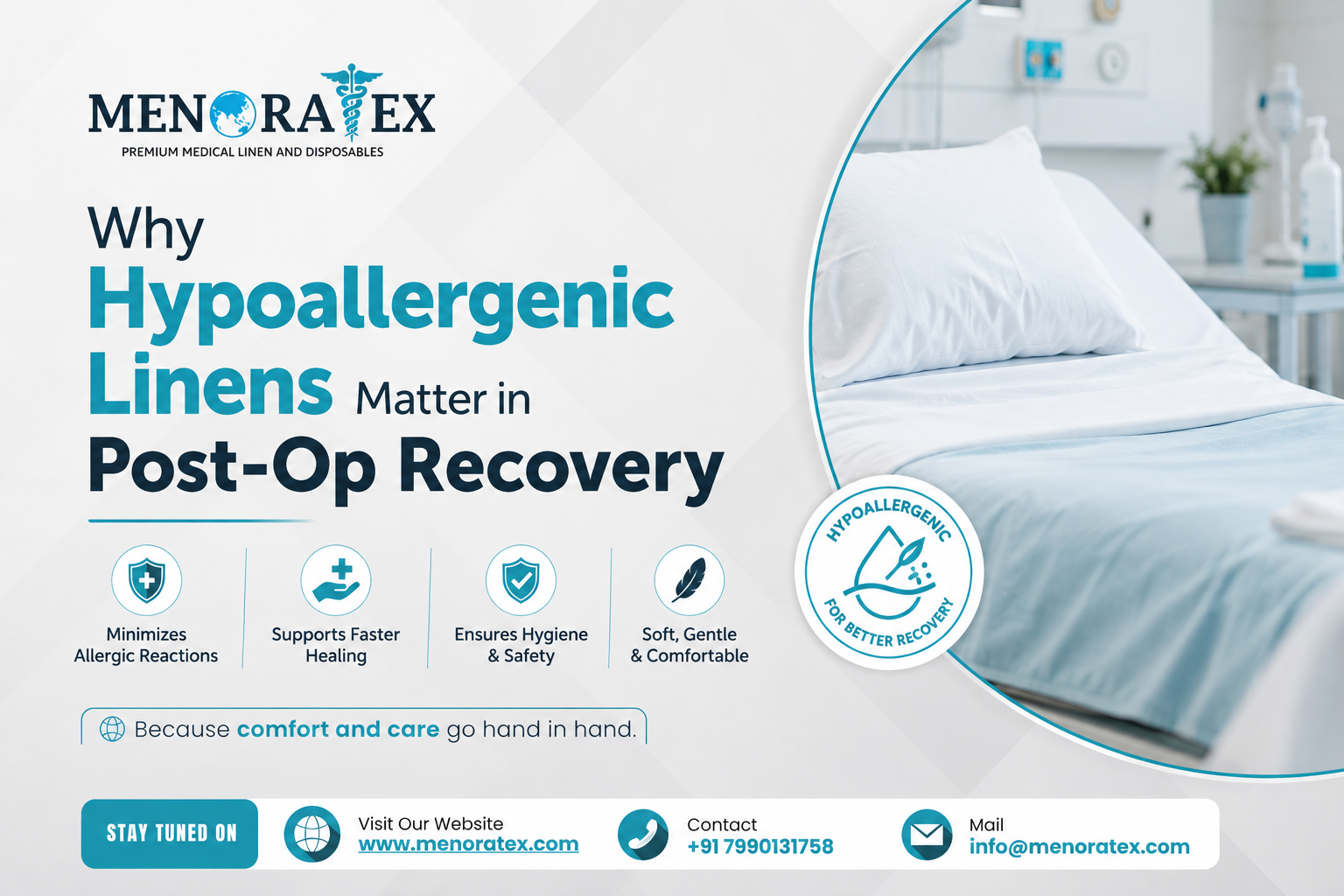
Finding a supplier that can back up “hypoallergenic” claims with real certification is often the hardest part of this process. Menoratex, a medical linen and healthcare disposables brand under Radhe Overseas, manufactures hypoallergenic and anti-allergenic hospital bed sheets, pillow covers, and blankets built for the compliance and durability standards North American healthcare facilities require, alongside related items like surgical gowns, caps, and gloves.
If you’re building out a sourcing shortlist for your facility, it’s worth requesting sample batches and certification documentation directly.
Contact Menoratex
- Email: info@menoratex.com
- Phone: +91 7990131758
- Website: www.menoratex.com