In the modern U.S. healthcare system, the tension between financial sustainability and clinical excellence is palpable. Hospital administrators are under constant pressure to trim operational expenses without compromising the standard of care. Among the various expenditure categories, medical textiles—ranging from patient gowns and bed sheets to high-performance surgical drapes—often find themselves under the microscope. This article explores the multifaceted impact of budget constraints on hospital textile choices and provides a strategic framework for procurement managers to optimize their spending while maintaining safety and compliance.
The Economic Reality of 2026 Healthcare
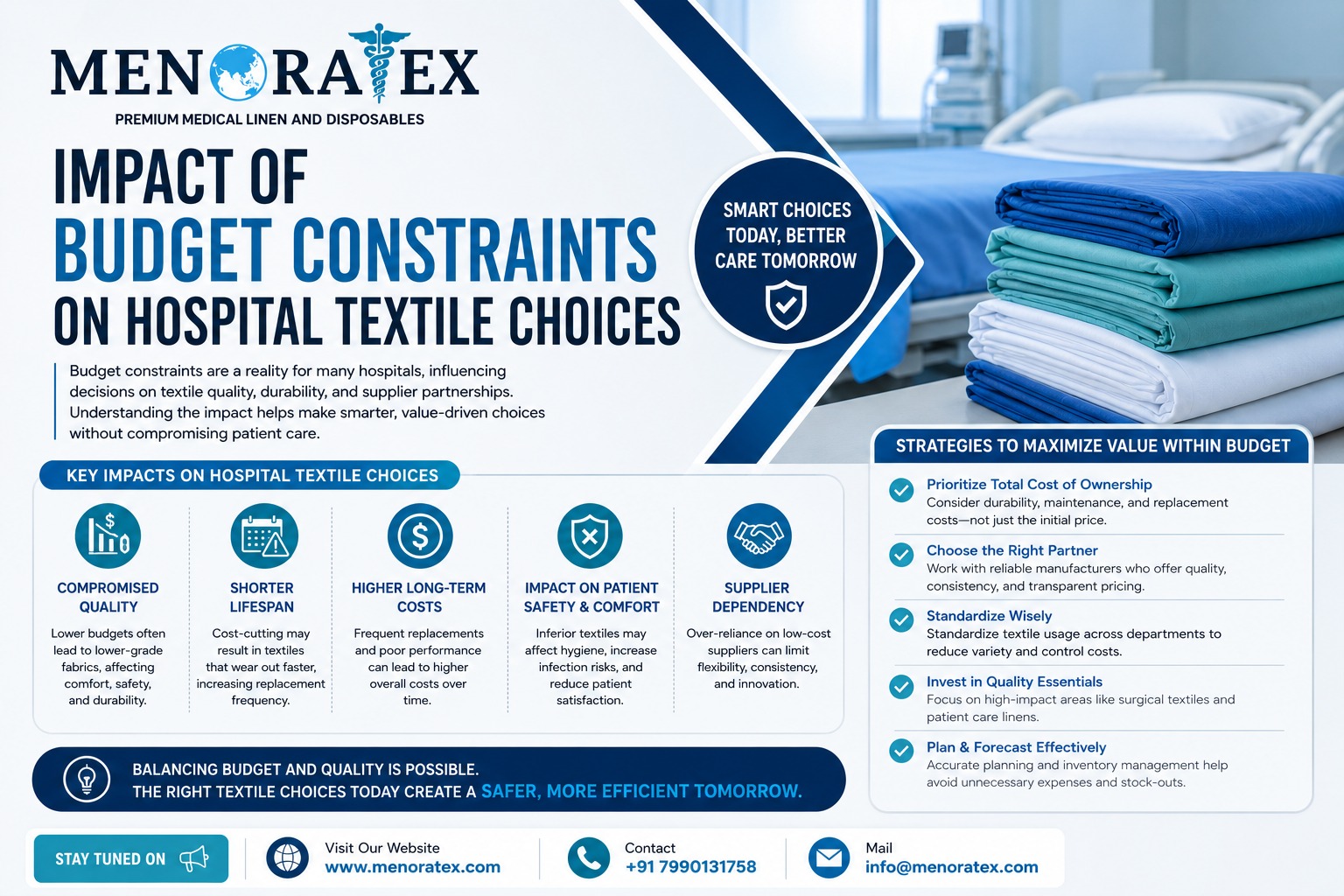
Rising inflation, aging infrastructure, and increased labor costs have forced U.S. hospitals to re-evaluate their supply chain spend. When margins are tight, the “commodity” items—which include linens—are frequently the first to face cost-cutting measures. However, this is a dangerous path. If hospitals pivot solely toward the cheapest available textiles, they risk long-term financial pain through premature fabric failure, increased laundry energy consumption, and heightened risks of hospital-acquired infections (HAIs).
The TCO (Total Cost of Ownership) Perspective
Procurement officers must move away from evaluating products based on unit price alone. The Total Cost of Ownership (TCO) is a much more accurate metric. A textile with a lower upfront cost that needs to be replaced after 20 wash cycles is significantly more expensive than a premium textile that withstands 60 cycles. Factors that contribute to TCO include:
- Durability: Resistance to chemical degradation from high-heat laundry processes.
- Weight/GSM: Impact on laundry costs (heavier fabrics cost more to wash and dry).
- Performance Life: Frequency of replacement.
- Clinical Outcome Risks: Potential costs associated with increased infection rates due to inferior barrier performance.
Balancing AAMI Compliance and Budget
Regulatory compliance, particularly regarding AAMI PB70, is non-negotiable. Budget constraints cannot be used as an excuse to ignore barrier protection standards. The strategic challenge is to find products that meet these standards at a price point that supports the facility’s bottom line. This is where partnering with sophisticated manufacturers becomes vital. By leveraging economies of scale and vertically integrated supply chains, manufacturers can produce compliant products that remain competitively priced.
Innovative Sourcing: The Menoratex Approach
Finding a supplier who understands the financial reality of U.S. hospitals is crucial. Menoratex (https://menoratex.com/) has designed its business model around this very balance. By managing the supply chain from the raw fiber up to the finished product, Menoratex eliminates the overhead costs typically associated with intermediate agents. This direct-to-hospital model allows them to provide high-quality, AAMI-compliant surgical textiles that fit within restrictive budgetary parameters.
Their focus is not just on the sale, but on the long-term utility of the product. Menoratex works with procurement teams to analyze their specific laundering facilities and usage rates, recommending the optimal fabric weight and design that will maximize the linen’s life and minimize replacement frequency.
Strategies for Budget Optimization
To navigate budgetary pressure without compromising quality, hospitals should implement the following strategies:
- Standardization: Reduce the number of SKU variants. Using a standardized linen set across multiple departments can lower purchasing costs and simplify inventory management.
- Lifecycle Testing: Partner with your laundry facility to conduct stress tests on textiles. Data-driven evidence of durability can justify the initial investment in higher-quality products.
- Predictive Procurement: Utilize inventory data to avoid emergency spot-purchasing, which is almost always more expensive than planned, bulk contracting.
- Sustainable Procurement: Invest in products that have a longer life, even if the initial purchase price is higher. The savings in labor and replacement costs over three years will far outweigh the initial premium.
The Hidden Cost of “Cheap” Linens
When hospitals choose low-quality, budget-grade textiles, they often encounter hidden costs that negate any initial savings:
- Increased Laundry Labor: Poor-quality fabrics are prone to tearing, which requires staff time to patch, sort, and discard garments.
- Patient Experience: Inferior, rough, or stained linens impact the HCAHPS (Hospital Consumer Assessment of Healthcare Providers and Systems) scores. Patient perception of cleanliness is directly tied to the quality of the bedding.
- Risk of HAIs: If the barrier performance is not consistent, the risk of pathogen transmission rises. The financial burden of a single extended hospital stay caused by an infection can eclipse the entire annual budget for textile procurement.
Conclusion: A Strategic Shift
Budget constraints are an inevitable part of hospital administration, but they should not dictate a decline in the quality of care. By viewing textile procurement as a strategic investment rather than a cost-cutting exercise,hospitals can build a resilient supply chain that supports clinical staff and protects the patient. Partnering with a manufacturer like Menora Tex allows for this strategic shift, ensuring that your facility remains compliant, efficient, and financially sustainable.
Ready to Optimize Your Linen Spending?
For procurement managers looking to maximize value without compromising on safety or AAMI compliance, Menoratex is your partner. Reach out today at (https://menoratex.com/) for a comprehensive cost-benefit analysis and to see how your facility can achieve better quality at a sustainable price point.