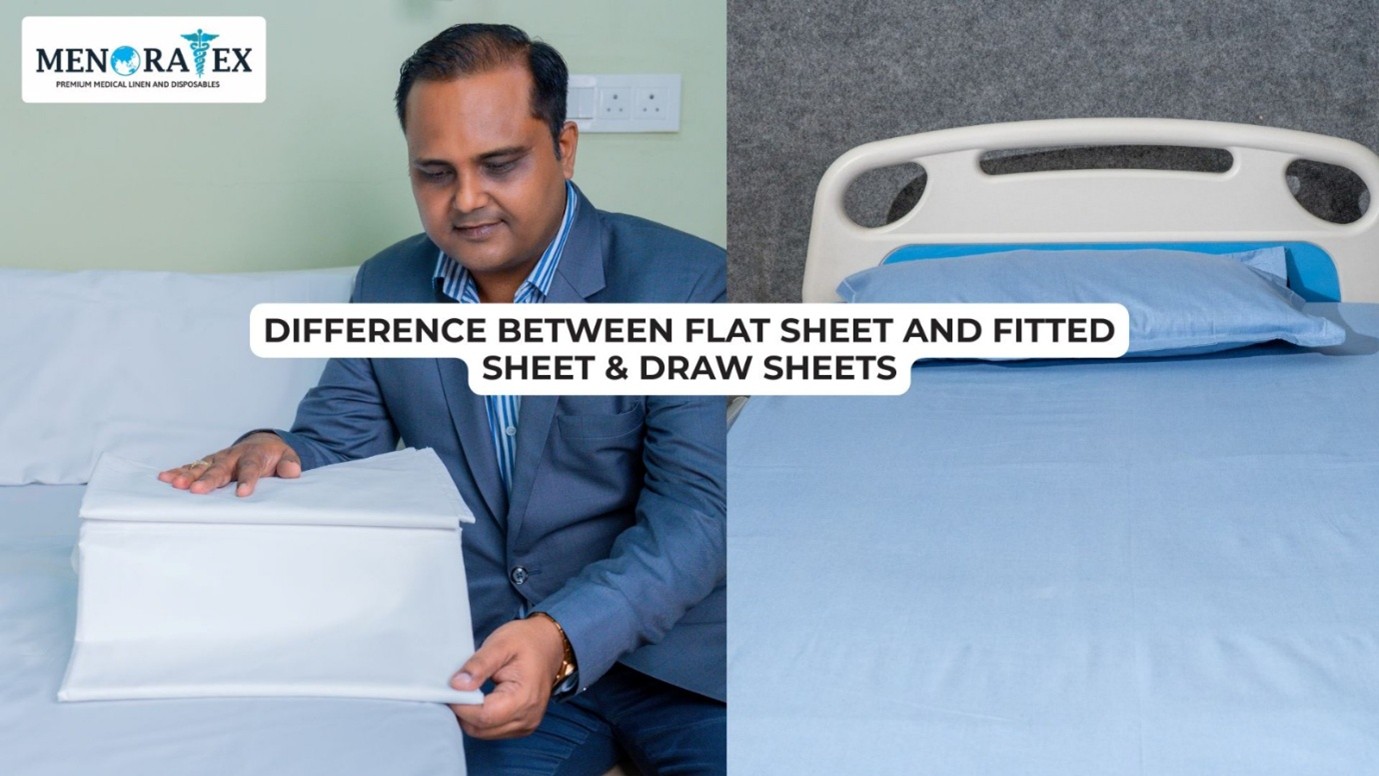
Understanding the key differences between flat sheets, fitted sheets, and draw sheets for hospital and home bedding.
Introduction: Hospital Bedding Is a Clinical Decision
In modern healthcare environments, bedding is not a decorative or secondary concern. Hospital bed sheets are a critical part of patient care, hygiene management, and staff efficiency. Every hospital, clinic, and long-term care facility must follow strict protocols to ensure patient safety and infection control.
Understanding the difference between flat sheet and fitted sheet is essential for healthcare procurement managers, linen supervisors, and administrators. Along with draw sheets, correct hospital bed dimensions, and appropriate material, hospital bedding systems must be designed for real clinical use.
This guide explains the difference between flat sheet and fitted sheet, highlights the importance of draw sheets, discusses hospital bed dimensions, and helps healthcare facilities choose the right material for long-term efficiency.
Understanding Hospital Bedding Systems
A hospital bedding system includes multiple components that work together:
- Flat sheets
- Fitted sheets
- Draw sheets
Ignoring the difference between flat sheet and fitted sheet often leads to poor fit, higher linen costs, and compromised hygiene. Hospitals that understand each component perform better operationally and clinically.
What Is a Flat Sheet in a Hospital?
A flat sheet is a rectangular sheet without elastic. It is one of the most commonly used hospital linens due to its versatility.
Uses of Flat Sheets in Hospitals
- Top layer for patient coverage
- Secondary layer over fitted sheets
- Temporary bedding during transfers
- Emergency replacements
- Multi-purpose ward usage
Because flat sheets are easy to fold and wash, they are widely used in hospital laundries.
Limitations of Flat Sheets
Despite their flexibility, flat sheets:
- Move easily during patient repositioning
- Require frequent re-tucking
- Can expose mattresses
- Increase staff workload
These issues highlight the difference between flat sheet and fitted sheet in active clinical environments.
What Is a Fitted Sheet in Healthcare?
A fitted sheet has elasticized corners designed to grip the mattress securely. In hospitals with adjustable beds, fitted sheets are increasingly preferred.
Benefits of Fitted Sheets
- Secure fit on hospital mattresses
- Reduced wrinkles and pressure points
- Improved patient comfort
- Faster bed-making
The difference between flat sheet and fitted sheet becomes clear when beds are adjusted or patients move frequently.
Difference Between Flat Sheet and Fitted Sheet: Clear Comparison
| Feature | Flat Sheet | Fitted Sheet |
| Elastic corners | No | Yes |
| Mattress grip | Low | High |
| Stability | Moderate | Excellent |
| Folding ease | Easy | Moderate |
| Patient safety | Moderate | High |
This table clearly shows the difference between flat sheet and fitted sheet in hospital use.
Understanding Draw Sheets in Hospitals
Draw sheets are smaller sheets placed horizontally across the bed’s center. They are essential for patient handling and hygiene.
Functions of Draw Sheets
- Help reposition patients safely
- Protect mattresses from fluids
- Reduce full linen changes
- Support infection control
Draw sheets are critical in ICUs, long-term care units, and high-dependency wards.
Types of Draw Sheets
Hospitals commonly use:
- Cotton draw sheets
- Waterproof draw sheets
- Disposable draw sheets
Each type supports specific care requirements and hygiene protocols.
How Draw Sheets Improve Hospital Efficiency
Proper use of draw sheets:
- Reduces nursing strain
- Improves patient comfort
- Extends mattress life
- Lowers laundry volume
Ignoring draw sheets increases both labor and linen costs.
Importance of Hospital Bed Dimensions
Correct hospital bed dimensions are critical when selecting flat sheets, fitted sheets, and draw sheets.
Standard Hospital Bed Dimensions
- USA & UK: ~36” × 80”
- Europe: ~90 cm × 200 cm
- Latin America: Similar to US standards
Sheets must also fit mattress thickness and adjustable frames. Incorrect hospital bed dimensions reduce the effectiveness of fitted sheets and exaggerate the weaknesses shown in the difference between flat sheet and fitted sheet.
Why Hospital Bed Dimensions Affect Sheet Performance
Incorrect sizing causes:
- Loose fitted sheets
- Slipping flat sheets
- Reduced patient safety
- Faster fabric wear
Accurate hospital bed dimensions ensure optimal sheet performance.
Choosing the Right Material for Hospital Bed Sheets
Material selection determines durability, comfort, and hygiene compliance.
Common Hospital Bedding Material
Cotton Material
- Breathable and comfortable
- Suitable for direct patient contact
Polyester-Cotton Material
- Highly durable
- Faster drying
- Cost-effective for hospitals
Waterproof Material
- Used mainly for draw sheets
- Protects mattresses
The right material supports infection control and long-term use.
Combining Flat Sheets, Fitted Sheets, and Draw Sheets
High-performing hospitals use a layered system:
- Fitted sheet over mattress
- Draw sheet across the center
- Flat sheet as top cover
This setup maximizes hygiene, comfort, and efficiency while leveraging the difference between flat sheet and fitted sheet.
Procurement Considerations for Hospital Buyers
Buyers should evaluate:
- Correct hospital bed dimensions
- Durable material
- Performance under industrial laundering
- Reliable suppliers
Understanding the difference between flat sheet and fitted sheet prevents over-ordering and inefficiency.
Why Hospitals Trust Menoratex
Menoratex, a brand under Radhe Overseas, supplies premium hospital bed sheets and medical disposables globally.
Menoratex focuses on:
- High-quality material
- Hygiene compliance
- Durable flat sheets, fitted sheets, and draw sheets
- Reliable supply for healthcare facilities
This expertise supports hospitals across the USA, UK, Europe, and Latin America.
Operational Benefits of Proper Bedding Selection
Hospitals that understand the difference between flat sheet and fitted sheet experience:
- Reduced linen waste
- Better staff productivity
- Improved patient comfort
Stronger infection control
Final Conclusion
Understanding the difference between flat sheet and fitted sheet is essential for healthcare facilities aiming to improve care quality and control costs.
By selecting:
- Proper flat sheets
- Secure fitted sheets
- Functional draw sheets
- Accurate hospital bed dimensions
- Durable material
hospitals can build a bedding system that supports safety, hygiene, and efficiency.
ABOUT MENORATEX
Choosing the right hospital bed sheets is a long-term decision that affects patient safety, hygiene compliance, and operational efficiency. If you are sourcing flat sheets, fitted sheets, or draw sheets that align with correct hospital bed dimensions and high-performance material standards, working with an experienced medical textile supplier matters.
Menoratex delivers hospital-grade bed sheets and medical disposables designed for real healthcare environments, trusted by hospitals and healthcare facilities across the USA and international markets.
🔗 Explore hospital bedding solutions or request a bulk inquiry at:
👉 https://www.menoratex.com
Partner with a supplier that understands the real difference between flat sheet and fitted sheet — and delivers quality you can rely on.