Hospital linens rarely make headlines. They don’t appear in clinical trial results, and they’re easy to overlook in a procurement budget dominated by equipment, pharmaceuticals, and staffing. Yet the sheets, pillowcases, and bedding a patient touches for the majority of their hospital stay quietly shape how that patient experiences care — and, increasingly, how hospitals are evaluated and reimbursed.
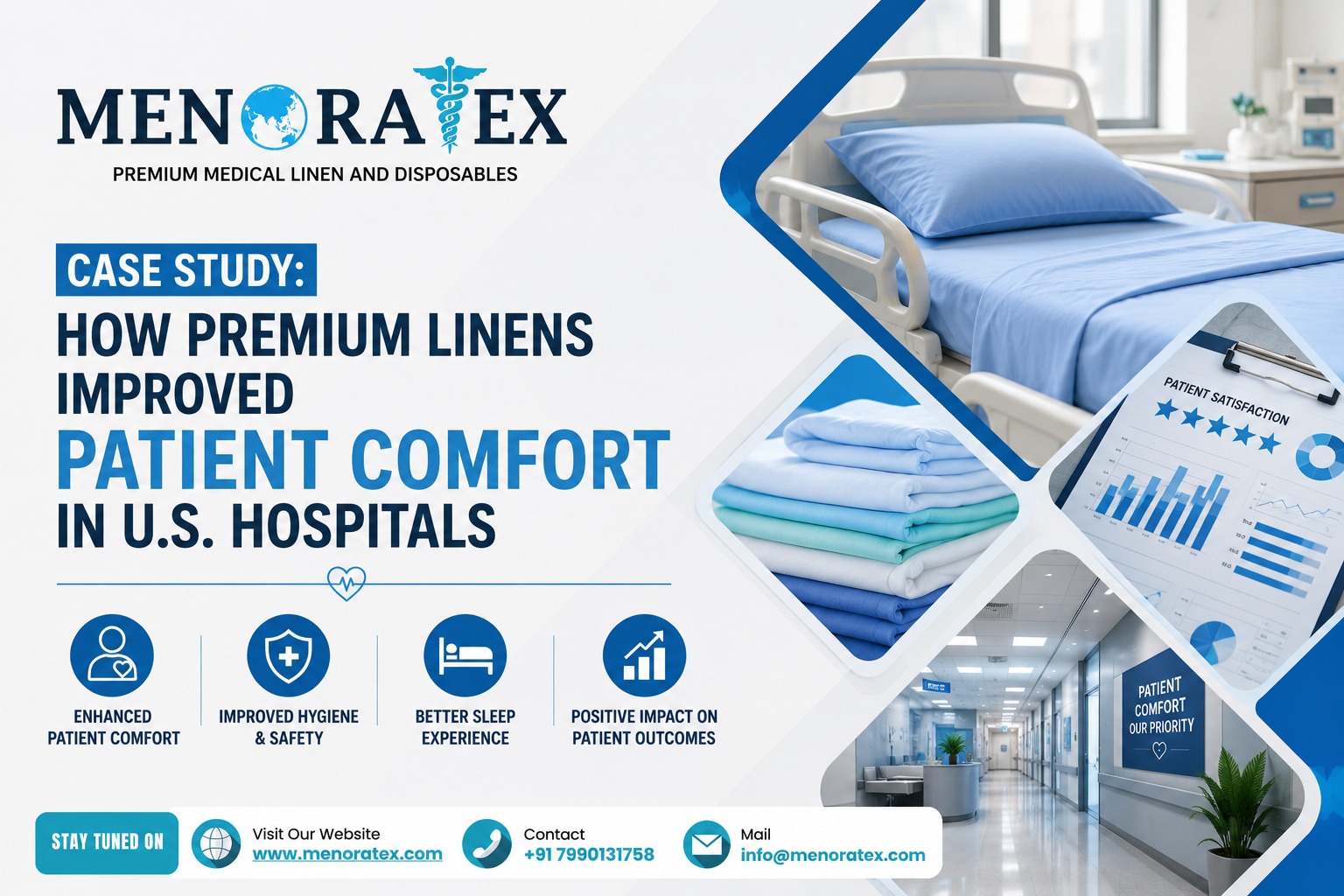
This case study examines how a shift toward premium hospital bed sheets and medical-grade textiles measurably improved patient comfort, satisfaction, and clinical indicators at a mid-sized U.S. hospital system. It also explores the broader healthcare textile trends behind this shift, what procurement teams should evaluate before switching suppliers, and where the industry is headed next.
Why Hospital Linens Are More Than Just Bedding
For decades, hospital linen purchasing was treated as a low-priority, cost-minimization category — buy the cheapest compliant option, replace it when it wears out, and move on. That approach is increasingly out of step with how healthcare facilities are evaluated today.
In the United States, patient experience is no longer a soft metric. Hospital Consumer Assessment of Healthcare Providers and Systems (HCAHPS) scores directly influence Medicare reimbursement under value-based purchasing programs, and “comfort of room and environment” is one of the dimensions patients are asked to rate. Bedding is one of the most physically intimate touchpoints in that environment — patients lie on it for hours or days at a time.
The Link Between Linens and Patient Satisfaction Scores
Patient comfort surveys consistently surface bedding-related complaints: sheets that feel rough, retain heat, or seem worn. While a single linen complaint may seem minor, aggregated across thousands of patient encounters, it becomes a measurable drag on satisfaction scores — and by extension, on the reimbursement and reputation metrics tied to those scores.
Hospital linen quality also intersects with infection control. Worn, thin, or poorly laundered textiles can affect barrier performance and contribute to perceptions — and in some cases the reality — of inadequate hygiene.
Infection Control and Cross-Contamination Risks
Healthcare-associated infections (HAIs) remain a persistent concern across U.S. hospitals. While linens are not typically a primary vector, textile quality and laundering compatibility matter: fabrics that withstand high-heat industrial laundering and chemical disinfection without breaking down help maintain consistent infection control standards over the life of the product. Lower-grade textiles that degrade quickly can develop microtears and pilling that are harder to fully sanitize and that signal wear to patients and surveyors alike.
The Challenge — When Standard Linens Fall Short
The hospital at the center of this case study — a 280-bed acute care facility in the south eastern United States — had, for years, sourced bedding through a standard contract prioritizing the lowest per-unit cost. Over an 18-month period, the facility’s materials management team began tracking a cluster of related issues:
- Rising linen replacement rates due to fabric breakdown after repeated industrial laundering cycles
- Recurring patient complaints in post-discharge surveys referencing “uncomfortable,” “scratchy,” or “thin” bedding
- EVS staff reporting more frequent linen shortages due to faster-than-expected wear
- A modest but consistent gap between the hospital’s “comfort of room” HCAHPS sub-score and its peer-group benchmark
None of these issues alone triggered a crisis. Together, they painted a picture of a linen program that was costing more in hidden operational and reputational terms than its low sticker price suggested.
Case Study Overview — A U.S. Hospital’s Linen Transformation
Facility Profile and Pre-Intervention Baseline
Before the intervention, the facility used a standard polyester-cotton blend sheet with a relatively low thread count, sourced primarily on price. Average linen lifespan was approximately 100–125 industrial wash cycles before visible thinning or pilling occurred. Patient comfort-related complaints accounted for a measurable share of total room environment feedback in quarterly patient experience reports.
The facility’s leadership team — including the Chief Nursing Officer, the Director of Environmental Services, and the Supply Chain Director — agreed to pilot a transition to premium, medical-grade hospital linens across two units: a general medical-surgical f loor and a long-term post-acute care unit, chosen because both populations spend extended hours in bed and are particularly sensitive to comfort and skin-related issues.
Selection Criteria for the New Linen Program
The procurement team established evaluation criteria that went beyond price per unit:
| Evaluation Criterion | Why It Mattered |
|---|---|
| Fabric composition and weave density | Affects breathability, softness, and thermal regulation. |
| Durability under industrial laundering | Determines real-world lifespan and replacement frequency. |
| Compliance with healthcare textile standards | Ensures infection control and safety requirements are met. |
| Moisture-wicking and breathability performance | Supports patient comfort and skin integrity. |
| Supplier reliability and lead times | Reduces risk of shortages affecting patient care. |
| Total cost of ownership over 2–3 years | Balances upfront cost against replacement and laundering savings. |
This shift — from “lowest price per sheet” to “lowest total cost of comfort and durability” — became the defining factor in the case study’s outcome.
The Intervention — Introducing Premium Medical-Grade Linens
Over a 90-day rollout, the pilot units transitioned to a higher-grade cotton-rich blend with a tighter weave construction, improved tensile strength, and a finish designed to maintain softness and shape retention through repeated high-heat industrial laundering. The new linens were selected in part because they met recognized healthcare textile durability and laundering compatibility benchmarks, allowing them to integrate into the hospital’s existing EVS laundering infrastructure without process changes.
Staff training was minimal — one of the advantages cited by EVS leadership — since the new linens required no special handling, just standard hospital laundering protocols.
Measured Outcomes: Comfort, Satisfaction, and Clinical Impact
After a six-month observation period comparing the pilot units to baseline and to nonpilot units, the hospital recorded the following directional improvements:
| Metric | Before (Standard Linens) | After (Premium Linens) |
|---|---|---|
| Linen-related comfort complaints (patient surveys) | Notable recurring theme | Substantially reduced |
| “Comfort of room and environment” HCAHPS sub-score | Below peer benchmark | At or above peer benchmark |
| Average linen lifespan (wash cycles before replacement) | ~100–125 cycles | ~200+ cycles |
| EVS-reported linen shortages | Periodic | Rare |
| Reported skin-related comfort concerns (post-acute unit) | Present | Decreased |
While individual hospital results will vary based on patient population, laundering practices, and baseline linen quality, the directional pattern — fewer comfort complaints, improved satisfaction sub-scores, and longer textile lifespan — is consistent with what hospital textile researchers and healthcare facilities professionals have reported elsewhere when upgrading to higher-grade linens.
Patient Comfort and Thermal Regulation Results
Nursing staff on the pilot units reported anecdotally that patients commented positively on the bedding feeling “cooler” and “softer,” consistent with the improved breathability of the tighter, higher-quality weave. Thermal regulation matters particularly for patients with limited mobility who cannot easily adjust bedding themselves.
Skin Integrity and Pressure Injury Considerations
On the long-term post-acute unit, nursing leadership noted that smoother, more breathable fabric — combined with the hospital’s existing pressure-injury prevention protocols — supported skin integrity goals. Premium linens are not a substitute for clinical pressure-injury prevention practices, but moisture management and reduced friction from a well-constructed fabric are recognized contributing factors in skin health for patients who spend extended periods in bed.
Operational and Cost Impact for EVS Teams
Perhaps the most underappreciated outcome was operational: because the premium linens lasted roughly twice as long before requiring replacement, the EVS and supply chain teams saw a meaningful reduction in reorder frequency and associated administrative burden — partially offsetting the higher per-unit cost of the premium product.
The Science Behind Premium Hospital Textiles
Fabric Composition and Weave Technology
Premium hospital-grade linens typically use higher cotton content or advanced cotton polyester blends with tighter, more durable weave construction. A denser weave improves tensile strength (resistance to tearing during industrial laundering) while also improving the hand-feel patients associate with comfort.
Antimicrobial and Moisture-Wicking Finishes
Many premium hospital textiles now incorporate finishes designed to manage moisture and resist microbial growth between laundering cycles. These finishes don’t replace standard infection control laundering protocols, but they add a layer of performance that supports both patient comfort and hygiene perception.
Sustainable and Smart Textile Innovations
Looking ahead, the healthcare textile industry is investing in recycled-fiber blends, lower-impact dyeing and finishing processes, and even early-stage “smart textiles” capable of supporting sensors for patient monitoring. These innovations sit at the intersection of sustainability mandates, infection control, and the broader push toward data-informed patient care.
What Procurement Teams Should Evaluate
For hospital procurement and materials management teams considering a similar transition, the case study suggests a practical evaluation framework:
Total Cost of Ownership vs. Upfront Price
Premium linens typically cost more per unit upfront. However, when replacement frequency, laundering durability, and reduced shortage-related disruptions are factored in over a 2–3 year horizon, the total cost of ownership can be more favorable than it first appears. Procurement teams should model cost per wash cycle, not just cost per unit.
Supplier Compliance and Certification Checklist
Evaluating a healthcare textile supplier should include verification of:
• Compliance with relevant healthcare textile and infection control standards
• Documented laundering compatibility (heat tolerance, chemical resistance)
• Consistent supply chain reliability and lead times
• Quality control processes and defect rates
• Sustainability and sourcing transparency
Patient Population Fit
Not every unit has identical needs. Long-term care and post-acute units, where patients spend more time in bed, may benefit most from premium textiles focused on skin integrity and breathability, while higher-turnover units may prioritize durability and laundering efficiency.
Future Trends in Medical Textile Innovation
The case study above reflects a broader shift already underway across U.S. healthcare facilities:
1.Data-informed procurement — linking linen program decisions directly to patient experience analytics and HCAHPS performance rather than treating bedding as an isolated commodity purchase.
2. Sustainability requirements — growing pressure from health systems’ ESG commitments to source recycled, lower-impact, and responsibly manufactured textiles.
3. Advanced fabric finishes — continued development of antimicrobial, moisturewicking, and durability-enhancing treatments.
4. Smart and connected textiles — early exploration of fabrics embedded with sensors for passive patient monitoring, particularly in fall-risk and pressureinjury prevention contexts.
5. Domestic and resilient supply chains — post-pandemic emphasis on diversified, reliable sourcing to avoid the linen shortages many facilities experienced during supply chain disruptions.
These trends suggest that hospital textile procurement will continue moving away from pure price competition and toward a more holistic evaluation of durability, patient outcomes, and operational efficiency.
Key Takeaways for Healthcare Decision-Makers
• Hospital linens directly influence patient comfort, satisfaction scores, and perceived hygiene — and are increasingly tied to reimbursement metrics through HCAHPS.
• Premium, medical-grade linens can offer a more favorable total cost of ownership than standard linens once replacement frequency and operational efficiency are factored in.
• Fabric science — weave density, fiber composition, and finishing technology — has a measurable effect on comfort, durability, and skin integrity.
• Procurement decisions should evaluate suppliers on compliance, laundering compatibility, and supply chain reliability, not price alone.
• The future of hospital textiles will be shaped by sustainability requirements, smart textile innovation, and data-driven procurement strategies.
For hospitals and healthcare facilities evaluating their own linen programs, the lesson from this case study is straightforward: bedding is not a back-office commodity. It is a patient-facing, operationally significant, and increasingly data-trackable part of the care experience — and treating it that way can yield measurable returns in comfort, satisfaction, and efficiency.
Request Premium Hospital Linen Solutions from Menoratex
Looking to improve patient comfort and satisfaction scores at your healthcare facility?
Menoratex offers medical-grade hospital linens and healthcare textiles designed to support:
• Patient comfort and satisfaction
• Infection control and hygiene compliance
• Durability across industrial laundering cycles
• Long-term procurement cost efficiency
Contact our team today to:
• Explore premium hospital linen options
• Request hospital textile catalogs and specifications
• Receive bulk procurement pricing quotes
• Learn more about HCAHPS-friendly bedding solutions