Walk into any hospital supply room and you’ll see shelves stacked with gowns that all look pretty much the same — until you check the label. One says Level 1. Another says Level 3. A third says Level 4. If you’ve ever wondered whether that difference actually matters, the short answer is: it absolutely does, and getting it wrong can put staff and patients at real risk.
If you’re a procurement manager, infection control officer, nurse, or clinic owner trying to figure out which disposable isolation gown to stock, this guide breaks down everything you need to know about AAMI levels — in plain English, no jargon overload.
By the end of this article, you’ll know exactly what each AAMI level means, how the ratings are actually tested, which level fits which task, and how to avoid the costly mistake of over-or under-protecting your team.
What Is an AAMI Level Isolation Gown?
AAMI stands for the Association for the Advancement of Medical Instrumentation. It’s the organization behind ANSI/AAMI PB70, the standard that grades isolation and surgical gowns based on how well they resist liquid and microbial penetration.
In simple terms: the AAMI level tells you how much fluid a gown can hold back before it soaks through to the wearer’s skin or clothing. It’s not about thickness, price, or brand — it’s about tested, measurable barrier performance.
Every disposable isolation gown sold for U.S. healthcare use should carry one of four AAMI ratings, so buyers can match the gown to the actual risk of the task at hand rather than guessing.
Why the AAMI Rating System Matters?
Here’s the problem it solves: not every patient interaction carries the same risk of fluid exposure. A nurse doing a routine check-up faces a very different risk than a surgeon performing a long operation with heavy blood loss.
Without a standardized rating system, hospitals would have no reliable way to compare gowns from different manufacturers or confirm a product actually performs as advertised. AAMI PB70 fixes that by requiring gowns to pass specific, repeatable lab tests before they can claim a level.
For healthcare facilities, this matters for three big reasons:
Staff safety — the right gown protects workers from bloodborne pathogens and infectious fluids.
Compliance — hospitals are often audited on PPE compliance, and using unrated or mismatched gowns can be flagged.
Cost control — buying Level 4 gowns for every task wastes money; buying Level 1 gowns for high-risk tasks endangers staff.
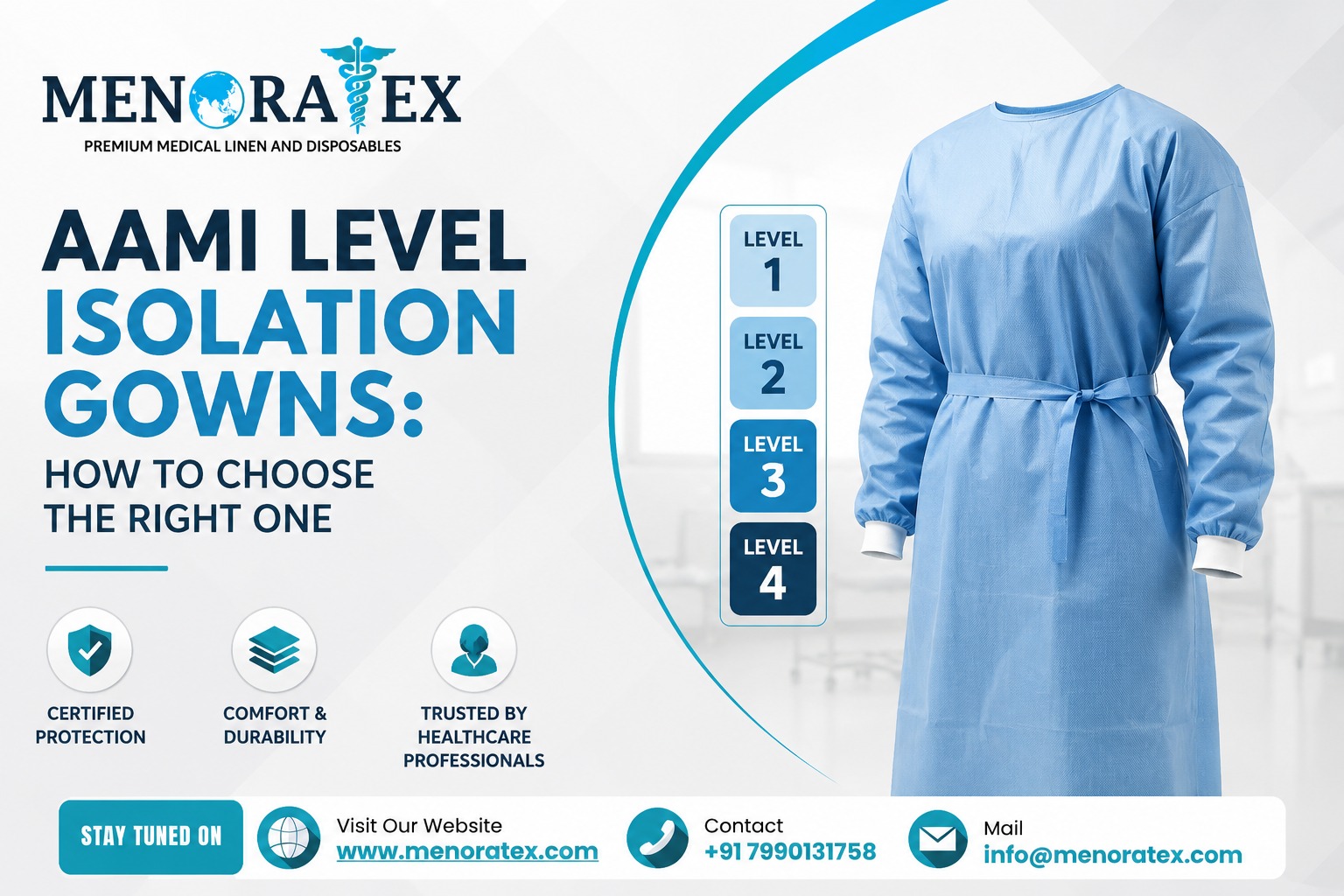
The 4 AAMI Levels Explained
Let’s go through each level one at a time, including what test it has to pass and where it’s typically used.
AAMI Level 1 — Minimal Risk
Level 1 gowns are tested with a simple water spray test (AATCC 42). They offer the lightest barrier protection and are meant for situations with very little chance of fluid contact.
Typical uses:
– Basic patient care
– Standard isolation precautions
– Visitor cover gowns
– General medical unit rounds
Think of Level 1 as your everyday, low-risk gown — comfortable, breathable, and inexpensive, but not built for anything involving significant fluid exposure.
AAMI Level 2 — Low Risk
Level 2 gowns step up the protection with both a water spray test and a hydrostatic pressure test, which measures resistance to fluid pushing against the fabric.
Typical uses:
– Blood draws
– Suturing
– ICU care
– Pathology lab work
This is one of the most commonly stocked gowns in general hospital settings because it strikes a solid balance between protection and comfort for routine clinical tasks.
AAMI Level 3 — Moderate Risk
Level 3 gowns are tested with a more demanding hydrostatic pressure test, simulating greater fluid pressure and exposure.
Typical uses:
– Arterial blood draws
– Inserting IV lines
– Emergency room procedures
– Trauma cases
If your staff regularly deals with moderate splashing or spraying of bodily fluids, Level 3 is usually the sweet spot.
AAMI Level 4 — High Risk
Level 4 is the only level tested for viral penetration resistance using ASTM F1671, which uses a bacteriophage (a virus surrogate) to simulate blood-borne pathogen exposure. This means Level 4 gowns are the only ones considered impermeable to viral penetration under standardized testing.
Typical uses:
– Long, fluid-intensive surgeries
– Situations involving suspected infectious disease
– Procedures with high blood or fluid volume
Important nuance: Levels 1–3 are tested using water, not blood or synthetic blood. Since water has a much higher surface tension than blood, blood can pass through a fabric more easily than water in lab conditions. That’s why Levels 1–3 should never be assumed to offer viral protection — only Level 4 gowns are validated for that.
Quick Comparison Table
| AAMI Level | Test Method | Risk Category | Common Use Case | Viral Protection Rated? |
|---|---|---|---|---|
| Level 1 | Water spray (AATCC 42) | Minimal | Basic care, visitor gowns | No |
| Level 2 | Water spray + hydrostatic pressure | Low | Blood draws, ICU, suturing | No |
| Level 3 | Higher hydrostatic pressure test | Moderate | ER, IV insertion, trauma | No |
| Level 4 | Viral penetration test (ASTM F1671) | High | Surgery, infectious disease exposure | Yes |
How AAMI Testing Actually Works
It’s worth understanding what happens behind the scenes before a gown earns its level:
1.Material selection — manufacturers typically use SMS (spunbondmeltblown-spunbond) non-woven fabric, chosen for its balance of breathability and fluid resistance.
2. Lab testing — samples are tested using AATCC 42 (impact penetration) and AATCC 127 (hydrostatic pressure) for Levels 1–3, and ASTM F1671 (viral penetration) for Level 4.
3. Critical zone mapping — AAMI PB70 also requires manufacturers to identify which “zones” of the gown (chest, arms, etc.) must meet the barrier standard, since not every part of a gown faces the same exposure risk.
4. Certification and labeling — once a gown passes, it’s labeled with its AAMI level so buyers can trust the rating without re-testing it themselves.
Benefits of Choosing the Correct AAMI Level
- Reduced infection risk for both patients and healthcare staff by selecting the appropriate level of barrier protection.
- Regulatory confidence during audits and inspections through compliance with recognized AAMI standards.
- Better budget allocation by avoiding unnecessary spending on higher-level protective apparel when lower levels are sufficient.
- Improved staff comfort because lower AAMI levels are lighter, more breathable, and better suited for routine clinical tasks.
- Consistent product quality as standardized AAMI testing provides reliable performance verification, reducing reliance on manufacturer claims alone.
Step-by-Step: How to Choose the Right Gown Level
- Map out your procedures. Identify the clinical tasks your staff perform regularly, such as routine examinations, blood draws, IV insertions, surgeries, emergency trauma care, and intensive care procedures.
- Assess the risk of fluid exposure. Evaluate how much exposure to blood, bodily fluids, or other contaminants is expected during each procedure, as well as the duration and intensity of that exposure.
- Match the procedure to the appropriate AAMI level. Select the gown level that provides the required barrier protection based on the assessed risk.
- Consider the work environment. Take into account factors such as kneeling, leaning against patients or surfaces, prolonged contact with contaminated areas, and other conditions that may increase pressure on the gown beyond standard testing scenarios.
- Maintain inventory across multiple AAMI levels. Stock a combination of gown levels to meet the varying protection needs of different departments, procedures, and clinical situations.
- Review your gown selection regularly. Reassess your PPE requirements at least annually—or whenever procedures, regulations, or patient care needs change—to ensure continued protection and cost-effective inventory management.
Common Mistakes to Avoid
- Assuming higher protection is always better. Level 4 gowns provide the highest barrier protection, but they are generally more expensive and less breathable. Using them for routine, low-risk procedures can increase costs and reduce staff comfort without adding meaningful benefits.
- Ignoring critical protection zones. A gown’s overall AAMI level does not tell the whole story. Review the manufacturer’s specifications to ensure critical areas—such as the front torso, sleeves, and seams—provide adequate protection for the intended application.
- Using cover gowns in place of isolation gowns. Non-rated cover gowns intended for visitors or minimal-risk environments should never be used as a substitute for AAMI-rated isolation gowns during clinical procedures involving exposure to blood or bodily fluids.
- Overlooking fit and wearer comfort. A properly rated gown that restricts movement or causes discomfort during extended wear may reduce compliance and encourage improper use.
- Failing to train staff on AAMI levels. Healthcare personnel should understand the differences between AAMI protection levels and know which gown is appropriate for each procedure to ensure consistent and effective PPE use.
Best Practices and Expert Tips
- Keep a quick-reference guide accessible. Place a simple, laminated AAMI gown selection chart in supply rooms or clinical areas so staff can quickly match procedures with the appropriate protection level.
- Choose suppliers that provide verified test documentation. Purchase gowns from manufacturers that offer certification and laboratory test reports in addition to the stated AAMI level, providing greater confidence in product performance.
- Manage inventory using a first-in, first-out (FIFO) system. Rotate stock regularly to minimize the risk of material degradation during long-term storage and ensure older inventory is used first.
- Integrate gown selection into your overall PPE strategy. Consider gown protection levels alongside other personal protective equipment, including gloves, masks, respirators, and eye protection, to maintain comprehensive infection control.
- Review inventory during periods of increased demand. During seasonal outbreaks or public health emergencies, reassess your gown inventory to ensure the available mix of AAMI levels aligns with current clinical needs and patient volumes.
Real-World Example
Consider a mid-sized urgent care clinic that primarily handles walk-in patients, minor wound care, and basic diagnostics. Most of their staff interactions fall into the “low risk” category, so Level 2 gowns cover the bulk of daily needs. However, they still keep a small stock of Level 3 gowns on hand for occasional trauma cases that walk through the door unexpectedly. This tiered approach — rather than buying one gown level for everything — keeps costs reasonable while making sure staff are never under-protected when a higher-risk situation arises.
Pros and Cons by Level
| AAMI Level | Pros | Cons |
|---|---|---|
| Level 1 | Lightweight, breathable, and cost-effective for minimal-risk environments. | Provides only basic barrier protection and is unsuitable for procedures with significant fluid exposure. |
| Level 2 | Offers a good balance of comfort and fluid resistance for routine clinical procedures. | Not designed for high-pressure fluid exposure or procedures with a moderate to high risk of contamination. |
| Level 3 | Provides enhanced barrier protection for moderate-risk procedures involving greater fluid exposure. | Heavier and less breathable than Level 1 and Level 2 gowns, which may reduce comfort during extended wear. |
| Level 4 | Delivers the highest level of protection and is the only AAMI level tested for resistance to viral penetration. | More expensive, bulkier, and less comfortable for prolonged use in routine or non-surgical settings. |
Future Trends in Isolation Gown Standards
- Sustainable and reusable materials. Manufacturers are developing reusable and environmentally friendly gown fabrics that continue to meet the required AAMI barrier protection standards while reducing waste and long-term costs.
- Enhanced breathability in higher-level gowns. Advances in fabric technology are improving airflow and wearer comfort without compromising fluid resistance, helping reduce heat stress during extended procedures.
- Expanded domestic manufacturing capacity. Many manufacturers have increased local production capabilities to strengthen supply chain resilience and reduce dependence on overseas sourcing following pandemic-related shortages.
- Improved labeling and product traceability. Modern gowns increasingly feature clear labeling and QR codes that provide direct access to certification documents, laboratory test reports, and product specifications, making verification easier for healthcare facilities.
Healthcare facilities that monitor these developments and incorporate them into their procurement strategies are better positioned to maintain regulatory compliance, improve supply chain reliability, and optimize long-term costs as PPE standards and clinical needs continue to evolve.
Final Thoughts
Choosing the right AAMI level isolation gown is not about selecting the highest level of protection for every situation—it’s about matching the gown’s barrier performance to the specific procedure and its expected exposure risk. Level 1 and Level 2 gowns are suitable for most routine clinical tasks, Level 3 provides additional protection for moderate-risk procedures, and Level 4 is intended for high-risk environments where maximum fluid resistance and viral penetration protection are required.
Selecting the appropriate gown helps protect healthcare workers and patients, supports compliance with infection control standards, improves staff comfort, and ensures PPE budgets are used efficiently. Choosing a gown with more protection than necessary can increase costs and reduce comfort, while selecting an insufficient level may leave staff inadequately protected.
Ready to optimize your facility’s PPE strategy? Review your current inventory against your clinical procedures, identify any gaps in AAMI protection levels, and work with your PPE supplier to verify product certifications and test documentation before placing your next order. A well-planned gown selection strategy improves safety, strengthens regulatory compliance, and helps ensure your team is prepared for every level of patient care.
FAQ Section
Frequently Asked Questions (FAQs)
1. What does AAMI stand for in isolation gowns?
Answer:
AAMI stands for the Association for the Advancement of Medical Instrumentation. The organization developed the ANSI/AAMI PB70 standard, which classifies isolation and surgical gowns into four protection levels based on their resistance to liquid and microbial penetration. This standardized system helps healthcare facilities select the appropriate level of protection for different clinical procedures.
2. What is the difference between AAMI Level 1 and Level 2 gowns?
Answer:
Level 1 gowns provide basic fluid protection and are intended for minimal-risk activities such as routine patient care and visitor use. They are tested using the AATCC 42 water impact penetration test.
Level 2 gowns offer greater fluid resistance by passing both the AATCC 42 and AATCC 127 hydrostatic pressure tests, making them suitable for low-risk procedures such as blood draws, suturing, and work in intensive care units.
3. Which AAMI level gown is used for surgery?
Answer:
Level 4 gowns are commonly used during surgical procedures and other high-risk clinical settings where significant fluid exposure is expected. They are the only AAMI-rated gowns tested for viral penetration resistance using the ASTM F1671 standard, providing the highest level of barrier protection.
4. Are AAMI Level 1–3 isolation gowns waterproof?
Answer:
No. Levels 1–3 are designed to provide increasing levels of resistance to liquid penetration, but they are not fully waterproof. These gowns are evaluated using water-based tests rather than blood or synthetic blood. Because blood has a lower surface tension than water, it can penetrate materials more easily under certain conditions. Only Level 4 gowns are tested for resistance to viral penetration through synthetic blood.
5. Can I use a Level 4 gown for routine patient care?
Answer:
Yes, but it is generally unnecessary. Level 4 gowns provide the highest level of protection but are typically heavier, less breathable, and more expensive than lower-level gowns. For routine, low-risk patient care, Level 1 or Level 2 gowns usually provide adequate protection while improving comfort and reducing costs.
6. How are isolation gowns tested for their AAMI level?
Answer:
AAMI gown classifications are determined through standardized laboratory testing:
- Levels 1–3: Tested using AATCC 42 (water impact penetration) and AATCC 127 (hydrostatic pressure).
- Level 4: Must meet the requirements of ASTM F1671, which evaluates resistance to viral penetration using a bacteriophage challenge in synthetic blood.
7. Do isolation gowns expire?
Answer:
Isolation gowns do not have a fixed expiration date like pharmaceuticals. However, prolonged storage, especially in humid or high-temperature environments, can degrade the material and reduce performance. Healthcare facilities should rotate inventory using a first-in, first-out (FIFO) system and inspect gowns regularly for signs of damage or deterioration before use.
8. What is the difference between an isolation gown and a surgical gown?
Answer:
Isolation gowns are designed to protect healthcare workers during routine patient care from exposure to fluids and microorganisms. Surgical gowns also follow the AAMI protection levels but are manufactured specifically for sterile surgical procedures and must meet additional sterility and performance requirements appropriate for the operating room.
9. Which AAMI level should a nursing home stock?
Answer:
Most nursing homes primarily require Level 1 and Level 2 isolation gowns for routine resident care. Maintaining a limited supply of Level 3 gowns is also recommended for higher-risk situations, such as wound care, infection control measures, or outbreak response.
10. Are unrated cover gowns the same as AAMI-rated isolation gowns?
Answer:
No. Cover gowns are not tested or classified under the AAMI PB70 standard and are intended only for minimal-risk applications, such as visitor use or general housekeeping. They should never be used as a substitute for AAMI-rated isolation gowns during clinical procedures where exposure to blood, bodily fluids, or infectious materials is possible.
Contact Us
Feel Free to Contact Us
We welcome the opportunity to work with businesses looking for reliable, high-quality PPE and textile solutions. If your requirements align with our products, we’d be happy to discuss how we can support your needs.
Phone
- +91 7990131758