Healthcare facilities across the USA, UAE, and Latin America are under increasing pressure to improve hygiene standards, reduce operational costs, and enhance patient comfort. One of the most overlooked but critical decisions in hospital management is the choice of hospital linen fabric.
From patient bedsheets and pillow covers to surgical gowns and reusable drapes, fabric selection directly impacts infection control, durability, comfort, and long-term cost efficiency.
At Menoratex, we work closely with healthcare suppliers, hospitals, and institutional buyers across international markets. One common question we hear repeatedly is:
Should hospitals choose cotton or synthetic fabrics for hospital linens?
The answer depends on climate, healthcare standards, laundry infrastructure, patient expectations, and operational goals.
This detailed guide compares cotton and synthetic fabrics in hospital linens specifically for healthcare markets in the USA, UAE, and Latin America.
Why Fabric Choice Matters in Hospital Linens
Hospital linens are not ordinary textiles. They are used daily in high-risk healthcare environments where cleanliness, durability, and patient comfort are essential.
Poor-quality hospital linens can lead to:
• Faster wear and tear
• Higher replacement costs
• Poor patient experience
• Increased bacterial retention
• Operational inefficiencies
This is why healthcare procurement teams increasingly partner with trusted suppliers like Menoratex to source durable, hygienic, and region-specific healthcare textiles.
Understanding Cotton Hospital Linens
Cotton is one of the oldest and most widely used materials in healthcare textiles.
Advantages of Cotton Hospital Linens
Superior Patient Comfort
Cotton is naturally soft and breathable. Patients in hospitals often remain in bed for long periods, making comfort a major priority.
In the USA especially, patient satisfaction scores influence hospital reputation and reimbursement systems. Cotton linens help create a more comfortable patient experience.
Excellent Breathability
Cotton allows better air circulation, reducing heat buildup and moisture retention.
This is particularly important in:
• UAE hospitals with hot climates
• Latin American tropical regions
• Long-term care facilities
Hypoallergenic Properties
Cotton is generally gentler on sensitive skin. Many hospitals prefer cotton bedding for pediatric units, elderly patients, and dermatology departments.
Natural Fiber Appeal
Sustainability is becoming a key procurement factor in the USA and parts of Latin America. Cotton offers a more natural textile option compared to petroleum-based synthetic fibers.
At Menoratex, many healthcare buyers request cotton-rich blends to balance sustainability and durability.
Disadvantages of Cotton Hospital Linens
Despite comfort advantages, cotton also has limitations.
Higher Maintenance Costs
Cotton wrinkles easily and may require:
• More ironing
• More water during washing
• Longer drying cycles
This increases operational costs for hospitals handling large-scale laundry operations.
Faster Fabric Wear
Pure cotton can weaken over time under industrial washing conditions.
Hospitals in high-volume healthcare systems often find that cotton linens need replacement sooner than synthetic alternatives.
Moisture Absorption
Cotton absorbs moisture quickly. While this improves comfort, it can also:
• Increase drying time
• Create bacterial retention risks if not properly sanitized
Understanding Synthetic Hospital Linens
Synthetic fabrics commonly include:
• Polyester
• Microfiber
• Poly-cotton blends
Modern healthcare systems increasingly use synthetic-based linens because of their operational efficiency.
At Menoratex, synthetic and blended healthcare fabrics are among the fastest-growing categories for institutional buyers.
Advantages of Synthetic Hospital Linens
Exceptional Durability
Synthetic fabrics are highly resistant to:
• Frequent industrial washing
• Chemical disinfectants
• Shrinkage
• Tearing
This makes them ideal for:
• High-traffic hospitals
• Emergency care centers
• Government healthcare institutions
Lower Operational Costs
Synthetic linens dry faster and wrinkle less.
This helps hospitals reduce:
• Energy consumption
• Laundry labor costs
• Replacement frequency
In regions like Latin America where healthcare budgets may be tighter, synthetic hospital linens can provide significant long-term savings.
Better Color Retention
Synthetic fabrics maintain appearance longer, even after repeated washing cycles. This is important for healthcare brands focused on maintaining a professional environment.
Infection Control Benefits
Many advanced synthetic healthcare textiles now include:
• Antimicrobial coatings
• Fluid resistance
• Enhanced barrier protection
Hospitals in the USA and UAE increasingly prioritize these performance-based textile solutions.
Disadvantages of Synthetic Hospital Linens
Reduced Breathability
Some synthetic fabrics trap heat more than cotton. In warmer climates such as the UAE, this may affect patient comfort unless advanced moisture-management fabrics are used.
Static Electricity
Synthetic materials may generate static, which can be uncomfortable in certain healthcare environments.
Environmental Concerns
Pure synthetic fabrics are petroleum-based and less biodegradable. Many healthcare systems are now seeking sustainable textile sourcing strategies. This is why Menoratex often recommends blended hospital fabrics that combine cotton comfort with synthetic durability.
Cotton vs. Synthetic Fabrics: Which Is Better for Hospitals?
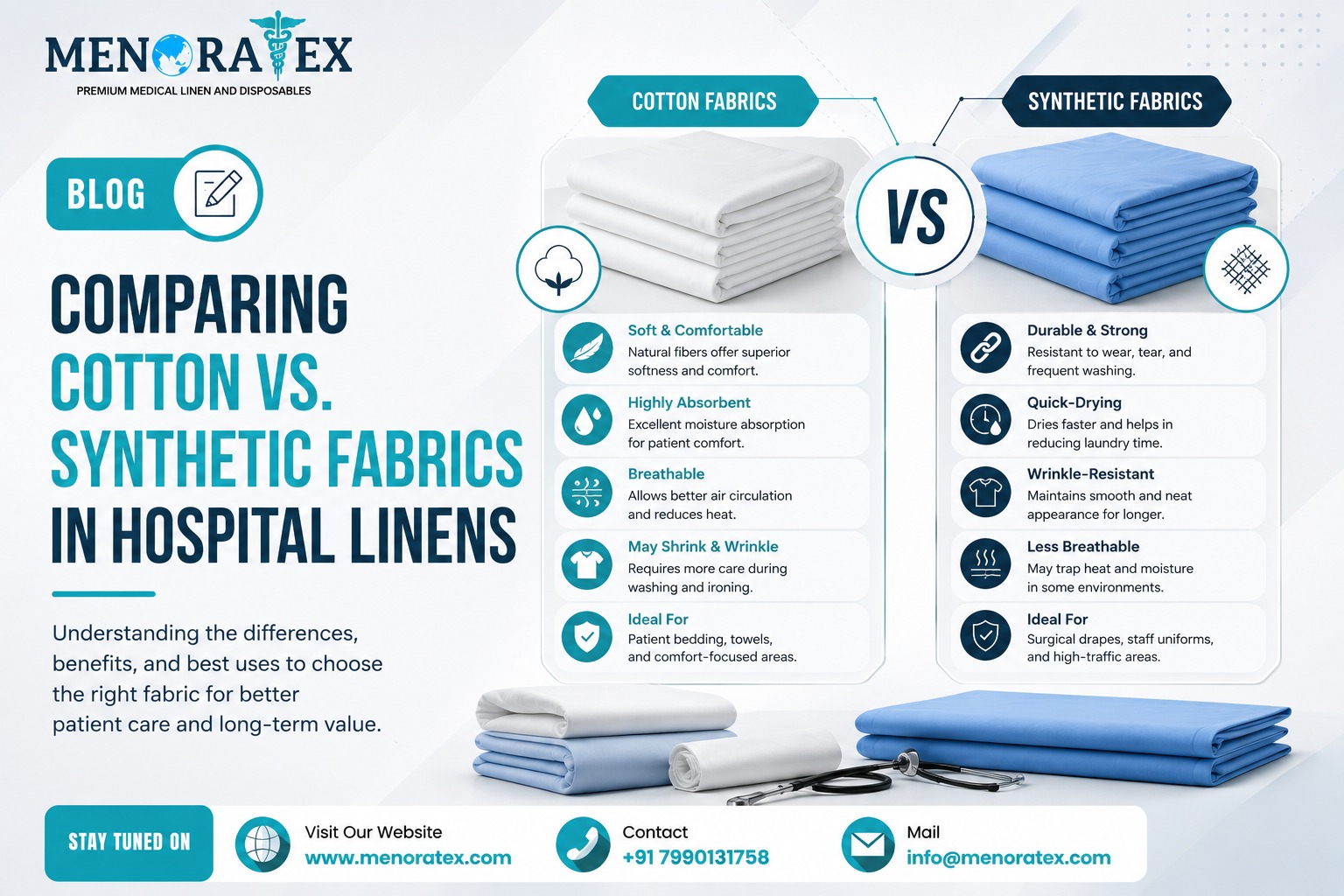
The choice between cotton and synthetic hospital linens depends on the specific priorities of the healthcare facility. Cotton linens are widely valued for their exceptional comfort, breathability, and sustainability, making them ideal for enhancing patient comfort. However, they tend to have moderate durability, lower cost efficiency over time, slower drying speeds, and lower wrinkle resistance. In contrast, synthetic linens offer superior durability, higher cost efficiency, faster drying times, better wrinkle resistance, and enhanced infection control capabilities. While they may not match the comfort and breathability of cotton, they are often preferred by facilities seeking operational efficiency, longevity, and reduced maintenance costs. Ultimately, healthcare organizations should evaluate their patient care objectives, budget constraints, laundry operations, and infection control requirements when selecting the most suitable linen material.
Hospital Linen Trends in the USA
Healthcare facilities in the USA increasingly prefer:
• Poly-cotton blends
• Antimicrobial fabrics
• High-thread-count patient linens
• Sustainable textile sourcing
American hospitals focus heavily on:
• Patient satisfaction
• Infection prevention
• Operational efficiency
This has increased demand for advanced healthcare textile suppliers like Menoratex that can provide durable, compliant hospital linen solutions.
Hospital Linen Demand in the UAE
The UAE healthcare sector emphasizes:
• Luxury patient experience
• Premium hospital interiors
• Heat-resistant fabrics
• High hygiene standards
Because of the region’s climate, breathable blended fabrics perform better than purely synthetic options.
Many UAE healthcare buyers prefer:
• Cotton-polyester blends
• Soft-touch performance textiles
• Quick-drying medical linens
Menoratex supports healthcare distributors and institutional buyers in the UAE with customized healthcare textile solutions designed for hot-climate performance.
Hospital Linen Requirements in Latin America
Latin America presents unique healthcare textile challenges:
• Budget-sensitive procurement
• High patient turnover
• Humid climates
• Public healthcare expansion
Hospitals often prioritize:
• Long-lasting linens
• Cost-effective synthetic fabrics
• Easy maintenance textiles
Blended fabrics are becoming increasingly popular because they provide:
• Better durability
• Improved comfort
• Lower lifecycle costs
At Menoratex, we see rising demand from Latin American healthcare buyers for durable hospital linens that balance affordability and hygiene performance.
Why Blended Fabrics Are Becoming the Industry Standard
Today, many hospitals no longer choose 100% cotton or 100% synthetic fabrics. Instead, they prefer blended hospital linens.
A common example is:
• 60% cotton / 40% polyester
This combination provides:
• Patient comfort
• Improved durability
• Lower maintenance costs
• Better wrinkle resistance
Healthcare institutions across the USA, UAE, and Latin America increasingly view blended fabrics as the most practical solution.
This is one reason why Menoratex focuses heavily on high-performance blended healthcare textiles.
Key Factors Hospitals Should Consider Before Buying Linens
Laundry Infrastructure
Hospitals with industrial laundry systems may benefit more from synthetic fabrics.
Climate Conditions
Hot climates require breathable materials.
Patient Experience Goals
Luxury hospitals often prefer softer cotton-rich fabrics.
Infection Control Standards
High-risk healthcare settings require advanced textile performance.
Budget and Replacement Cycles
Long-lasting fabrics reduce procurement frequency. At Menoratex, we help healthcare buyers evaluate all these factors before selecting hospital linen solutions.
Final Thoughts
Choosing between cotton and synthetic fabrics in hospital linens is not simply about comfort or price.
It is a strategic healthcare decision that affects:
• Patient satisfaction
• Infection control
• Operational efficiency
• Long-term cost management
For hospitals in the USA, UAE, and Latin America, the best solution is often a carefully engineered blended fabric that delivers both comfort and durability.
As global healthcare standards continue evolving, trusted textile partners like Menoratex play an increasingly important role in helping healthcare institutions source reliable, hygienic, and cost-effective hospital linens.
Whether your priority is luxury patient care, operational savings, or long-term textile durability, selecting the right hospital linen fabric can significantly improve healthcare performance.
Frequently Asked Questions (FAQs)
Which fabric is best for hospital bed sheets?
Blended fabrics combining cotton and polyester are often considered the best option because they balance comfort, durability, and maintenance efficiency.
Why do hospitals use synthetic fabrics?
Hospitals use synthetic fabrics because they last longer, dry faster, resist wrinkles, and reduce operational laundry costs.
Are cotton hospital linens better for patients?
Cotton hospital linens are generally softer and more breathable, making them more comfortable for patients.
What is the most durable hospital linen fabric?
Polyester-rich blended fabrics are usually the most durable for high-volume healthcare environments.
Why choose Menoratex hospital linens?
Menoratex provides high-quality healthcare textiles designed for international healthcare markets, including the USA, UAE, and Latin America, with a strong focus on durability, hygiene, and patient comfort.
Request Hospital Linen Fabric Consultation from MenoraTex
Looking for the right fabric choice for your hospital linens—cotton or synthetic?
MenoraTex helps healthcare facilities make informed decisions on hospital bed sheet materials based on comfort, durability, infection control, and operational efficiency.
We provide tailored solutions for:
• Hospitals and healthcare systems
• Nursing homes and long-term care facilities
• Healthcare procurement teams
• Medical textile distributors and suppliers
Choose the right hospital linen fabric to improve patient comfort, reduce operational costs, and enhance healthcare efficiency.