Hospitals cannot run efficiently without a dependable supply of disposable healthcare products. From examination rooms and emergency care to operating rooms and patient wards, disposables help support hygiene protocols, workflow consistency, staff protection, and patient safety. For procurement leaders in U.S. hospitals, the question is not whether disposable products matter – it is which products are essential, how they should be evaluated, and which suppliers can deliver quality with consistency.
A practical hospital purchasing strategy should look beyond unit price. Procurement teams must consider barrier performance, intended use, compliance requirements, packaging, storage, staff usability, reorder frequency, and supplier reliability. A product that is cheap upfront but inconsistent in quality can increase waste, disrupt care, create inventory pressure, and expose the facility to avoidable risk.
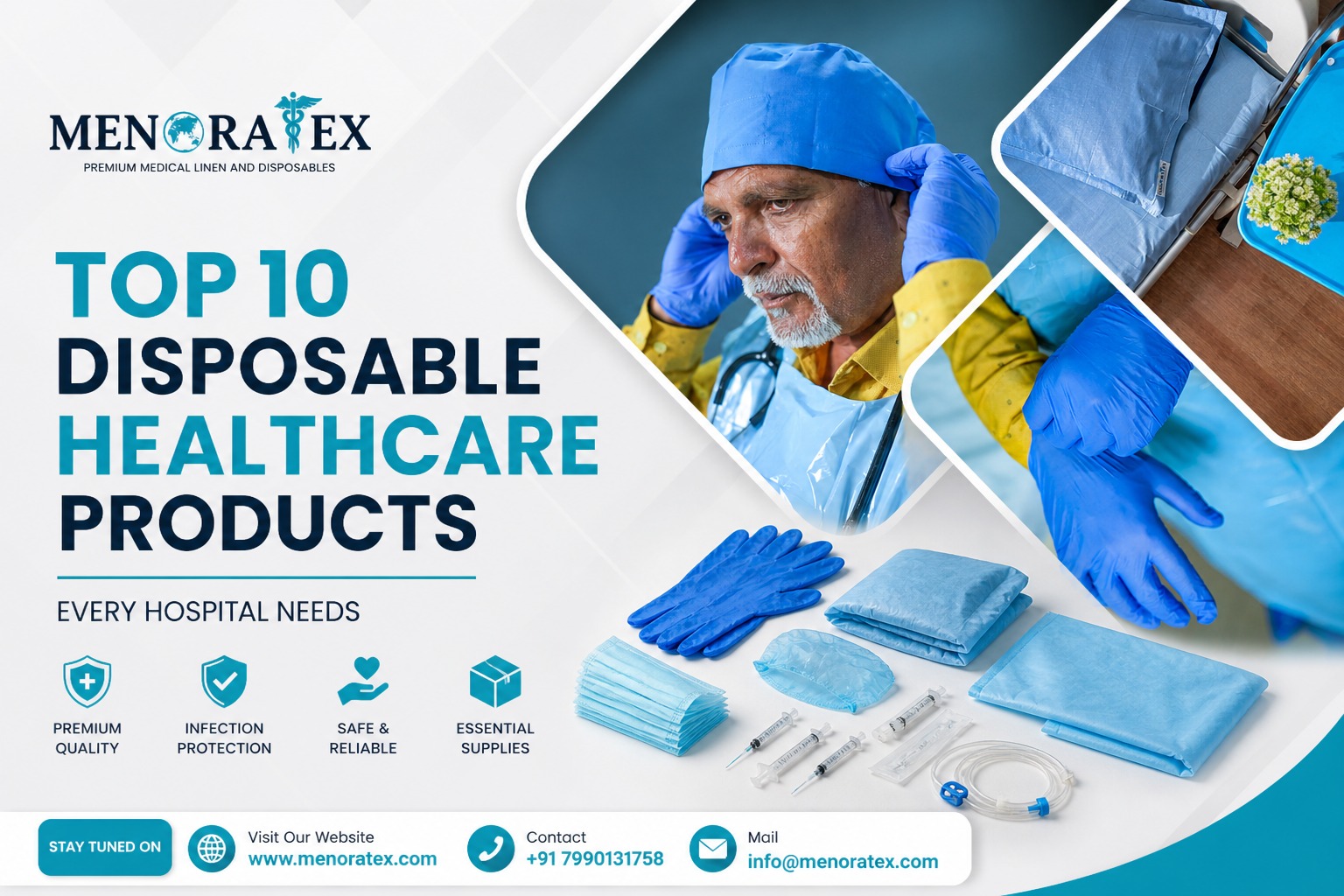
In this guide, we break down the top 10 disposable healthcare products every hospital needs and explain why each category matters from a purchasing, operations, and infection-prevention perspective. This article is written for hospital procurement managers, supply chain teams, nursing leaders, administrators, and distributors looking for dependable medical disposable solutions.
1. Examination Gloves
Disposable examination gloves are one of the highest-usage products in any hospital. They support routine patient contact, sample collection, dressing changes, housekeeping tasks, and general infection-control practices. Buyers should assess material type, tactile sensitivity, tear resistance, powder-free performance, fit range, and carton consistency. For procurement teams, stable sizing and dependable supply are just as important as price, because glove shortages can affect multiple departments at once.
2. Surgical Gloves
Surgical gloves are distinct from standard examination gloves because they are used in sterile procedures that require a more precise fit, higher tactile control, and dependable barrier performance. Hospitals typically evaluate surgeon preference, cuff design, sterile packaging, and consistency across batches. When choosing a supplier, purchasing teams should also consider storage conditions, shelf life, and whether the vendor can support predictable replenishment for operation theaters and procedure rooms.
3. 3-Ply Face Masks
Three-ply masks remain a routine requirement in many healthcare environments for general patient-facing use, visitor management, outpatient settings, and non-aerosol tasks. Procurement teams should focus on comfort, breathability, filtration claims, ear-loop quality, and carton durability. A mask that is uncomfortable or poorly packed often leads to wastage and staff dissatisfaction, which affects overall usage efficiency.
4. N95 or Equivalent Respiratory Protection
For higher-risk exposure environments, hospitals need access to appropriately specified respirator options. These products are especially important for emergency departments, isolation workflows, respiratory care, and situations where higher filtration performance is needed. Buyers should evaluate certification pathway, fit-related usability, supply continuity, and product documentation. This category requires careful review because performance and regulatory expectations are more specific than they are for routine masks.
5. Surgical and Isolation Gowns
Disposable gowns are essential for protecting staff and reducing exposure risk in clinical environments. Hospitals may require different gown types depending on the setting – general examination use, isolation precautions, or surgical use. Buyers should review intended use, barrier level, material strength, seam integrity, comfort, and packaging format. In the U.S., gowns intended for medical use are regulated by the FDA, and barrier expectations differ by gown type and use case.
6. Surgical Drapes
Surgical drapes help create a controlled sterile field during procedures and are a core product category for operating rooms and specialty interventions. Procurement teams should assess absorbency, fluid resistance, adhesive performance where applicable, drape design, and compatibility with procedure needs. A dependable drape supplier reduces variation in the OR and supports staff confidence during setup.
7. PPE Kits
PPE kits simplify readiness by grouping essential protective items for rapid deployment. They can be especially useful for emergency preparedness, isolation workflows, temporary outbreak response, and standardized distribution across departments. For hospital buyers, the value lies in convenience, consistent kit composition, clear labeling, and reduced picking time. A well-designed PPE kit also makes stock control easier because it converts multiple SKUs into a single managed unit.
8. Syringes
Disposable syringes are fundamental across inpatient care, outpatient care, injections, medication delivery, and procedural use. Procurement teams evaluate graduations, smooth plunger movement, sterile integrity, packaging, and compatibility with clinical needs. Because syringes are high-volume products, buyers also pay close attention to carton configuration, storage efficiency, and replenishment reliability.
9. IV Sets
IV sets are critical for infusion workflows and require close review of tubing quality, drip performance, sterility, connection reliability, and packaging integrity. Even small inconsistencies in this category can create workflow disruptions or product rejection at the user level. For procurement leaders, product standardization across units helps improve operational efficiency and reduces confusion during use.
10. Surgeon Caps, Bouffant Caps, Shoe Covers, and Other Protective Consumables
These products may appear small in cost compared with other line items, but they are important in maintaining procedural discipline and hygiene protocols. Hospitals often purchase them in large volumes, which makes supplier consistency and packing quality highly relevant. The best procurement approach is to source these items from a partner who can support multiple protective disposable categories under one quality system and one reliable supply relationship.
What Hospital Buyers Should Look for Before Purchasing Disposable Products
- Consistent product quality across every batch and shipment.
- Clear product specifications, intended-use documentation, and labeling.
- Relevant compliance and quality-system support depending on the product category.
- Carton-level packaging that supports warehouse handling and department-level distribution.
- Reliable lead times, bulk-order capability, and responsive communication.
- Products that match the practical needs of nursing, OT, housekeeping, and infection-control teams.
Global Standards and Certifications Matter
Not every disposable product is regulated in the same way, so content and purchasing decisions should be product-specific. In the U.S., PPE and certain medical products intended for medical use – such as some gowns, gloves, and masks – may fall under FDA regulatory requirements depending on intended use and classification. Hospitals also value suppliers that operate with documented quality systems and clear product traceability.
That is why hospital buyers often prefer certified and well-documented suppliers. Beyond the product itself, they want confidence in manufacturing controls, hygiene practices, packaging discipline, and shipment consistency. For procurement teams, a dependable supplier reduces the administrative burden of re-checking quality with every order.
Why This Matters for U.S. Hospital Procurement Teams
A strong purchasing strategy protects patient care, supports staff readiness, and helps reduce avoidable disruptions. It also improves budgeting because procurement teams can forecast more accurately when quality and supply are stable.
The best suppliers are those who understand healthcare buying logic. They know that procurement managers are looking for dependable specifications, predictable fulfillment, and practical value over the long term. Hospitals do not simply need products; they need a sourcing partner who supports standardization, uptime, and confidence across departments.
FAQ
What are the most essential disposable healthcare products in a hospital?
The most essential categories typically include examination gloves, surgical gloves, masks, respirator options, gowns, drapes, syringes, IV sets, PPE kits, and protective consumables such as caps or shoe covers.
Why do hospitals buy disposable products in bulk?
Bulk purchasing helps hospitals standardize supply, reduce stock-out risk, improve department readiness, and negotiate better commercial terms for high-usage items.
Are all disposable medical products regulated the same way in the U.S.?
No. Regulatory expectations vary by product type and intended use. Procurement teams should review the applicable product documentation and compliance requirements for each category rather than assuming one rule fits all.
How should a hospital choose a disposable-products supplier?
Hospitals should look at quality consistency, documentation, packaging, supply reliability, communication, and the supplier’s ability to support recurring institutional orders.
Can one supplier support both medical linen and disposable products?
Yes. Many healthcare buyers prefer vendors who can support multiple related product categories because this simplifies sourcing, vendor management, and ordering workflows.
Call to Action
Looking for a dependable supplier of disposable healthcare products for your hospital, clinic, or distribution business? Explore Menoratex’s product range, request a free sample, or contact our team for a customized quote based on your facility requirements.
About Menoratex
Menoratex, a brand of Radhe Overseas, supplies premium medical linen and healthcare disposables for hospitals, clinics, and institutional buyers. With a focus on hygiene, durability, documentation, and dependable supply, Menoratex supports healthcare facilities looking for practical, procurement-friendly sourcing solutions. To learn more, explore the product range or contact the team at www.menoratex.com.